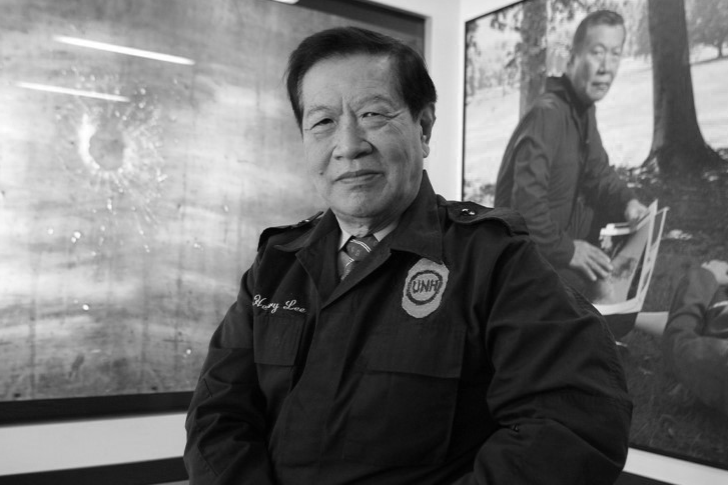
The international forensic science community is mourning the loss of Dr. Henry C Lee, the legendary Chinese-American forensic scientist who passed away at his home in Henderson, Nevada, at age 87. The announcement came jointly from his family and the University of New Haven, where he served as a distinguished professor for over fifty years.
Dr. Lee, known in China as Li Changyu, was completing his final literary work—a comprehensive study on missing-persons investigations—during his last days, adding to his remarkable collection of over forty published books throughout his career.
The forensic luminary gained worldwide recognition through his pivotal involvement in some of history’s most notorious criminal investigations. His expertise proved instrumental in the OJ Simpson murder trial, the JonBenét Ramsey case, the Laci Peterson disappearance, the Elizabeth Smart abduction, and the forensic response to the 9/11 terrorist attacks.
Born in 1938 in Rugao, Jiangsu province, Lee emigrated to the United States to pursue advanced biochemical studies. His academic journey led him to the University of New Haven in 1975, where he revolutionized forensic education by establishing what began as a modest program with basic fingerprint equipment into the nation’s premier multidisciplinary forensic science department by 1998.
The program’s growth culminated in 2010 with the inauguration of a cutting-edge 15,000-square-foot facility dedicated to forensic innovation. At its opening, Lee articulated his vision: “This institute will serve as a catalyst uniting professionals worldwide, creating a smaller global community committed to combating crime.”
Beyond his professional accomplishments, Dr. Lee served as a bridge between Chinese and American forensic science communities, making frequent visits to China over several decades to lecture at universities and strengthen bilateral academic cooperation. His most recent visit occurred in June 2025, when he visited Shanghai University of Political Science and Law to launch an oral history project.
Lee’s influence extended across all 50 U.S. states and 46 countries worldwide, where he collaborated with more than 600 law enforcement agencies and provided expert testimony in over 1,000 court cases. He also formerly served as Commissioner of the Connecticut Department of Public Safety.
University of New Haven President Jens Frederiksen memorialized Lee as “an extraordinary individual whose contributions to our institution, forensic science, and global law enforcement remain unparalleled. His profound legacy will continue through the countless students and professionals he inspired throughout his remarkable career.”