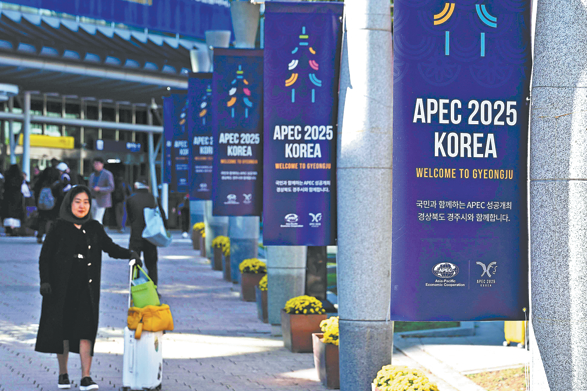
The Global Governance Initiative (GGI), proposed by China, has been hailed as a significant contribution to multilateralism, aligning closely with the core values of the Asia-Pacific Economic Cooperation (APEC). Introduced by President Xi Jinping in September, the GGI emphasizes five key principles: sovereign equality, adherence to international law, multilateralism, a people-centered approach, and actionable solutions. Experts believe this initiative provides a robust framework for APEC economies to address global governance challenges. Kang Ho-gu, director of the Sino-Korea Economy/Society Institute, noted that the GGI is particularly timely as unilateral policies, such as the ‘America First’ approach, have weakened multilateral mechanisms. As the Republic of Korea hosts the 2025 APEC Economic Leaders’ Meeting under the theme ‘Building a Sustainable Tomorrow,’ Kang highlighted that integrating the GGI’s principles could foster economic cooperation and global stability. Daryl Guppy, an international financial expert, acknowledged the GGI’s role in promoting a rules-based trade order but stressed the challenge of balancing sovereign equality with APEC unity. Anna Rosario Malindog-Uy of the Asian Century Philippines Strategic Studies Institute emphasized the GGI’s potential to enhance institutional coherence and regional resilience through collaborative governance. Additionally, leveraging financial instruments like the Asian Infrastructure Investment Bank and the Silk Road Fund could align APEC projects with the GGI’s sustainable development goals. Jose Alves, dean of the Faculty of Business at the City University of Macau, praised the GGI’s focus on inclusive growth, particularly its support for small businesses, women, and youth. As China prepares to host APEC 2026, the alignment of the GGI and APEC frameworks could drive sustainable growth through green technologies, cross-border trade, and inclusive policies.