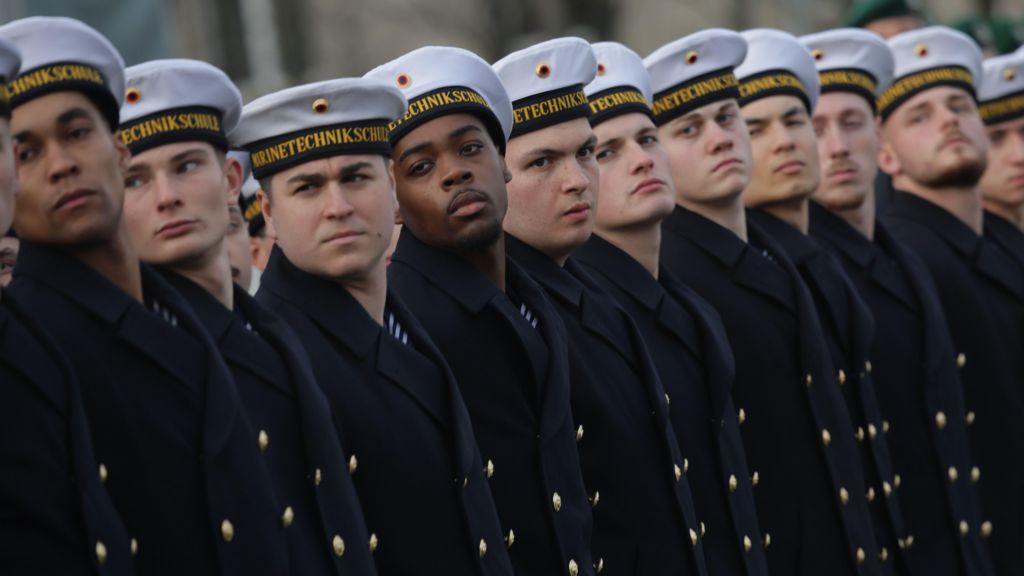
Germany’s coalition government has finalized a comprehensive military service plan aimed at significantly bolstering its armed forces. The initiative, which follows months of political negotiations, mandates all 18-year-old men to complete a questionnaire assessing their suitability for service and, starting in 2027, undergo medical screenings. This move is part of Berlin’s broader strategy to establish Europe’s most formidable conventional army. Armin Papperger, CEO of Rheinmetall, Germany’s largest defense firm, expressed confidence in the plan’s feasibility, stating that Chancellor Friedrich Merz’s goals are ‘realistic’ and supported by decisive government action. The Bundeswehr, currently comprising 182,000 troops, aims to increase its numbers by 20,000 in the next year, eventually reaching between 255,000 and 260,000 by 2035, supplemented by approximately 200,000 reservists. While the plan initially introduces voluntary military service for women, men will face mandatory assessments. If recruitment targets are not met, compulsory enlistment could be considered. The decision comes amid heightened security concerns, with German defense chief Gen Carsten Breuer warning of a potential Russian attack within four years. Despite opposition from some political factions and a significant portion of young Germans, Defense Minister Boris Pistorius has sought to reassure the public, emphasizing that a stronger military enhances deterrence and reduces the likelihood of conflict. Germany’s defense spending, which declined after the Cold War, has seen renewed focus following Russia’s invasion of Ukraine, with NATO allies urging increased military investments. Rheinmetall, a key player in Europe’s rearmament efforts, has reported substantial revenue growth, driven by demand for vehicles, ammunition, and advanced technologies like artificial intelligence. Papperger, who has been linked to a Russian assassination plot, remains optimistic about Europe’s defense capabilities, stating, ‘Whatever you call it, it’s not a peaceful time.’
Germany paves way to conscription as defence boss sees strongest EU army in five years