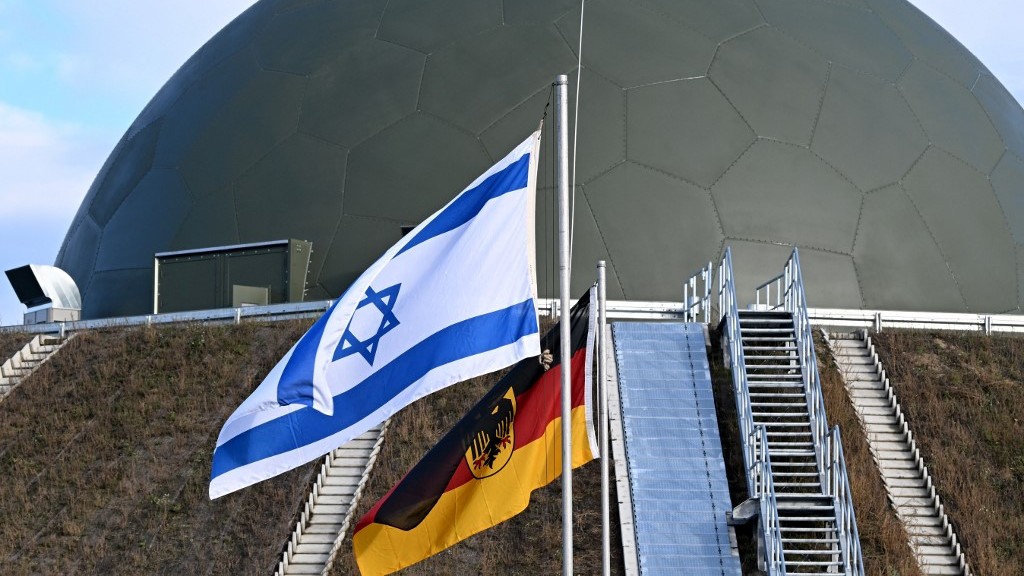
Germany has authorized a contentious $3.1 billion weapons agreement with Israel, approving the acquisition of Arrow 3 missile defense systems despite ongoing international legal proceedings against Israel for alleged genocide in Gaza. The Israeli defense ministry confirmed the transaction on Thursday, marking one of Israel’s largest-ever arms exports.
This latest deal follows a previous $3.5 billion agreement signed between the two nations in 2023, bringing their total defense cooperation to over $6.6 billion. The arrangement provides significant financial reinforcement to Israel’s defense industry while the country faces International Criminal Court arrest warrants for Prime Minister Benjamin Netanyahu and former Defense Minister Yoav Gallant over alleged war crimes in Gaza.
The approval comes despite Germany’s temporary arms embargo imposed in summer 2024 in response to Israel’s planned full occupation of Gaza, which was reversed by November. Germany remains Israel’s second-largest weapons supplier after the United States, providing approximately 30% of Israel’s defense imports.
Israeli Defense Minister Israel Katz characterized the approval as “a clear expression of the deep trust that Germany places in the State of Israel.” Defense Ministry Director-General Major General Amir Baram noted the deal would accelerate Arrow production and channel billions into strengthening Israel’s defense industries.
The transaction occurs against the backdrop of South Africa’s genocide case against Israel at the International Court of Justice, which in January 2024 recognized a plausible risk of genocide in Gaza. This recognition created legal obligations for states to avoid aiding Israel’s actions against Palestinians.
Security expert Andreas Krieg of King’s College London warned that “the scale of reported harm [in Gaza], the legal warnings and the live ICJ case raise the risk level to a point where continued transfers and major deals become hard to square with Germany’s own stated standards.”
Palestinian journalist Hebh Jamal, based in Germany, criticized Berlin’s reliance on the concept of “Staatsrason”—the doctrine that Israel’s security constitutes Germany’s “reasons of state”—arguing that “the protection of a foreign state is more important for the German political establishment than their responsibility to the public and the ICC.”
The agreement reflects Germany’s most substantial rearmament initiative since World War Two, with Chancellor Friedrich Merz approving nearly $60 billion in military spending this week. Independent analyst Ori Golberg observed that “Germany, under [Merz], is building a war machine and Israel stands ready to supply the war machines,” characterizing the arrangement as “a smart business deal” for both parties despite the controversial timing.