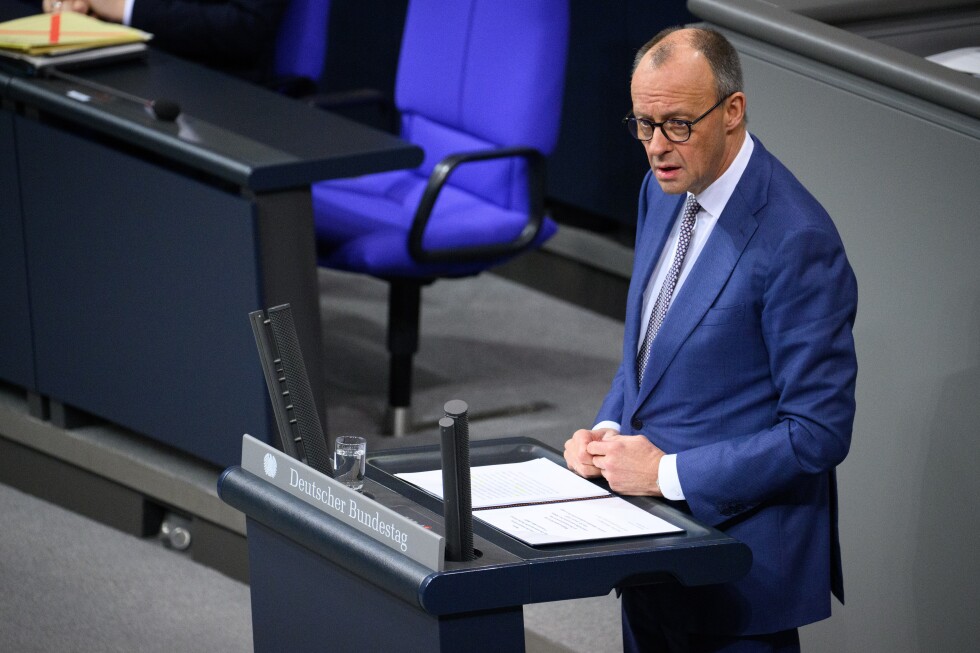
BERLIN — German Chancellor Friedrich Merz articulated a robust vision of the European Union’s global role on Thursday, characterizing the bloc as a compelling “alternative to imperialism and autocracy” in an increasingly competitive international landscape. Addressing the German parliament during a significant foreign policy address, Merz emphasized the EU’s capacity to establish partnerships with like-minded democracies through mutual respect and reliability rather than coercion.
The Chancellor’s remarks came precisely one week after U.S. President Donald Trump retracted tariff threats against Germany and seven other European nations—a pressure tactic initially deployed to advance American claims over Greenland, the semi-autonomous territory of Denmark. Merz noted this episode demonstrated the EU’s capacity for rapid, unified response, stating unequivocally that the bloc “would not be intimidated again by tariff threats.”
Merz acknowledged the emerging “world of great powers” where “a harsh wind is blowing,” but positioned this reality as creating opportunities for European leadership. He contended that open democracies with expanding markets actively seek what Europe offers: partnerships grounded in mutual respect rather than domination.
While reaffirming Germany’s commitment to NATO and trans-Atlantic cooperation, Merz established clear parameters for this relationship. “We will always reach out the hand of cooperation to the United States of America,” he stated, while simultaneously asserting that “as democracies, we are partners and allies and not subordinates.”
The Chancellor indirectly addressed recent controversial remarks by President Trump regarding NATO allies’ military contributions. Without directly referencing Trump’s claims that non-U.S. NATO forces avoided front-line positions in Afghanistan, Merz highlighted Germany’s significant sacrifices—59 troops killed and over 100 wounded during their nearly two-decade deployment. He firmly declared that Germany “will not allow this deployment, which we also performed in the interest of our ally, the United States of America, to be disparaged and demeaned today.”
Merz advocated for European strategic autonomy through enhanced defense capabilities, technological independence, and economic growth, urging the continent to “learn the language of power politics.” Simultaneously, he endorsed expanding the EU’s network of trade agreements, specifically mentioning recently concluded deals with Mercosur and India, while maintaining that existing alliances like NATO remain fundamentally valuable.