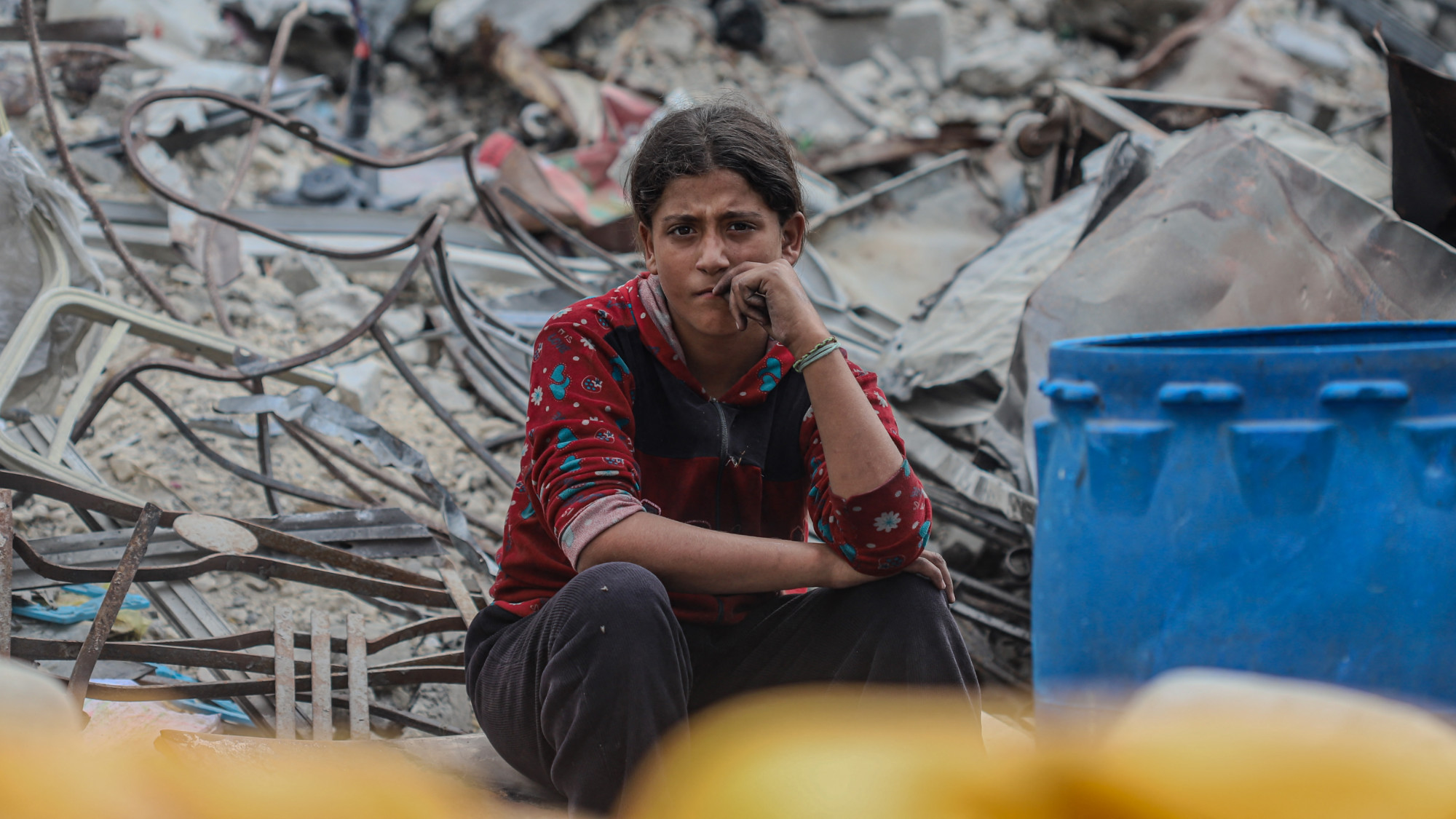
Despite the implementation of a ceasefire in Gaza a month ago, the lives of many Palestinians, including Manar Jendiya, remain fraught with danger and uncertainty. Originally from Gaza City, Jendiya has been displaced in Deir al-Balah since the truce began on October 11. Her neighborhood, Shujaiya, remains under Israeli control, and two weeks into the agreement, Israeli forces bombed the area where she was staying, forcing her to flee once again. Tragically, one of these attacks claimed the life of her sister, who had been caring for her children alone after her husband was killed earlier in the conflict.
Jendiya’s story is emblematic of the broader suffering in Gaza, where many residents feel that Israel’s two-year campaign of violence continues unabated. Daily explosions demolish homes, and shelling and gunfire persist, claiming lives and causing injuries. Essential supplies like food and medicine remain scarce due to the ongoing Israeli siege. Jendiya poignantly remarked, ‘The genocide has only stopped in the media. But for us, it’s still ongoing.’
Since the ceasefire began, Israeli forces have killed at least 242 Palestinians, including dozens of children, in clear violation of the agreement. The Rafah crossing, crucial for evacuating the severely wounded to Egypt, remains closed, and only a fraction of the agreed-upon aid trucks are allowed through daily. Most carry non-essential items, leaving critical supplies in short supply.
Adding to the psychological toll, Israeli drones hover over Gaza, broadcasting threatening messages and playing disturbing sounds late at night. Anas Moeen, a 30-year-old resident, described the drones as a deliberate tactic to spread panic and anxiety. ‘They are addressing civilians with messages like ‘hand over the bodies of captives’ and ‘respect the ceasefire’, but as civilians, this is not our responsibility,’ he said. ‘What we understand from these messages is that the army can reach us at any moment, that the war isn’t over, and we could be the next target whenever the drone operator decides.’
The situation on the ground remains dire, with Israeli military vehicles positioned just two kilometers from central Gaza City. Moeen described the constant routine of air raids, artillery shelling, and gunfire as ‘hysterical,’ with soldiers sometimes keeping their fingers on the trigger for extended periods. Despite the ceasefire, the threat of renewed war looms large, leaving Gaza’s residents in a state of perpetual fear and uncertainty.