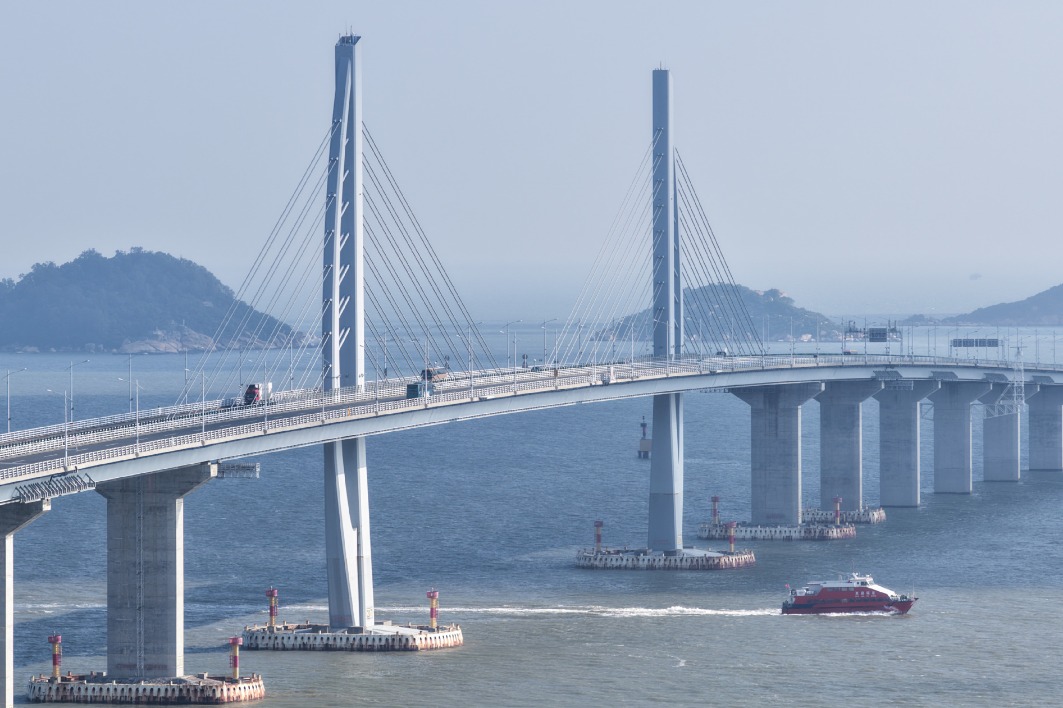
The Guangdong-Hong Kong-Macao Greater Bay Area (GBA), a visionary national strategy conceived and championed by President Xi Jinping, has evolved from a bold blueprint into a thriving reality. This transformative initiative, which began to take shape in 2012, aims to create a world-class city cluster with enhanced global competitiveness. The GBA encompasses two Special Administrative Regions (SARs)—Hong Kong and Macao—and nine cities in Guangdong’s Pearl River Delta, including Shenzhen and Zhuhai. It is often compared to other major global bay areas such as San Francisco, Tokyo, and New York. The region, home to over 80 million people, contributes approximately one-ninth of China’s GDP, with its economic output reaching 14.79 trillion yuan ($2.09 trillion) last year. The development of the GBA has been marked by significant milestones, including the signing of the framework agreement in 2017 and the unveiling of the outline development plan in 2019. These efforts have fostered deeper regional integration, with coordinated policies in infrastructure, innovation, industrial support, and public services. The recent joint hosting of the 15th National Games by Guangdong, Hong Kong, and Macao exemplifies the growing synergy among the regions. This event not only highlights the progress of the GBA’s development but also serves as a model for future collaboration in areas such as food safety, tourism, education, and healthcare. The GBA’s success is a testament to the effective implementation of the ‘one country, two systems’ principle and its potential to drive Chinese modernization and global engagement.