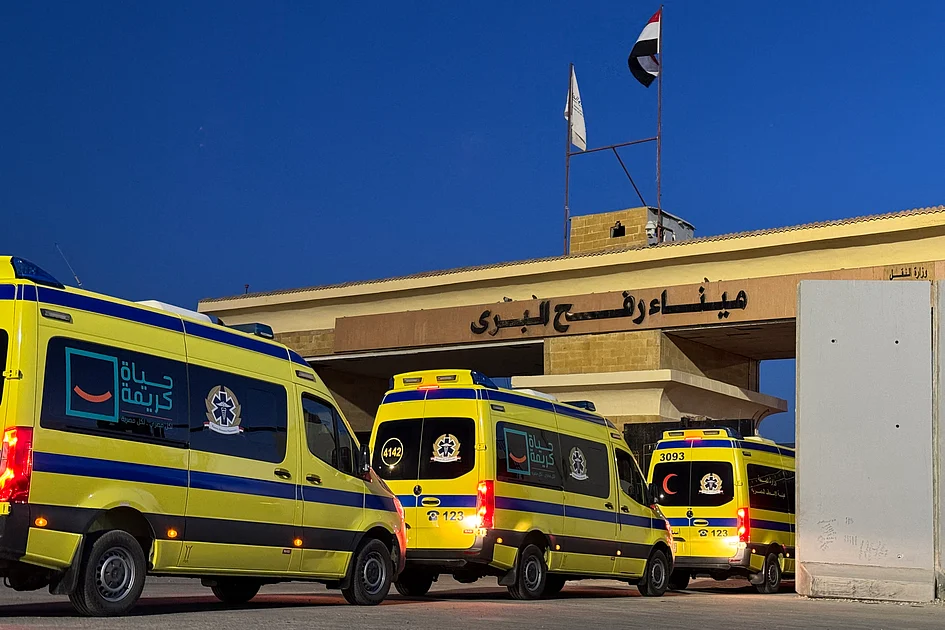
In a significant development for the war-ravaged Gaza Strip, the Rafah border crossing with Egypt partially resumed operations on Monday under a tightly controlled pilot program. An Israeli security official confirmed the reopening, marking the first time in over two years that Palestinian residents can utilize this critical gateway.
The initial phase will see extremely limited traffic, with Egyptian state-linked media reporting just 50 people permitted to cross in each direction daily. This cautious approach follows months of intense diplomatic pressure from international aid organizations highlighting Gaza’s deteriorating humanitarian situation.
The reopening comes against a backdrop of renewed violence. Gaza’s civil defense reported dozens killed in Israeli strikes over the weekend, which the military described as retaliation for Palestinian fighters emerging from a tunnel in Rafah city—an action Israel claims violated the fragile US-brokered ceasefire in effect since October 10.
European Union border assistance mission (EUBAM) teams have arrived to monitor operations and support Palestinian border guards. Israeli state broadcaster Kan indicated the crossing would operate for approximately six hours daily during this initial phase.
For Gaza’s residents, the crossing represents a vital lifeline. Mohammed Nassir, a Palestinian who underwent leg amputation due to war injuries, expressed desperate hope: ‘I need to undergo surgery that is unavailable in Gaza but can be performed abroad.’
Medical preparations are underway on the Egyptian side, with AlQahera News (linked to Egypt’s state intelligence) reporting that 150 hospitals and 300 ambulances have been prepared to receive Palestinian patients. Additionally, 12,000 doctors and 30 rapid deployment teams have been allocated for their care.
The reopening follows Israel’s recovery and burial of Ran Gvili, the last Israeli hostage held in Gaza, whose return Israel had previously tied to the crossing’s resumption. Despite this development, COGAT, Israel’s defense ministry body coordinating Palestinian civilian affairs, made no mention of allowing the long-awaited surge of humanitarian aid into Gaza, focusing only on individual movement.
The conflict, sparked by Hamas’s October 7, 2023 attack on Israel that killed 1,221 people according to Israeli figures, has left Gaza with at least 71,795 fatalities according to the Hamas-run health ministry—figures the UN considers reliable. Rafah remains under Israeli military control following their withdrawal behind a designated ‘Yellow Line’ as part of the ceasefire agreement, with Israeli troops still controlling more than half of Gaza territory.