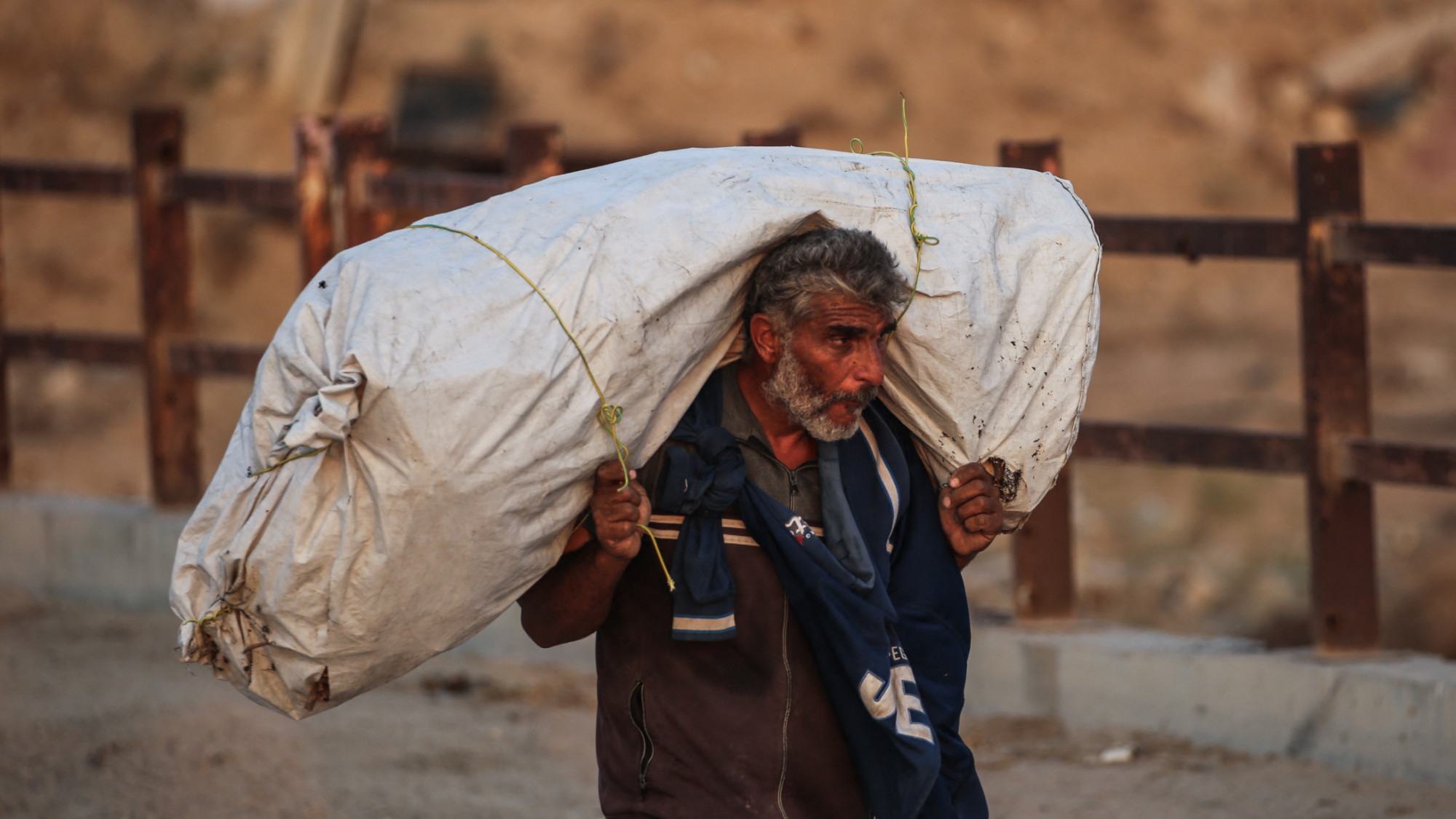
Residents of the Gaza Strip have expressed deep skepticism following the United Nations Security Council’s adoption of a resolution that authorizes foreign governance and an international force in the war-torn territory. The resolution, drafted by the United States and passed on Monday, has been met with criticism from locals who argue that it prioritizes political conditions over urgent humanitarian needs. Abu Malek Jerjawi, a Gaza resident, lamented that the UNSC’s decision ties reconstruction and relief efforts to disarmament, a move he described as ‘deeply disappointing’ and a ‘disaster’ for the population. ‘The Council disregarded all humanitarian needs and tied them to political considerations,’ Jerjawi told Middle East Eye. The resolution, known as UNSC 2803, supports a transnational governing body led by former U.S. President Donald Trump and the establishment of an international force to oversee the demilitarization of Gaza. However, critics fear this approach will exacerbate tensions rather than bring stability. Satellite analysis by the United Nations Satellite Centre (UNOSAT) reveals that over 80% of structures in Gaza have been destroyed or damaged since the conflict began more than two years ago, leaving most of the 2.3 million residents internally displaced and lacking basic necessities. Nermin Basel, a mother of three who fled Gaza during the war, emphasized that any international plan must guarantee the return of displaced Palestinians. ‘Leaving was never our choice, but staying meant certain death,’ she said. ‘Any plan to end the war and improve the situation must ensure we can return.’ The resolution has also been rejected by armed Palestinian factions, including Hamas, which insists that resistance to occupation is a legitimate right under international law. Critics argue that the resolution risks eroding Palestinian claims to the land and fails to address the root causes of the conflict. Jerjawi warned that the mandate granted to the international force could ‘reproduce the war’ rather than end it, further destabilizing the region.