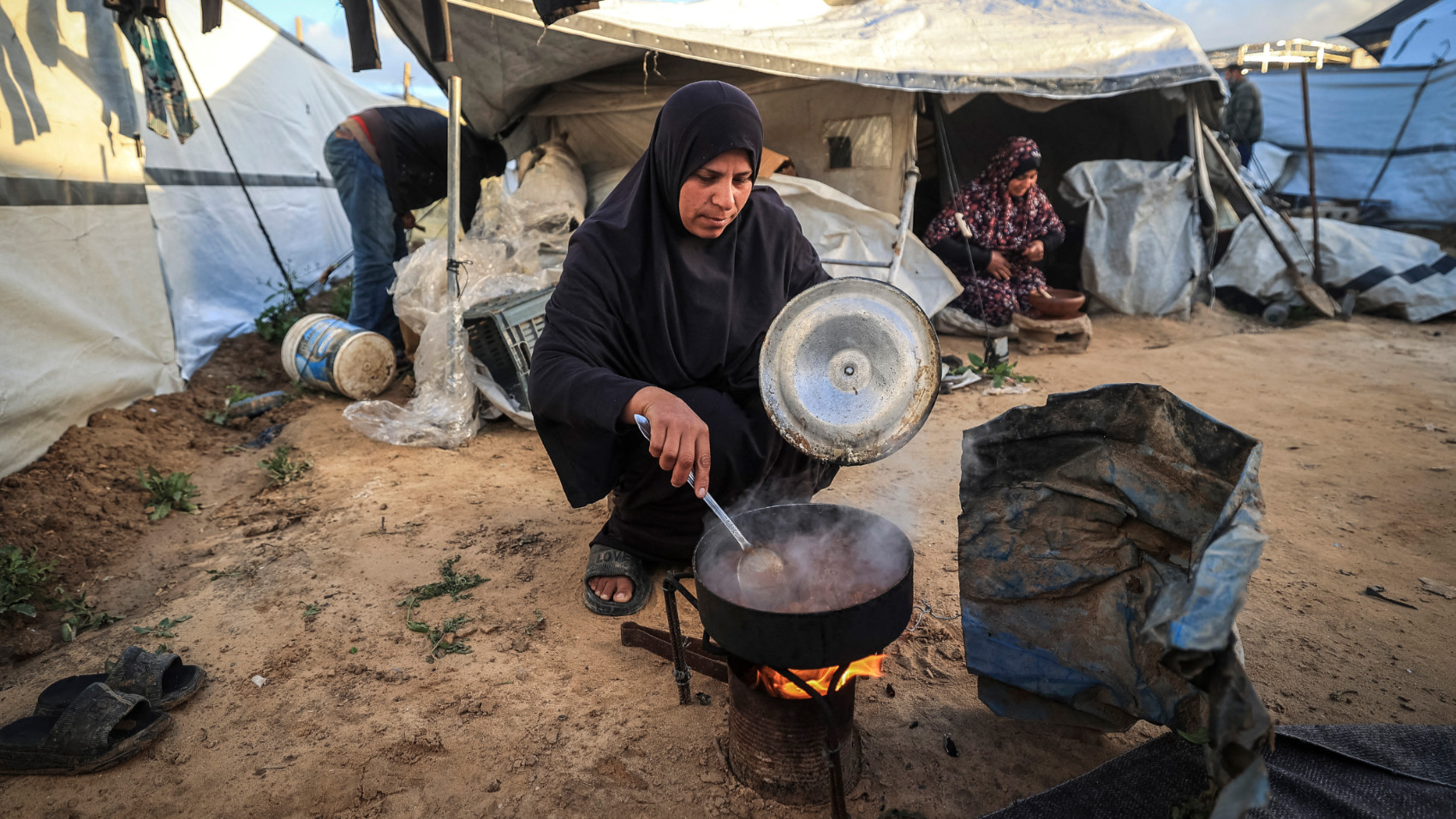
Amid the rubble of her home, partially reconstructed after Israeli bombardment, Tasneem prepares a Ramadan meal for her family by candlelight. Her story mirrors that of countless Gazans who now depend entirely on international aid organizations for survival following Israel’s devastating military campaign that pushed poverty rates to 81.5 percent and created unlivable conditions across the strip.
The humanitarian crisis has reached a critical juncture as 37 non-governmental organizations, including Médecins Sans Frontières, Save the Children, Oxfam, and the Norwegian Refugee Council, face potential license suspensions by Israeli authorities. Despite a temporary injunction from Israel’s Supreme Court that allows continued operations after a petition by 17 agencies, the threat looms large over Gaza’s vulnerable population.
For Tasneem and her family, aid packages represent their primary food source since her husband lost his employment due to the conflict. “One food box is enough for me for almost a month,” she explained, highlighting how these supplies contain essential items like fish and fruits that families can no longer afford independently.
The situation proves particularly dire for medical patients like Mohammed Alasdoudi, who underwent multiple amputations after being shot by an Israeli sniper in 2018. He depends entirely on MSF for rehabilitation and specialized care unavailable in local hospitals. “If MSF stops its operations, it will be the last nail in the coffin of patients,” Alasdoudi stated, emphasizing the organization’s provision of expensive medications otherwise inaccessible in Gaza.
MSF’s operations remain crucial, with the organization supporting one in five hospital beds in Gaza last year and assisting with one in three births. Their 15 accessible health centers provide vital services to amputees and trauma patients who cannot reach distant governmental clinics due to transportation shortages.
According to Claire Nicolet, MSF’s Gaza emergency coordinator, the organization faces severe supply chain disruptions due to Israeli restrictions. “Fortunately, we still have some supplies, but gradually they will run out. If we don’t find a solution to bring them in, we honestly will not be able to continue operating,” she warned.
The reduction of international staff also diminishes independent witnessing of Gaza’s conditions. Nicolet noted that with international journalists barred entry and Palestinian journalists under attack, the removal of humanitarian workers further isolates the territory from external observation.
Legal experts emphasize that Israel’s actions violate international humanitarian law. Yahya Muhareb, a specialist in international humanitarian law, stated that suspending aid organizations contravenes Israel’s obligations as an occupying power under the Fourth Geneva Convention and the International Court of Justice’s 2024 provisional measures requiring unhindered aid flow into Gaza.
Despite a nominal ceasefire, Israel continues to impose obstacles on essential goods entering Gaza while maintaining military operations near the demarcation line. This persistent uncertainty leaves aid-dependent families like Tasneem’s in constant anxiety: “We don’t trust Israel; it may resume the war or close the crossing at any time… if the aid stops, how are people supposed to survive?”