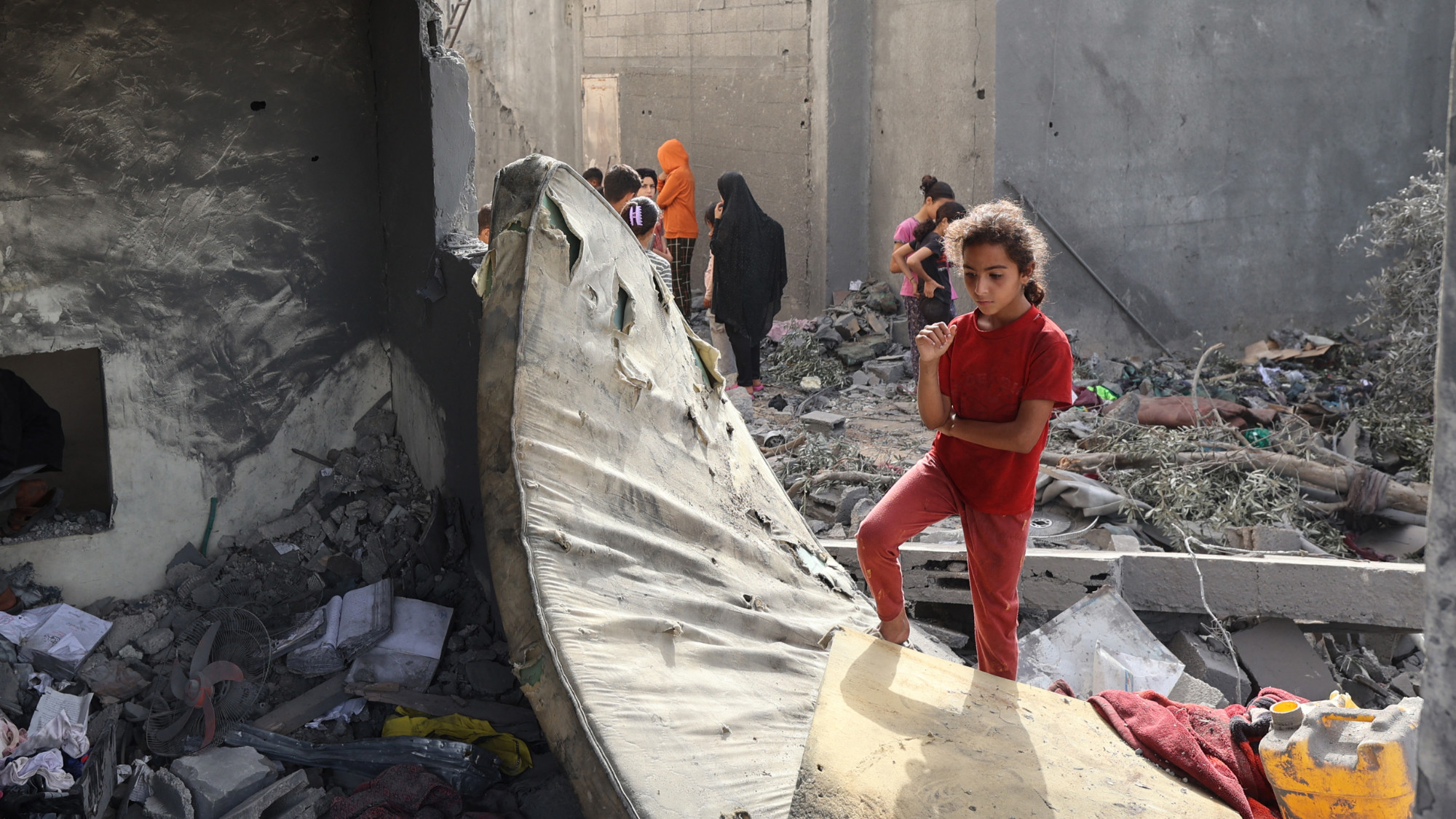
In the war-torn Gaza Strip, 22-month-old Rewan Aldreini’s life is a stark illustration of the devastating impact of conflict and malnutrition. Born in November 2023, just a month after the Israeli siege began, Rewan has never tasted her mother’s milk. Her mother, grappling with depression and post-traumatic stress disorder (PTSD), stopped producing milk due to the trauma of relentless bombardment and displacement. The family fled their home in Beit Lahia, moving first to Gaza City and then to Khan Younis, where they now struggle to survive. Rewan’s father, Mohamed Aldreini, can only afford rice to feed his daughter, who suffers from severe malnutrition, a weak immune system, heart problems, and developmental delays. At just 7kg, her health continues to deteriorate under what her father describes as “engineered starvation.”
Rewan’s plight is not unique. Scientists warn that the ongoing crisis in Gaza is creating an epigenetic disaster, with long-term health consequences for future generations. Epigenetics, the study of how environmental factors like stress and malnutrition alter gene expression without changing the DNA sequence, has shown that such conditions can leave lasting genetic imprints. Research from historic famines, such as the Dutch Hunger Winter and the Rwandan genocide, reveals that trauma and starvation can lead to increased risks of chronic diseases, mental health disorders, and developmental issues in children and their descendants.
Professor Tessa Roseboom, a biologist at the University of Amsterdam, explains that stress hormones in mothers can affect babies’ bodies and brains. Similar findings were observed in Holocaust survivors and their children, where gene changes were directly linked to parental trauma. In Gaza, the combination of starvation, displacement, and ongoing violence is creating a perfect storm for epigenetic damage. Dr. Leon Mutesa of the University of Rwanda, who studied the epigenetic legacy of the 1994 genocide, warns that the symptoms in Gaza—fear, stress, and high cholesterol—are early indicators of epigenetic changes.
According to Palestinian health officials, at least 20,000 children have been killed since the war began, and over 50,000 have been injured or killed. In August alone, 12,800 children were identified as acutely malnourished, a condition the UN has confirmed as famine. Experts like Professor Hassan Khatib of the University of Wisconsin–Madison predict that the epigenetic damage in Gaza will be catastrophic, affecting not only current generations but also future ones. Khatib emphasizes that the crisis is particularly harmful to pregnant women and adolescent boys, whose developing bodies are more vulnerable to genetic alterations.
While the damage already inflicted may be irreversible, scientists agree that immediate action can mitigate further harm. Ending the war, providing access to food, healthcare, and safe living conditions, and offering psychological support are critical steps. “We need action from the international community to stop the suffering in Gaza,” says Roseboom. “This conflict isn’t just about the present moment; it’s creating life-long consequences for children like Rewan, and potentially for generations to come.”
For Mohamed Aldreini, the hope for a normal life remains. “I still dare to dream this genocide will end,” he says. “That we can return to a normal life—as human beings.”