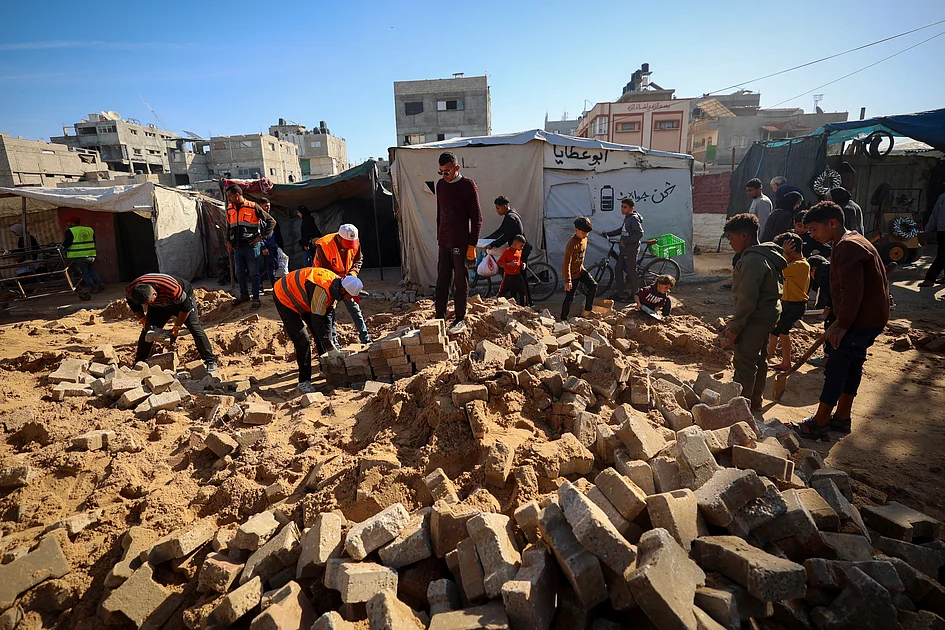
Palestinian families in southern Gaza’s Khan Younis region are confronting renewed fears of displacement as Israeli military operations intensify near the contentious Yellow Line demarcation zone. Despite a ceasefire that has largely held since October 10, recent drone and artillery strikes have shattered the fragile calm in eastern neighborhoods, creating widespread anxiety among residents who have already endured more than two years of conflict.
The Yellow Line, established under the truce agreement between Israel and Hamas, has become a focal point of tension. Israeli military authorities maintain that their deployment adheres to ceasefire provisions, asserting that operations target Hamas militants allegedly crossing the boundary to conduct terrorist activities. Conversely, Palestinian officials characterize these actions as systematic efforts to forcibly displace populations from their ancestral lands.
Humanitarian conditions remain catastrophic throughout Gaza, where tens of thousands continue to inhabit temporary tents or structurally compromised homes. The makeshift camps west of the Yellow Line in Al-Mawasi present a bleak alternative, already stretched beyond capacity with inadequate food, water, and sanitation infrastructure for the existing displaced population.
Personal accounts reveal the profound psychological toll on civilians. Umm Ahmed, a 40-year-old mother from Bani Suheila, describes children trembling at every explosion, questioning where their family might find safety. Like many others, her family resides beside their completely destroyed home, preferring the familiarity of ruins to the uncertainty of displacement.
The conflict originated with Hamas’s October 7, 2023 attack on Israel, which resulted in approximately 1,221 fatalities according to Israeli figures. Subsequent military operations have claimed over 70,000 lives in Gaza according to local health authorities, with the vast majority of Gaza’s two million residents experiencing displacement multiple times during the conflict.
Israeli Army Chief Lieutenant General Eyal Zamir recently characterized the Yellow Line as a “new border line” serving defensive and operational purposes. This framing has intensified concerns among Palestinian authorities about permanent territorial revision and systematic population transfer.
Despite the pervasive atmosphere of fear and destruction, many residents demonstrate determined resilience. Seventy-year-old Abdel Hamid, residing north of Khan Yunis with his five children, embodies this sentiment: “We will not leave… this is our land. Moving would not be a solution, but yet another tragedy.”