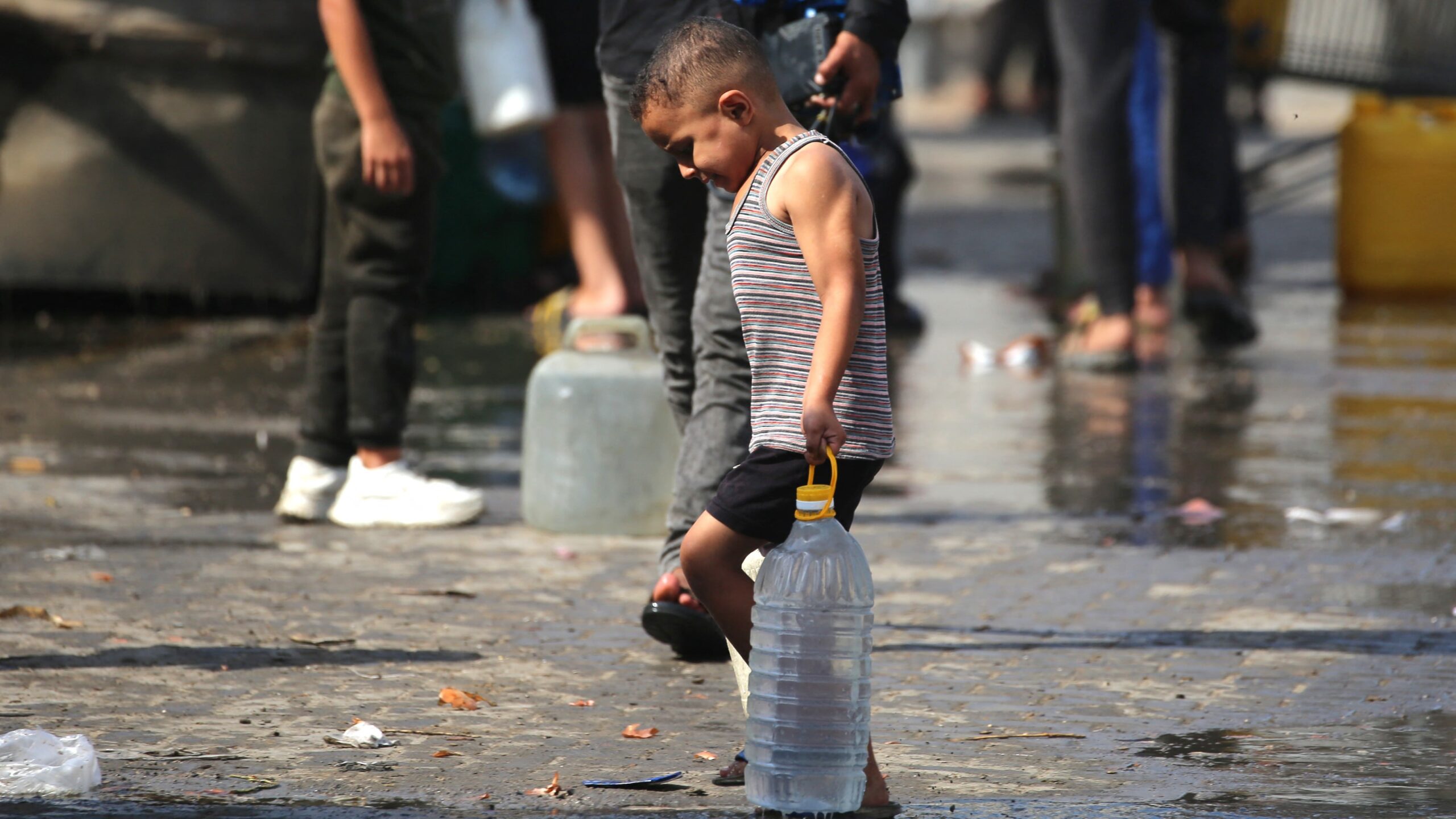
The Gaza Strip remains in the grip of a severe water crisis, exacerbated by the aftermath of Israel’s two-year military campaign and the persistent blockade, even after a ceasefire was declared. Local officials report that the region’s water supply is critically insufficient, meeting only 15% of the daily needs of its over two million residents. Hosni Muhanna, spokesperson for the Gaza City Municipality, revealed that the current supply amounts to roughly 100,000 cubic meters per day, far below the required levels. The destruction of vital infrastructure during the conflict, including wells and the central desalination plant, has left only 17 out of 88 wells operational. Gaza now relies heavily on the Mekorot water line, Israel’s national water company, which provides a meager 15,000 cubic meters daily. Even before the war, the Israeli blockade had rendered most of Gaza’s water undrinkable, with UNICEF estimating in 2020 that only 10% of the population had access to clean water. The crisis has forced hundreds of thousands of households to purchase water for drinking and bathing, while the lack of fuel and essential equipment hampers recovery efforts. Additionally, the accumulation of 260,000 tonnes of waste and millions of tonnes of rubble further complicates the situation, posing significant environmental and health risks. The United Nations Environment Programme (UNEP) has warned that the ongoing environmental destruction could have long-term consequences for Gaza’s residents. The Israeli army’s reported disposal of construction waste within Gaza has added to the crisis, as documented by Israeli news outlet Haaretz. The Gaza City Municipality has called for urgent international assistance to restore basic services and prevent further deterioration of living conditions.