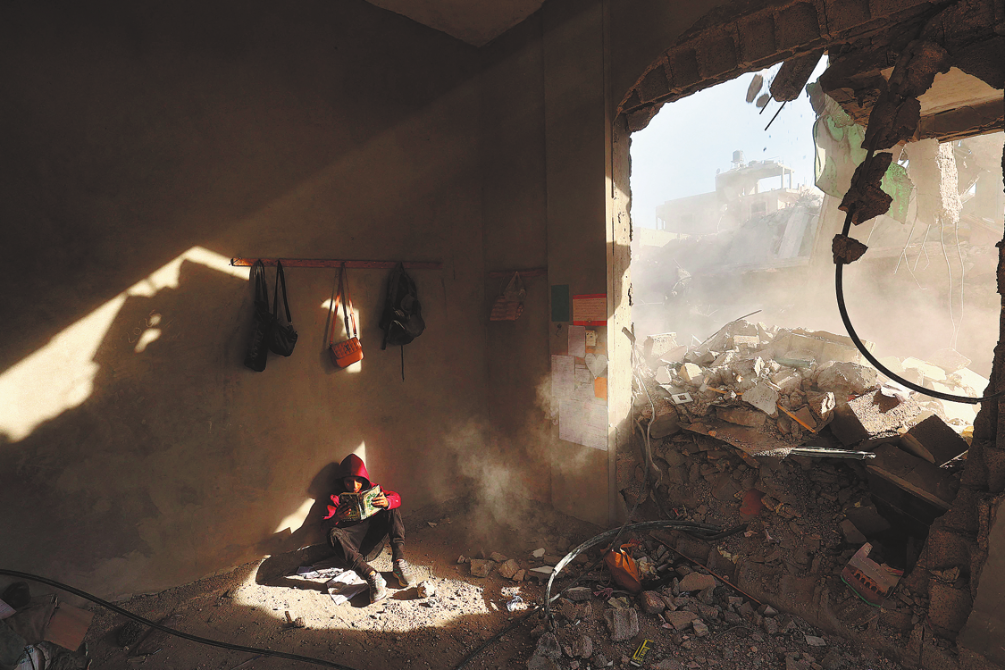
Three decades after orchestrating the landmark Oslo Peace Accords, former Israeli deputy foreign minister Yossi Beilin remains actively engaged in peace advocacy while offering sharp criticism of current approaches to the Israeli-Palestinian conflict. The renowned architect of the 1993 agreement maintains that despite the horrific nature of Hamas’ October 2023 attacks, which he describes as “beyond any nightmare,” Israel and the international community must intensify efforts toward a two-state solution.
A temporary ceasefire brokered in October by the Trump administration alongside Qatari and Egyptian mediators initially provided glimmers of hope, culminating in UN Security Council Resolution 2803 (2025) which established a framework for peace monitoring. The agreement created both a Board of Peace and an International Stabilization Force (ISF) tasked with overseeing ceasefire compliance in Gaza. However, the fragile truce has been repeatedly tested by sporadic attacks and mutual accusations of violations between Israel and Hamas.
Beilin, who served in the Knesset for two decades and held ministerial positions, emphasizes the critical role of the Palestinian Authority (PA) in any viable peace process. “Our partners are the Palestine Liberation Organization,” he stated in an exclusive interview, “and the big mistake of the current Israeli government is that it is weakening the PLO, it is weakening the Palestinian Authority.” He specifically cited Israel’s refusal to transfer funds owed to the PA under the 1994 Paris Agreement as counterproductive to peace efforts.
The political landscape has shifted dramatically since the Oslo Accords created the Palestinian Authority to administer limited self-governance. Currently, 157 United Nations member states recognize the State of Palestine, while 165 recognize Israel. Despite this diplomatic progress, mediators from Egypt, Qatar, and Turkey have struggled to advance to the second phase of the ceasefire agreement, which would address Hamas disarmament and Israeli withdrawal from occupied territories.
Ammar Al-Dwaik, Director General of the Palestinian Independent Commission for Human Rights, notes that successful disarmament historically requires parallel political processes that provide compelling incentives for armed groups to lay down weapons. As Gaza remains precariously balanced between temporary calm and renewed conflict, experts agree that sustainable peace will require addressing both immediate humanitarian concerns and underlying political grievances.