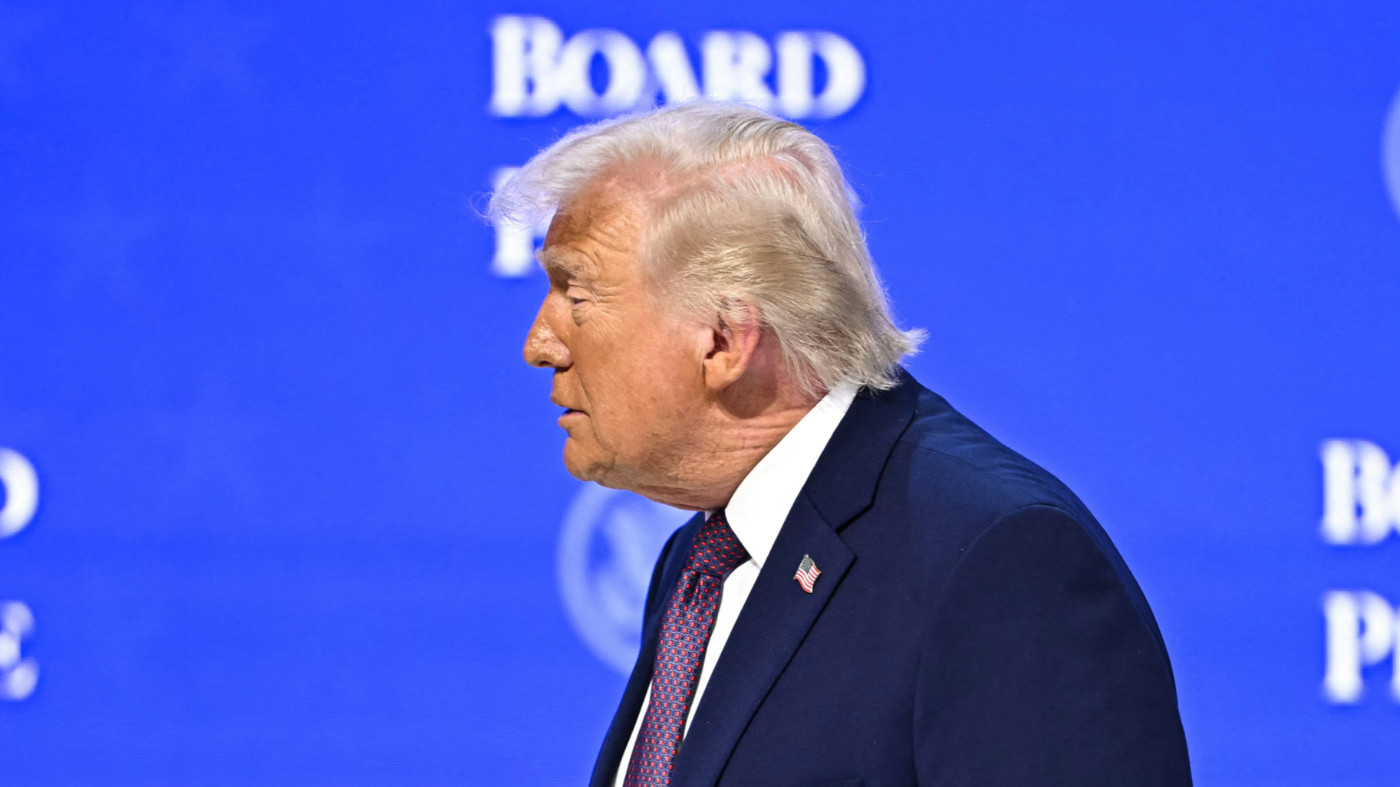
Washington witnessed the inaugural gathering of President Donald Trump’s controversial Board of Peace on Thursday, marking a significant development in post-conflict governance plans for Gaza. The summit convened against the backdrop of ambitious reconstruction proposals featuring high-rise apartments and data centers, while Israeli military operations persist despite an October ceasefire agreement. The death toll in the enclave has surpassed 72,000 Palestinians since October 2023.
The board, which Trump has hailed as “the most prestigious assembly ever convened,” requires a $1 billion entrance fee for permanent membership. Of the approximately 60 nations invited, nearly half have declined participation, including many traditional U.S. allies. Currently, 26 countries have joined the initiative that emerged from Trump’s 20-point peace plan announced last September.
Structural Framework and Leadership:
The board operates under a hierarchical structure with Trump serving as permanent chairman possessing unrestricted authority to appoint and remove members. An executive board of seven influential figures governs operations:
– Jared Kushner, Trump’s son-in-law
– Marco Rubio, U.S. Secretary of State
– Steve Witkoff, U.S. Special Envoy to the Middle East
– Tony Blair, former UK Prime Minister
– Ajay Banga, World Bank President
– Marc Rowan, U.S. private equity billionaire
– Robert Gabriel, U.S. Deputy National Security Advisor
These executives will oversee the National Committee for the Administration of Gaza (NCAG), a 15-member Palestinian body led by former deputy minister Ali Shaath that handles logistical operations without political authority. Nikolay Mladenov, former Bulgarian foreign minister, serves as High Representative for Gaza.
Regional Participation and Geopolitical Calculations:
Ten Middle Eastern and North African nations have joined, including UAE, Morocco, and Bahrain—all signatories of the 2020 Abraham Accords. Egypt’s participation reflects concerns about potential Palestinian displacement and dependence on U.S. military aid. Saudi Arabia, Turkey, Jordan, and Qatar joined through a joint statement committing to Palestinian self-determination, though Riyadh’s involvement is motivated by desired F-35 jet acquisitions and regional rivalries with the UAE.
Notable Absences and Controversies:
The board faces significant opposition from multiple fronts. Israel’s February 12 membership sparked domestic criticism, with Finance Minister Bezalel Smotrich advocating for military governance instead. The absence of Palestinian political representation—neither Hamas nor the Palestinian Authority were invited—has drawn condemnation. Iran, Lebanon, Syria, and several Arab states are excluded entirely.
European participation remains limited to Hungary and Bulgaria as full members, with Italy and Cyprus attending as observers. France declined involvement, citing protection of UN authority, while Germany referenced constitutional incompatibility. Canada had its invitation rescinded after Prime Minister Mark Carney criticized Trump during his Davos address.
International Skepticism and Legal Challenges:
The board’s charter omits specific mention of Gaza, raising concerns about potential mission expansion that could marginalize existing international institutions. When questioned about replacing the UN, Trump responded, “It might,” criticizing the organization for failing to meet its potential.
Human rights organizations have condemned the initiative, with Al-Haq describing it as “a dark day for the international community” that extends Israeli occupation. Hamas officials have dismissed the board as “the farce of the era,” while Islamic Jihad criticized appointments as serving Israeli interests.
The board operates under UN Security Council Resolution 2803, permitting international stabilization forces in Gaza, though EU diplomat Kaja Kallas claims the current composition exceeds the original mandate. As reconstruction plans advance amid ongoing violence, the board faces profound challenges in establishing legitimacy and effective governance mechanisms.