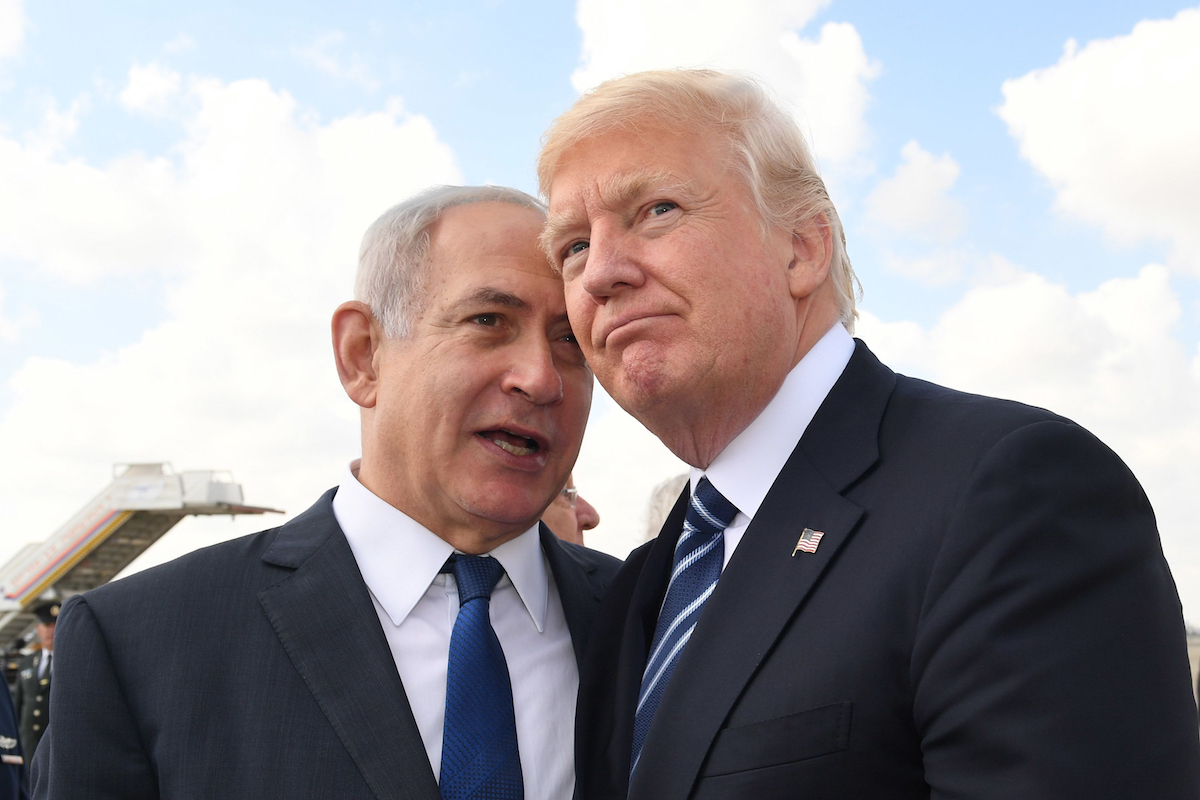
President Donald Trump’s recently unveiled 21-point plan for resolving the Israel-Palestine conflict has been framed as a bold and unprecedented initiative. The proposal includes a ceasefire, the release of hostages, Palestinian governance under international supervision, and the eventual possibility of statehood. While Israel has provisionally endorsed the plan, Hamas has predictably rejected it. On the surface, the plan appears to balance Israeli security concerns with Palestinian aspirations. Trump has vowed to block Israeli annexation of the West Bank, called for the dismantling of Hamas’s military wing, and left the door open to a two-state solution—positions that might once have been considered centrist. However, beneath the diplomatic veneer lie significant risks that could undermine both the plan and U.S. credibility. The Israel-Palestine conflict is not merely a governance or security issue but a deeply rooted ethnic and national dispute, with both Jewish Israelis and Palestinian Arabs asserting historical and territorial claims to the same land. Any peace framework that overlooks this fundamental reality risks addressing symptoms while leaving the underlying grievances unresolved. This is why past attempts, from the Oslo Accords to the Camp David Summit, have faltered, and why Trump’s rapid-fire blueprint may struggle to gain legitimacy across both communities. The plan’s governance model, which places Gaza under a technocratic Palestinian committee supervised by an international “Board of Peace” chaired by Trump himself, raises sovereignty concerns. Palestinians may perceive this as foreign control, while Arab partners could resist what appears to be a trusteeship arrangement. Trump’s promise to block West Bank annexation could also fracture Israeli politics, alienating hard-right factions in Netanyahu’s coalition. Furthermore, the plan’s vagueness on key issues such as prisoner exchanges, demilitarization, and international enforcement risks disputes at every step. These gaps carry significant dangers, including overpromising a quick peace that may inflame grievances, straining U.S. military readiness if enforcement falls on American troops without congressional or allied backing, triggering regional escalation from Iran, Hezbollah, or other militias, and undermining U.S. credibility if adversaries see the effort as rushed or unsustainable. The stakes were heightened when Defense Secretary Pete Hegseth summoned every U.S. general to a closed-door meeting days before Trump unveiled his plan. To supporters, this demonstrated strength and unity behind a serious push for peace. To critics, it appeared more like coercion than diplomacy. The European Union has also expressed cautious skepticism toward Trump’s plan, with several EU countries, including France, Luxembourg, and Belgium, recently recognizing Palestinian statehood. EU officials have stressed that any plan must uphold international law, ensure equitable treatment of both Israelis and Palestinians, and avoid unilateral impositions. Trump’s approach, which is rapid, top-down, and heavily reliant on U.S. enforcement, has prompted European leaders to warn that it could disrupt ongoing mediation efforts and complicate Europe’s role as a neutral broker. Analysts suggest that if the plan is implemented without EU coordination, it may provoke diplomatic friction and further politicize international recognition of Palestine, amplifying geopolitical tensions. Both China and Russia are maneuvering to exploit the situation. For Beijing, stability in the region protects energy flows and Belt and Road Initiative investments. China positions itself as a peace broker while quietly deepening its regional energy ties. However, an American-led “Board of Peace” sidelines its influence, and Chinese officials are likely to denounce the plan as neo-colonial. Moscow, on the other hand, stands to gain if the plan falters. Russia has long courted Hamas and Iran, presenting itself as a counterweight to Washington. Failure would reinforce its narrative that U.S. peace efforts are militarized and self-serving, while success would be framed as exclusionary, monopolizing diplomacy at others’ expense. In the complex and volatile Middle East, Trump’s initiative is a high-stakes gamble. The region’s crowded geopolitical chessboard leaves little margin for error. Trump’s plan could either pave the way for peace if Hamas capitulates or trigger escalation if it resists. Rivals are already positioning themselves to exploit the aftershocks. The world is left with a paradox: a peace plan that risks seeding more conflict, and a superpower asserting control even as its influence is contested. Trump’s Gaza blueprint is seen as decisive leadership in Washington, strategic overreach in Brussels, Moscow, and Beijing, and yet another imposition from afar in the Middle East. The real question is not whether Trump’s plan can deliver peace, but whether the players are prepared to accept rules imposed by one hand.