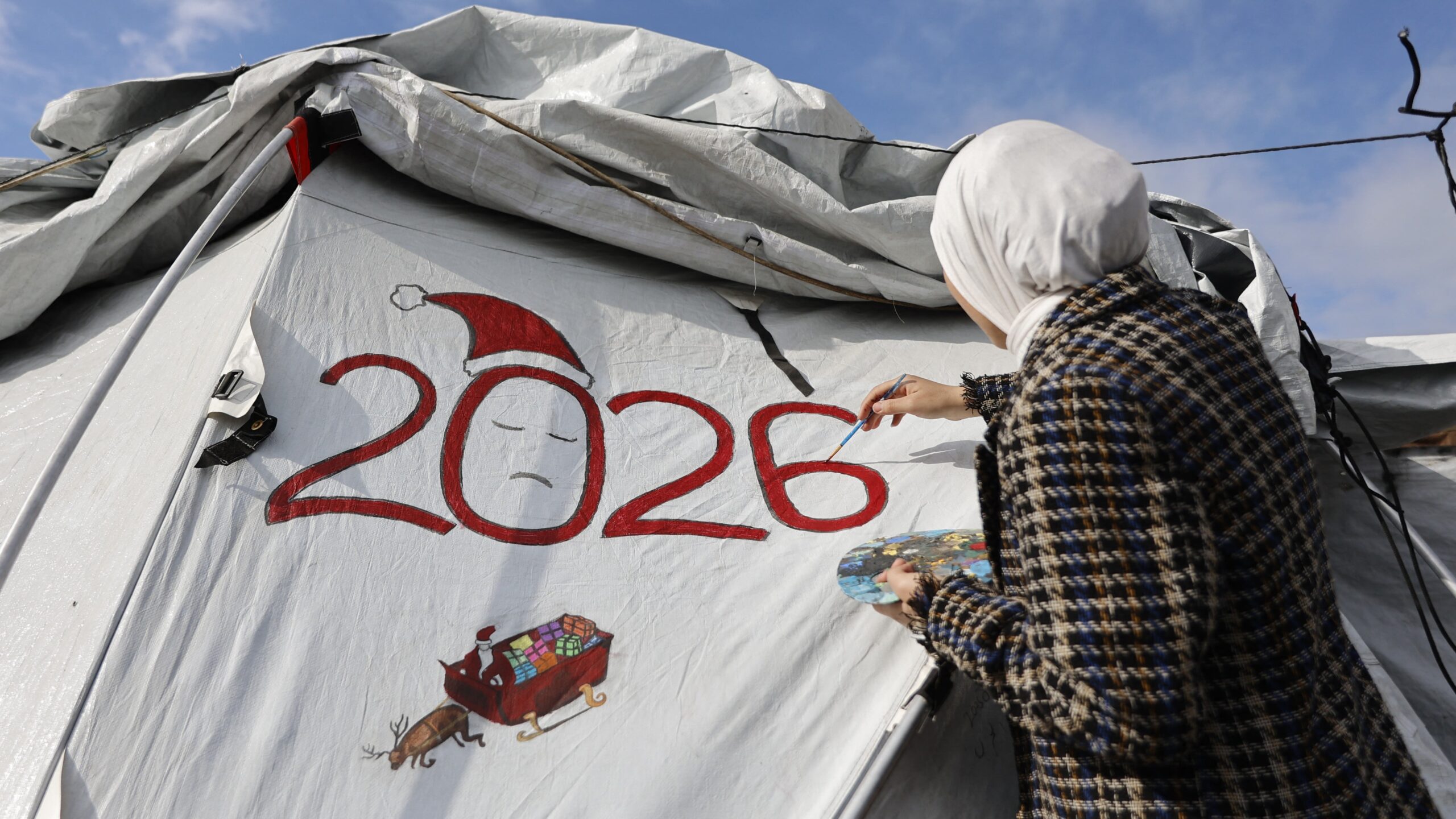
The new year in Gaza has been marred by escalating tragedy as a combination of severe winter conditions and ongoing Israeli military operations exacerbates an already dire humanitarian crisis. Civil defence authorities reported multiple fatalities, including a five-year-old boy, Saud Muhammad Abu al-Khair, and his 65-year-old grandmother, Amal Hamed Abu al-Khair, who perished in a tent fire caused by a cooking accident amplified by strong winds near Gaza City. In a separate incident, a young child, Malak Rami Ghneim, succumbed to hypothermia in central Gaza’s Nuseirat camp, highlighting the lethal consequences of inadequate shelter during plummeting temperatures.
These deaths occur against a backdrop of continued violence, with the Israeli military reported to have shot and killed a Palestinian man near Khan Younis, further violating a fragile ceasefire agreement that has been breached nearly a thousand times since its inception. The cumulative death toll from the two-year conflict now exceeds 71,271 Palestinians, with over 171,233 wounded.
Compounding the disaster, a coalition of international aid organizations, including Doctors Without Borders (MSF), faces an operational ban imposed by Israeli authorities. MSF issued a stark warning that this decision would sever hundreds of thousands of Palestinians from essential medical care, emphasizing that the decimated health system and destroyed infrastructure necessitate more humanitarian services, not less. Philippe Lazzarini, Commissioner-General of UNRWA, condemned the new restrictions as part of a ‘troubling pattern of disregard for international humanitarian law,’ setting a ‘dangerous precedent’ that undermines the principles of neutral and impartial aid.
The humanitarian response is further crippled by infrastructural collapse. Recent storms have damaged over 42,000 tents and makeshift shelters, displacing nearly a quarter of a million people. The Gaza-based Government Media Office accuses Israel of systematically evading its ceasefire obligations, allowing only approximately 20,000 aid trucks into the strip since October against an agreed-upon 48,000, a deficit it describes as instituting a ‘slow death’ for the population.
Diplomatic pressure is mounting, with a joint statement from eight nations—Egypt, Qatar, Jordan, Saudi Arabia, the UAE, Indonesia, Pakistan, and Turkey—demanding Israel grant aid groups ‘sustainable, predictable and unrestricted access.’ This echoes earlier calls from a group of ten major countries, reflecting growing international alarm over the restrictions on life-saving assistance during a critical winter emergency.