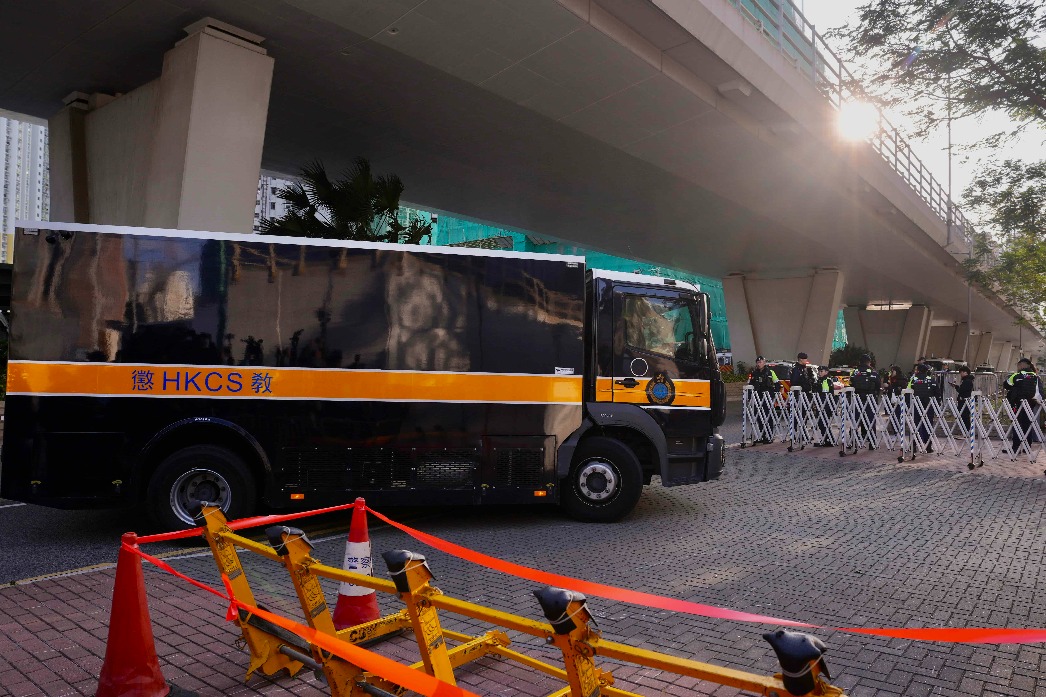
In a landmark ruling that has drawn international attention, Hong Kong’s High Court has sentenced media tycoon Jimmy Lai Chee-ying to 20 years imprisonment for national security offenses. The founder of the now-defunct Apple Daily newspaper was convicted on two counts of conspiracy to collude with foreign forces and one count of conspiracy to publish seditious materials.
The sentencing, delivered on February 9, 2026, represents one of the most significant applications of Hong Kong’s national security legislation since its implementation. Three companies associated with Lai—Apple Daily Ltd, Apple Daily Printing Ltd, and AD Internet Ltd—were each fined HK$3,004,500 (approximately $384,000). Eight additional defendants connected to the case received prison terms ranging from six years and nine months to ten years.
The Hong Kong and Macao Affairs Office of China’s State Council publicly endorsed the verdict through an article published under the pseudonym Gang Aoping on its official social media channels. The statement characterized the sentence as a ‘decisive and powerful demonstration’ that those challenging national security laws would face severe consequences.
Judicial authorities emphasized that the proceedings were conducted with complete transparency and adherence to legal protocols, with the defendant’s litigation rights fully protected throughout the process. The court maintained that the trial was carried out independently without external interference, reflecting the maturity of Hong Kong’s legal system.
The case has been widely viewed as a critical test of Hong Kong’s judicial autonomy under the national security framework implemented in 2020. Supporters of the verdict argue it represents necessary enforcement of laws protecting national stability, while critics have expressed concerns about implications for press freedom and political expression in the semi-autonomous region.