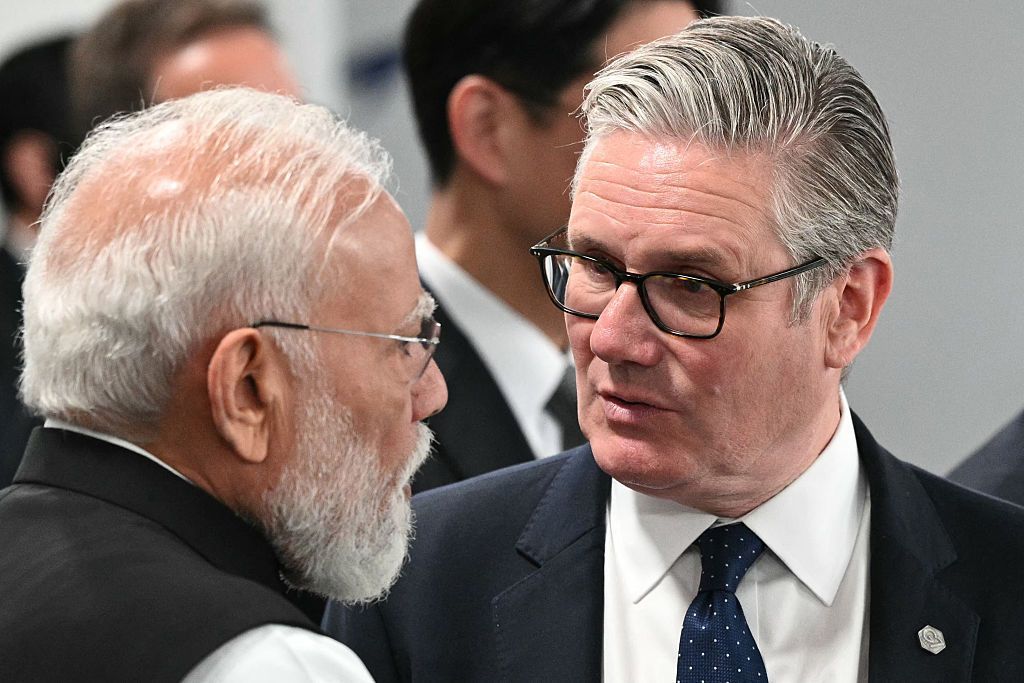
On Wednesday, the long-negotiated India-UK Free Trade Agreement (FTA) officially entered into force, opening a new chapter of bilateral economic ties between the world’s fifth and sixth largest economies. This landmark pact, which launched negotiations in 2022 and was formally signed earlier this month, marks the UK’s most economically substantial bilateral trade deal since its exit from the European Union. Under the terms of the agreement, 99% of Indian exports to the UK will see tariffs eliminated or reduced, while 90% of UK goods imported into India will gain preferential market access. Long-term projections estimate the deal will add £4.8 billion ($6.4 billion) to UK GDP annually and £5.1 billion to India’s annual output over time. For Indian labor-intensive industries that have long competed at a disadvantage in the UK market, the FTA is viewed as a game-changing opportunity to boost export volumes and expand market share. Textiles and home goods manufacturing giant Welspun Living, which supplies championship towels for Wimbledon and products to major UK high-street retailers including John Lewis and Tesco, has already ramped up preparations to capitalize on the new trade terms. Dipali Goenka, chief executive officer of Welspun Living, revealed that major British retail brands have recently visited India to map out multi-year business roadmaps – a level of forward planning previously reserved exclusively for the company’s US clients. As the agreement took effect, Goenka noted the firm’s London supply chain team was already meeting with stakeholders at John Lewis to align operations for the new tariff regime. Prior to the FTA, India faced a major competitive disadvantage compared to regional rivals Bangladesh and Pakistan, which benefited from duty-free access to the UK under the Developing Countries Trading Scheme, while Indian goods faced a 12% tariff. For home textiles alone, Pakistan holds 55% of the UK import market, while India’s share currently sits at just 6% to 7% – a gap Goenka says the FTA will finally allow Indian producers to close. She projects that Indian exports to the UK will now grow at double-digit rates, with textiles, garments, footwear, automotive goods and marine products all positioned to see strong business expansion. On the British side, the FTA delivers a major win for the country’s iconic Scotch whisky industry. India has cut the existing 150% tariff on Scotch whisky immediately to 75%, with the levy scheduled to phase down gradually to 40% over the next 10 years. Avneet Singh, director at New Delhi-based import firm Modern Drinks Pvt Ltd, described the tariff cut as far more than a minor adjustment, calling it a transformative shift for the sector. While the full impact on import volumes will not be clear for several months, Singh says importers have already completed extensive preparation to take advantage of the new rules from day one, including aligning documentation, verifying certificates of origin, updating compliance protocols, and coordinating with logistics partners to streamline clearance. For now, he says the industry has focused on careful operational preparation rather than rapid expansion, with larger growth expected once businesses realize tangible cost savings from the lower tariffs. Despite the widespread optimism across key sectors, trade analysts caution that the FTA’s overall impact is likely to be incremental rather than transformational, and a number of unresolved challenges could limit the deal’s benefits. Ajay Srivastava, a senior analyst at the Delhi-based Global Trade Research Initiative (GTRI), points out that more than half of India’s existing $13.4 billion in annual goods exports to the UK already entered the country duty-free under the most-favored-nation regime before the FTA took effect. On the import side, more than 45% of India’s $11.7 billion in annual imports from the UK consist of silver, which remains on India’s exclusion list and is not covered by the agreement. Srivastava says the real test of the FTA’s success will be whether goods that previously faced tariffs between 4% and 16% – including textiles, garments, footwear, carpets, automobiles, seafood and fresh produce – see rising export orders, higher volumes and improved profit margins. These impacts will likely take one to three years to become fully visible, he added. Unresolved structural issues also stand in the way of maximizing the deal’s benefits. The UK retains tariffs on steel imports above a fixed quota to protect domestic producers, creating a barrier for Indian steel exporters. Additionally, the UK’s upcoming Carbon Border Adjustment Mechanism (CBAM) could erode some of the gains from tariff elimination, Srivastava notes: even if tariffs fall to zero under the FTA, new carbon-related border charges will raise the effective cost of Indian exports in sectors covered by the policy, creating new trade frictions. Non-tariff barriers also remain a persistent challenge. Historically, India has had low utilization rates for preferential terms under FTAs, with only an estimated 20% to 30% of eligible exports actually claiming preferential tariff treatment, largely because small and medium-sized exporters lack awareness of the new rules and requirements. Many exporters will need targeted training to meet rules of origin standards and complete the required documentation to access lower tariffs, meaning tariff cuts will not automatically translate to higher exports without proactive outreach from government and industry groups, Srivastava explains. Even with these challenges, independent research firm CareEdge Research notes the FTA comes at a uniquely opportune moment for India’s ready-made garment sector. China currently holds the largest share of the UK’s ready-made garment import market, but it has been steadily losing ground due to rising labor costs and declining competitiveness. At the same time, major global brands are looking to diversify their sourcing away from Bangladesh, which has faced persistent socio-political instability in recent months. Against this backdrop, CareEdge projects India will double its share of the UK’s ready-made garment import market from 6% in 2024 to 12% in the near to medium term. Overall annual bilateral trade growth could also rise from the current 10% to 12% to 15% per year, with consumers in both countries benefiting from a broader range of products and improved pricing, the firm added.
From Wimbledon towels to Scotch: What India-UK trade deal could mean for shoppers