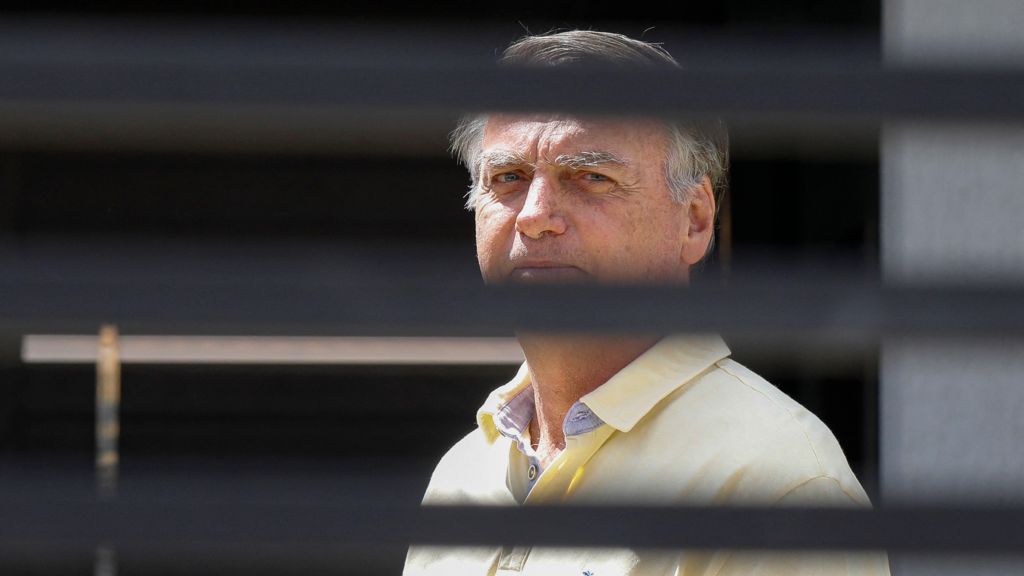
In a landmark ruling, Brazil’s Supreme Court has convicted former President Jair Bolsonaro of orchestrating a coup attempt, sentencing him to over 27 years in prison. The verdict marks a dramatic fall from grace for Bolsonaro, whose political career was once propelled by his outsider image and a shocking assassination attempt during his 2018 campaign. Despite his conviction, Bolsonaro remains a polarizing figure, with allies pushing for amnesty and his influence still looming over Brazil’s political landscape. Bolsonaro’s rise to power in 2018 was fueled by widespread disillusionment with Brazil’s political establishment, exacerbated by years of economic turmoil, corruption scandals, and the imprisonment of former President Luiz Inácio Lula da Silva. Bolsonaro capitalized on this discontent, rallying a coalition of conservative evangelicals, far-right militants, and frustrated middle-class voters. His presidency, marked by pro-business policies, environmental deregulation, and controversial handling of the COVID-19 pandemic, drew both domestic and international criticism. Bolsonaro’s relationship with Brazil’s Supreme Court was particularly contentious, culminating in his refusal to accept the 2022 election results, which saw Lula narrowly defeat him. In the aftermath, Bolsonaro’s supporters stormed government buildings in Brasília, echoing the U.S. Capitol attack. Investigations revealed plans to overturn the election and even assassinate Lula and Supreme Court Justice Alexandre de Moraes. Bolsonaro, now barred from public office until 2060, faces an uncertain future as his allies seek amnesty and potential pardons. The case underscores Brazil’s fragile democracy and the enduring divisions within its society.
From political outsider to a president like no other: Bolsonaro’s rise and fall