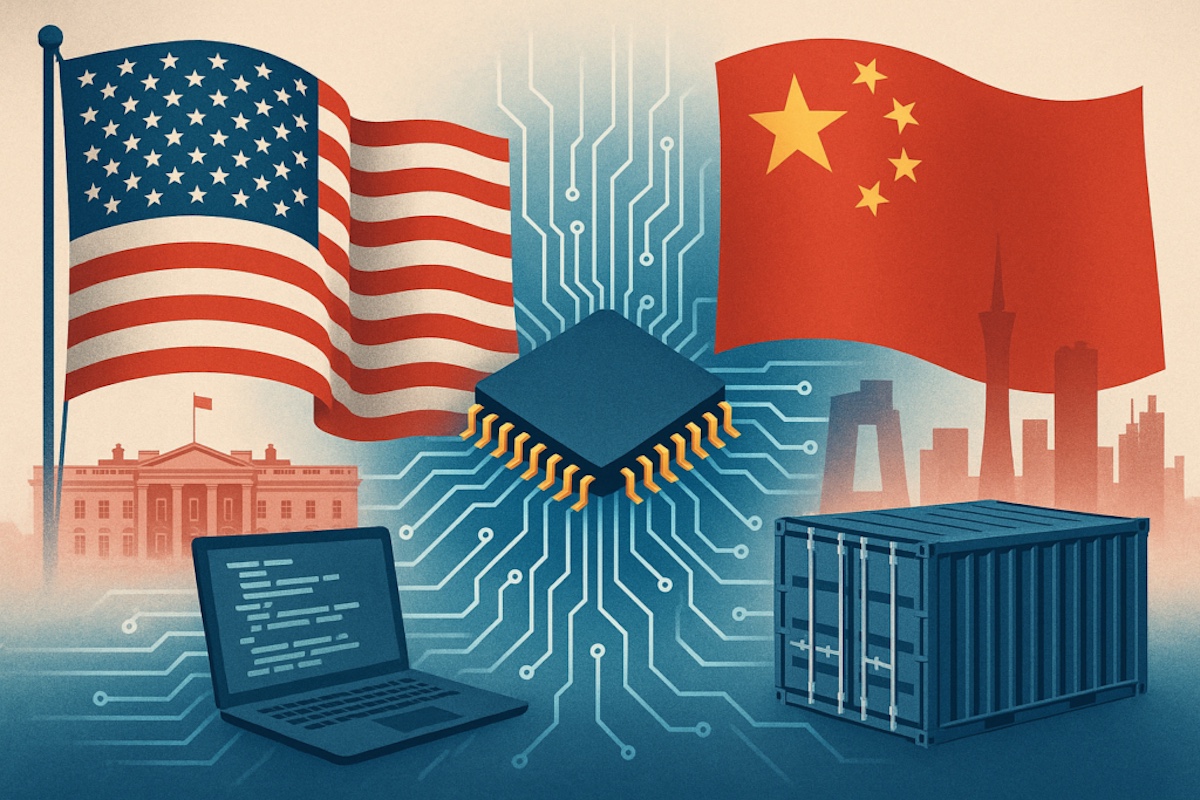
In 1925, power in Asia was visibly exerted through gunboats on rivers, foreign police patrolling Chinese streets, and tram boycotts that could be photographed. Fast forward to 2025, and power has become programmable—manifested through licenses that renew automatically, standards embedded in software, and compliance tracked via dashboards. This transformation marks the most significant shift over the past century. The battleground, once drawn on maps, is now fought through systems—supply chains, export lists, and audit trails. The Trump-Xi Busan meeting exemplified this change. It wasn’t about physical barricades but about levers that could be adjusted: export controls, time-bound licenses, refinery disclosures, precursor chemicals, and chip supplies. The meeting wasn’t a morality play of capitulation or defiance but a calculated reciprocity—each side offering reversible cooperation in exchange for time and predictability. Key chokepoints illustrate this logic. China refines the majority of rare earths essential for magnets, motors, and missiles, allowing it to control throughput as a form of escrow. South Korea, now a manufacturing democracy, hosts negotiations and holds practical leverage, a stark contrast to its role in 1925. The Netherlands’ licensing grip on advanced lithography tools creates predictable pulses of capability. Regional customs and port enforcement on fentanyl precursors can be targeted quietly to elicit movement elsewhere without grand declarations. This new paradigm requires calendars, counters, and credible follow-through rather than slogans. License renewals, minerals throughput, targeted port seizures, and customs dwell times serve as behavioral meters. If these indicators move in the right direction, the truce holds. If they stall, officials can reverse the levers without disrupting supply chains. Two practical implications emerge: first, treat interdependence as a tool, not a trap, by structuring market access, licensing, and standards as reversible and measurable sequences. Second, publish a minimal dashboard to anchor expectations. A one-page, monthly scoreboard on license renewals, minerals throughput, targeted seizures, and median dwell times would be more effective than numerous press conferences. The continuity with 1925 lies in the fact that mobilization still shapes outcomes—but today, it’s the mobilization of firms, insurers, and investors. Local nodes, such as a packaging line in Icheon or a refinery in Shandong, can alter the cost of escalation, much like a strike in Guangzhou once forced London and Tokyo to recalculate. Busan’s significance lies not in its language but in its quiet recoding of power in Asia as a sequence of programmable conditions. China can escrow minerals instead of weaponizing them outright. The United States can license chips in short cycles instead of banning them indefinitely. South Korea can pace advanced packaging and materials flows to maintain honesty. Regional authorities can apply surgical enforcement to signal seriousness without inviting spectacle. A century ago, power was made legible through street and port shutdowns by students and stevedores. Today, engineers, auditors, and logistics managers wield power by moving—or pausing—ones and zeros, parts, and permits. The stakes remain unchanged: who sets the terms of Asia’s future. Busan’s quiet dials—not its adjectives—will determine whether Asia becomes a supplicant, a spectator, or, finally, a system architect.