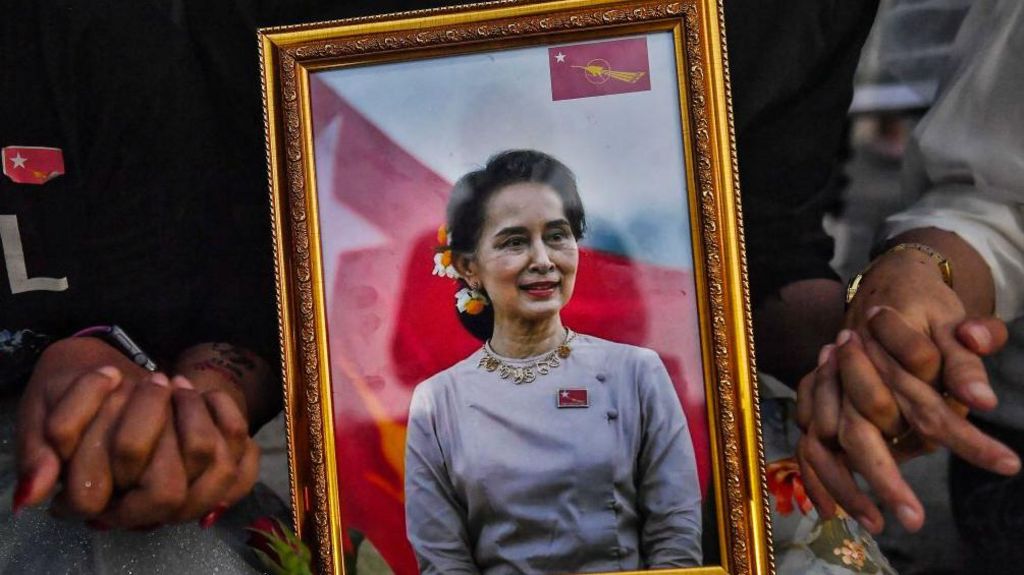
Myanmar’s political landscape remains overshadowed by the enduring legacy of Aung San Suu Kyi, who today marks a grim milestone of 20 cumulative years in detention. The Nobel laureate and former de facto leader has spent the past five years incarcerated since the military coup of February 2021 that overthrew her democratically elected government.
Currently held under complete isolation in a military prison in Nay Pyi Taw, Suu Kyi’s health and living conditions remain state secrets. Her son Kim Aris expressed grave concerns last month, stating ‘For all I know she could be dead,’ while junta spokespeople maintain she remains in good health. The democracy icon has been denied access to legal representation for at least two years, with communication limited exclusively to prison personnel.
Following the coup, Suu Kyi received cumulative prison sentences totaling 27 years on charges widely condemned by international observers as politically motivated fabrications. Despite her physical absence from public life, her symbolic presence persists throughout Myanmar. Faded posters of ‘The Lady’ or ‘Amay Su’ (Mother Su) still appear in discreet locations, despite systematic efforts by the military to erase her image.
The current crisis presents stark contrasts to the 2010 political transition when the military eventually released Suu Kyi after nearly 50 years of authoritarian rule. That period saw the military orchestrating a controlled democratic opening, believing their constitutional safeguards (guaranteeing 25% parliamentary seats for the military) and well-funded proxy party would contain Suu Kyi’s influence. They profoundly miscalculated both her popular appeal and the depth of public resentment against military rule.
In the 2015 elections, Suu Kyi’s National League for Democracy (NLD) achieved a landslide victory, reducing the military-backed USDP to just 6% of parliamentary seats. The 2020 election proved even more devastating for the military establishment, with the USDP securing merely 5% of seats despite widespread dissatisfaction with the NLD’s governance. This electoral rejection reportedly prompted Armed Forces Commander Min Aung Hlaing to launch the February 2021 coup, eliminating his presidential aspirations and Suu Kyi’s government simultaneously.
The current political context differs fundamentally from previous transitions. The junta’s brutal suppression of dissent has radicalized a new generation of resistance fighters who have abandoned Suu Kyi’s principle of non-violent protest. Additionally, her international reputation suffered significant damage after she defended Myanmar against genocide allegations at the International Court of Justice regarding military atrocities against Rohingya Muslims.
At 80 years old with uncertain health, questions emerge about Suu Kyi’s potential role in any future political settlement. Yet her symbolic value remains unmatched in Myanmar’s political landscape. As the country endures its fifth year of civil war with tens of thousands killed and homes destroyed, many observers believe her participation remains essential for any viable resolution to the nation’s protracted crisis.