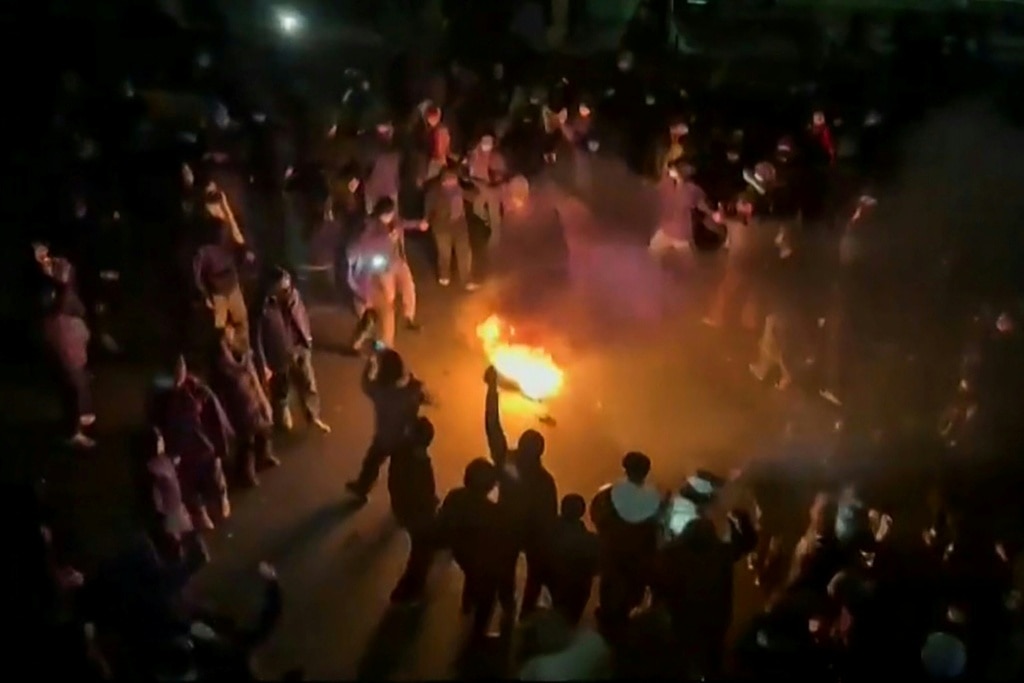
Iran’s capital witnessed renewed anti-government demonstrations Saturday night as a nationwide internet blackout entered its third day, raising international concerns about the severity of the regime’s crackdown on protesters. The protests, which began two weeks ago over economic grievances, have evolved into the most significant challenge to Iran’s theocratic government since the 2019 unrest, now featuring explicit calls for regime change.
Verified footage from Tehran’s northern districts showed protesters igniting fireworks, banging pots, and chanting slogans supporting the ousted monarchy. Additional unverified videos circulating on social media indicated similar demonstrations occurring across multiple cities including Mashhad, Tabriz, Qom, and Hamedan, where one individual waved the pre-revolutionary lion-and-sun flag—a potent symbol of opposition.
The digital blackout, described by internet monitor NetBlocks as a near-total connectivity shutdown since Thursday, has severely limited information flow, prompting rights organizations to warn of escalating violence. Amnesty International reported analyzing ‘distressing reports’ of security forces intensifying lethal measures against demonstrators, while Norway-based Iran Human Rights documented at least 51 fatalities, with actual numbers potentially higher based on hospital imagery from eastern Tehran.
International reactions have intensified, with U.S. President Donald Trump proclaiming on Truth Social that ‘Iran is looking at FREEDOM, perhaps like never before’ and offering American assistance. The New York Times reported that Trump had received briefings on potential military options, though no decisions have been made regarding intervention.
Iran’s leadership has responded with increasing defiance. Supreme Leader Ayatollah Ali Khamenei condemned protesters as ‘vandals’ doing America’s bidding during a Friday address, while the Iranian army issued statements vowing to ‘vigorously protect national interests’ against enemies seeking to ‘disrupt order and peace.’
European leaders have called for restraint, with EU Commission President Ursula von der Leyen expressing support for Iranian protesters and condemning the ‘violent repression’ by authorities. The situation remains volatile as citizens report inability to conduct basic communications or work, with one Tehran resident characterizing the internet shutdown as ‘the price to pay before the victory of the people.’