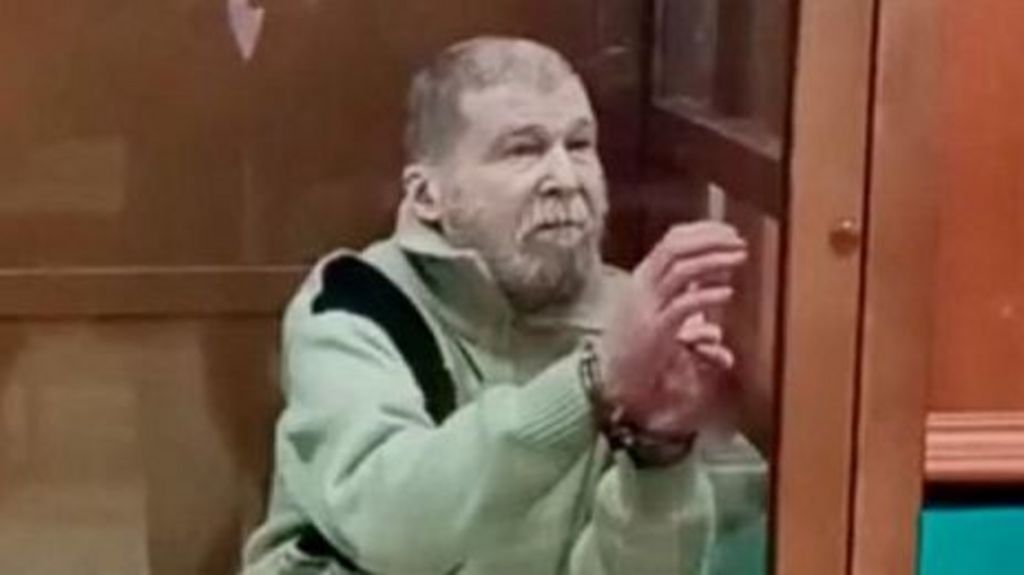
Two former Ukrainian prisoners who shared detention facilities with recently repatriated 74-year-old U.S. citizen Stephen Hubbard have come forward with firsthand accounts of systematic physical and psychological abuse they say was inflicted on the retired American English teacher by Russian correctional staff over his nearly five years of detention.
Hubbard was first seized by Russian forces in April 2022, shortly after occupying the eastern Ukrainian city of Izyum, where he had been residing with his local partner. Russian authorities alleged he served in Ukraine’s armed forces, convicted him following a trial in Moscow, and handed down a 82-month prison sentence before he was flown back to the United States earlier this week, released on the very day U.S. special envoy Steve Witkoff held closed-door talks with Russian President Vladimir Putin in St. Petersburg to discuss ongoing negotiations around the Ukraine conflict.
The two Ukrainian men who witnessed Hubbard’s mistreatment, former Ukrainian service member Ihor Shyshko and Ukrainian journalist Dmytro Khyliuk, first met the American detainee at the Novozybkov penal colony in Russia’s Bryansk region, near the Ukrainian border, in September 2022. Both confirmed Hubbard’s nationality immediately marked him as a specific target for guard harassment from the moment he arrived. Shyshko, who was present for years of Hubbard’s detention, described repeated unprovoked assaults: guards beat the 74-year-old on his back, legs and arms, subjected him to electric shocks from stun guns, deliberately denied him adequate food and urgent medical care, and held him in unheated cells through frigid Russian winters. He added that guards singled Hubbard out for extra cruelty because they labeled him a foreign mercenary, and orchestrated deliberate sexual humiliation and abuse staged for the entertainment of on-duty prison staff.
Detention conditions at the facilities were universally brutal, according to both men: rations were limited to thin porridge, stale bread and small portions of potatoes, cells had shattered windows that left detainees exposed to subzero temperatures, and guards regularly forced prisoners to hold painful stress positions or run for extended periods, even unleashing attack dogs to bite detainees’ limbs, leaving festering, untreated wounds. Shyshko recalled that Hubbard’s skin on his knees and feet became completely covered in rotting, infected lesions, and that he personally bandaged the frail, nearly immobile American after the prison’s medical staff refused to provide care. Both men also contracted scabies during their confinement.
Khyliuk, who was captured in the early weeks of Russia’s full-scale invasion as troops advanced on Kyiv, stated that prison administrators moved Hubbard to a hidden, unmarked section of the Pakino correctional facility shortly after the group was transferred there, specifically to hide his rapidly deteriorating health from a visiting delegation from the International Committee of the Red Cross. He criticized the global humanitarian body for only accessing pre-vetted parts of the facility and failing to push for full access to all detainees. In response, the ICRC issued an official statement noting that whenever it is granted access to conflict detention sites, its teams explicitly request to evaluate every single detainee, and that it continues active negotiations with all parties to the Ukraine conflict to expand full, unimpeded access to all prisoners of war and civilian detainees.
Khyliuk, who was repatriated to Ukraine in a prisoner exchange in August 2025, compared the entire Russian prison system for Ukrainian and foreign detainees to the brutal repressive apparatus of Soviet leader Joseph Stalin, describing the network as a purpose-built “torture machine” designed to break detainees through every form of physical and psychological abuse, from beatings and starvation to total isolation and complete bans on communicating with fellow prisoners.
The firsthand accounts from Shyshko and Khyliuk directly corroborate longstanding statements from Hubbard’s family that he had been subjected to sustained torture during his detention. The circumstances of his release have already sparked widespread debate: U.S. special envoy Witkoff publicly praised Putin as a “humanitarian” following the St. Petersburg meeting, a remark that drew widespread condemnation given Russia’s ongoing full-scale invasion of Ukraine and near-daily aerial and ground attacks on civilian infrastructure across the country. U.S. President Donald Trump later stated he had personally requested Hubbard’s release from Putin during a direct phone call one week prior to the prisoner’s return. Khyliuk criticized the timing of the release as “shameful PR” for the Trump administration, which he argued was leveraging the American’s freedom to boost flagging support in upcoming U.S. congressional elections. Shyshko, meanwhile, expressed cautious optimism that one day all guards and officials responsible for the abuse he witnessed will face formal legal accountability, stating firmly that “Evil must be punished, and so it will be.”
Freed US citizen was tortured in Russian jail, former Ukrainian prisoners say