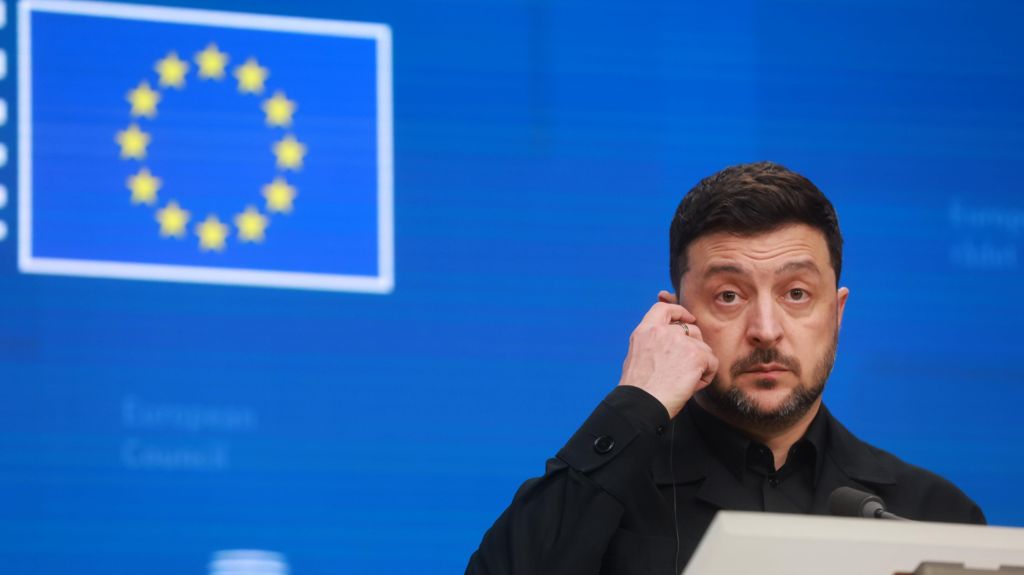
In a marathon 17-hour negotiation session marked by intense deliberations, European Union leaders reached a landmark agreement in the early hours of Friday to provide Ukraine with €90 billion in zero-interest loans. This financial package, designed to sustain Ukraine’s economy through the next two years, comes at a critical juncture as American military support wavers under the Trump administration.
Ukrainian President Volodymyr Zelensky had previously emphasized the existential necessity of these funds, warning EU leadership that without immediate financial assistance, Ukraine would lack the resources to compensate military personnel or procure essential weaponry against Russian aggression.
The loan mechanism will be backed by the EU’s collective budget, though the agreement revealed significant fractures within the bloc. Hungary, Slovakia, and the Czech Republic only consented to the measure—which required unanimous approval—after securing individual exemptions from direct financial contributions. This development underscores the deepening geopolitical schisms between nations maintaining closer Kremlin ties and those like Poland and the Baltic states, which perceive Ukraine’s defense as fundamental to European security.
Polish Prime Minister Donald Tusk framed the decision in stark terms during the summit’s outset, declaring that European leaders faced a choice between ‘financial commitment today or bloodshed tomorrow’—a statement he clarified pertained to Europe’s own security imperative rather than Ukraine’s alone.
The newly approved joint-loan arrangement supersedes a previously contested proposal to utilize €210 billion in frozen Russian assets held within the EU, predominantly in Belgium. While Kyiv had advocated for this approach as morally justified compensation for Russia’s devastation, multiple member states expressed concerns about potential legal repercussions and damage to the eurozone’s reputation as a secure repository for global assets.
EU officials indicated Friday that repurposing frozen Russian assets to repay the Ukrainian loan remains a future possibility, contingent upon the establishment of a formal peace agreement. Meanwhile, Brussels estimates Ukraine will require an additional €45 billion for 2026-2027, potentially sourced from non-EU allies including the UK, Japan, and Canada. The immediate financial stabilization also enables Kyiv to pursue lending opportunities through international financial institutions like the IMF.