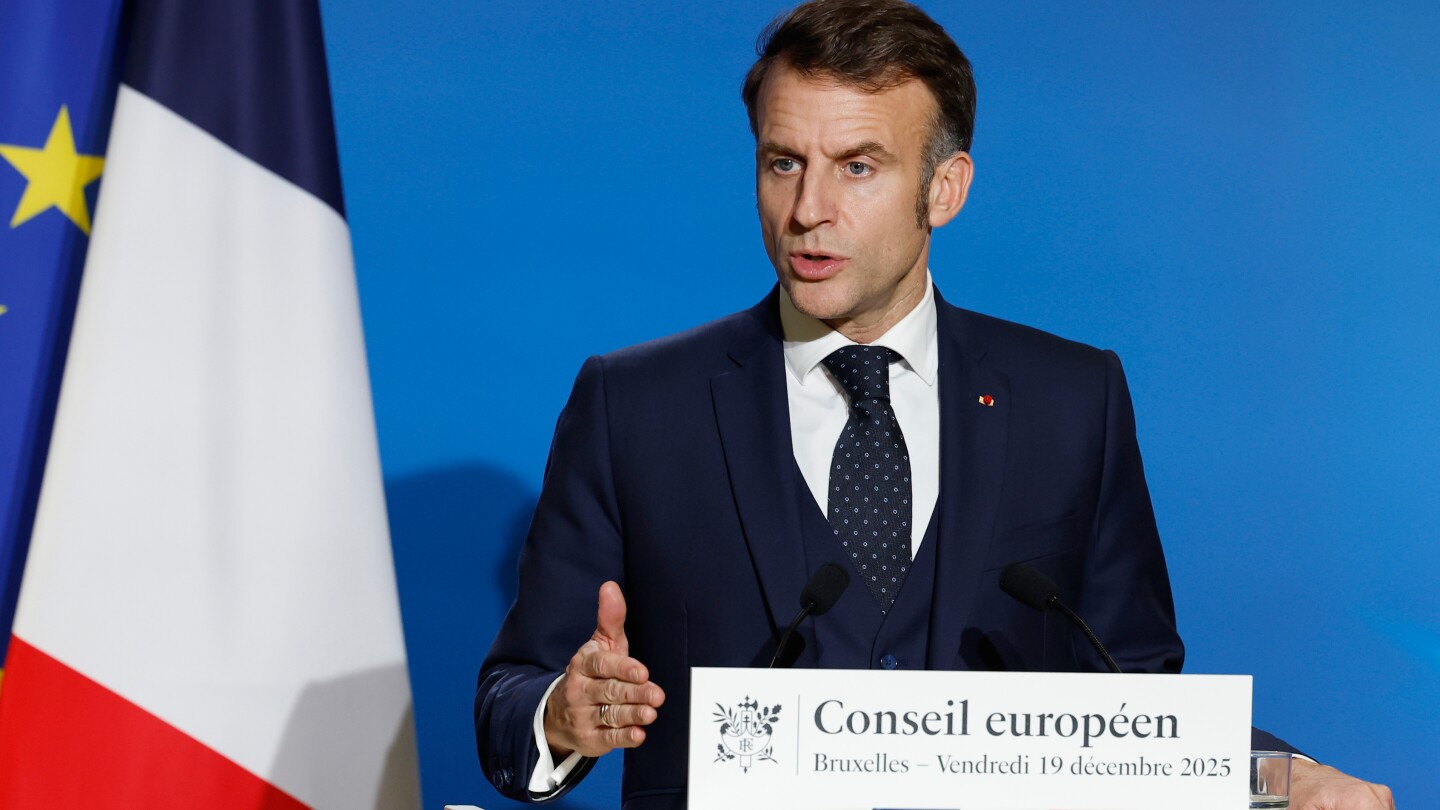
French President Emmanuel Macron has unveiled ambitious plans for a next-generation nuclear aircraft carrier during his address to French troops stationed in Abu Dhabi on Sunday. The monumental defense project represents France’s strategic response to evolving global security challenges and reinforces its commitment to maritime superiority.
The new vessel, scheduled for completion by 2038, will serve as the replacement for France’s current flagship, the Charles de Gaulle aircraft carrier that entered service in 2001. With specifications showcasing significant technological advancement, the future carrier will displace approximately 78,000 tons and extend 310 meters (1,017 feet) in length—marking a substantial increase from the Charles de Gaulle’s 42,000-ton displacement and 261-meter frame.
While the French carrier will remain smaller than the United States’ USS Gerald Ford—the world’s largest warship at over 100,000 tons—it will maintain France’s distinctive nuclear propulsion capability and deploy advanced Rafale M fighter jets. The vessel is designed to accommodate up to 30 aircraft and support a crew of 2,000 personnel, enabling extended operational deployments with enhanced combat readiness.
President Macron characterized the initiative as ‘the display of our nation’s power in the service of freedom on the seas,’ emphasizing that ‘in an age of predators, we must be strong in order to be feared, and especially strong at sea.’ The project aligns with France’s broader military modernization strategy, which includes increasing defense spending to 64 billion euros by 2027—doubling the budget from Macron’s initial term in 2017.
The defense ministry confirms the carrier will provide rapid response capabilities for heavily armed, long-range missions with minimal preparation time. Economically, the program is expected to benefit hundreds of suppliers, predominantly small- and medium-sized enterprises, with Macron personally committing to oversee industrial partnerships during a scheduled shipyard visit in February.
Financial projections from former Defense Minister Sébastien Lecornu (now Prime Minister) estimated the project cost at approximately 10 billion euros ($11.7 billion). This investment occurs alongside Macron’s announcement of an additional 6.5 billion euros ($7.6 billion) in military expenditures over the next two years, reinforcing France’s position as the European Union’s second-largest military force behind Poland.