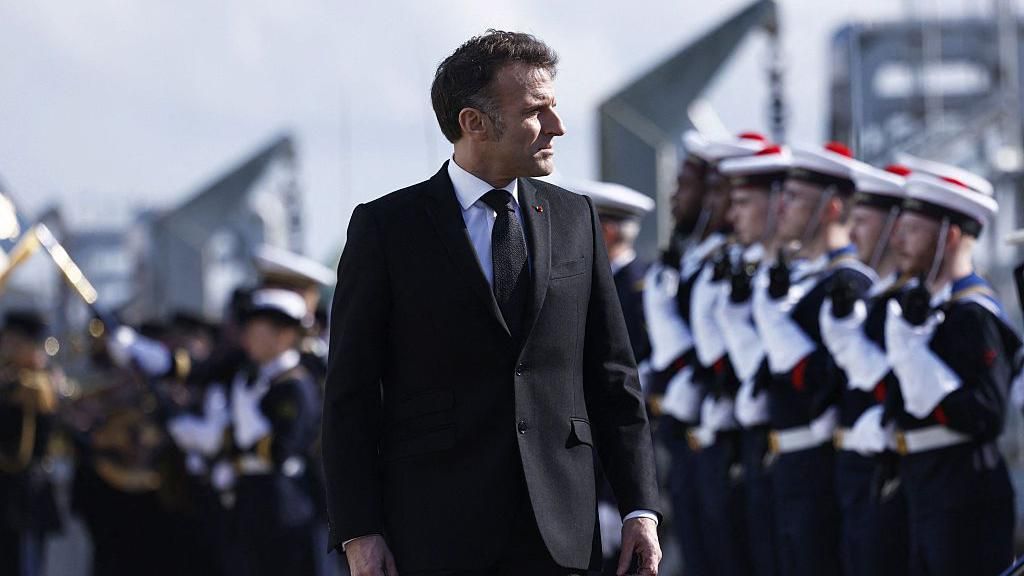
In a historic shift in European defense policy, French President Emmanuel Macron has announced a significant expansion of France’s nuclear capabilities alongside the creation of a new multinational deterrence framework. Speaking before naval officers at the Ile Longue nuclear submarine base in Brittany, Macron declared that France will increase its nuclear warhead count from approximately 300 and launch a new ballistic missile submarine named “The Invincible” by 2036.
The strategic overhaul, termed “advanced deterrence,” marks the most substantial evolution in French nuclear doctrine since Charles de Gaulle established the force de frappe in the 1960s. Macron justified these measures as necessary responses to an increasingly volatile geopolitical landscape, stating that “the next 50 years will be an era of nuclear weapons.
Eight European nations—Germany, Poland, the Netherlands, Belgium, Greece, Sweden, Denmark, and the United Kingdom—have agreed to participate in this enhanced security arrangement. The collaboration will include joint exercises with France’s Strategic Air Forces (FAS), potential hosting of French nuclear bomber bases, and development of complementary defense systems including space-based alert mechanisms, advanced air defense networks, and long-range missile technology.
Polish Prime Minister Donald Tusk endorsed the initiative on social media, stating: “We are arming up together with our friends so that our enemies will never dare to attack us.”
Despite this multilateral approach, Macron emphasized that France would retain exclusive control over nuclear deployment decisions. The doctrine maintains strategic ambiguity regarding what constitutes an attack on French “vital interests” that might trigger a nuclear response, though officials acknowledged these interests now explicitly extend beyond national borders.
Concurrently, France and Germany announced strengthened cooperation in nuclear deterrence, including German participation in French nuclear exercises. Both nations stressed this collaboration would complement rather than replace NATO’s existing nuclear deterrent framework.