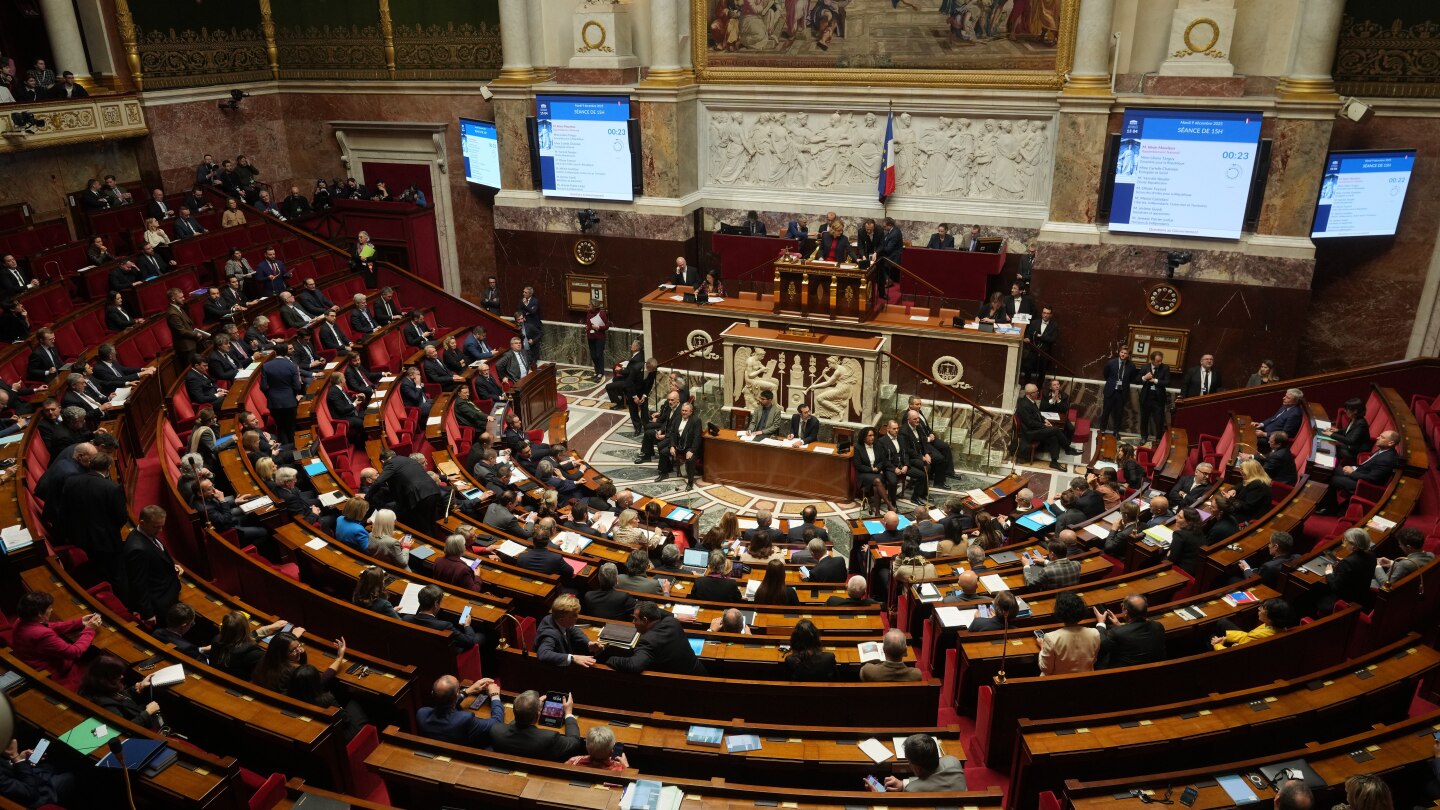
The French parliament is engaged in urgent deliberations over emergency legislation designed to prevent a complete government shutdown, following the collapse of negotiations concerning the 2026 national budget. With merely days remaining before the new fiscal year commences, President Emmanuel Macron’s administration has proposed a stopgap measure to maintain essential public services and governmental operations.
This provisional legislation, presented during a late Monday Cabinet meeting, seeks to guarantee the uninterrupted functioning of critical state services. Specifically, it would authorize continued tax collection and distribution of funds to local authorities based on 2025 budget allocations, thereby preventing administrative paralysis.
The National Assembly, France’s dominant lower parliamentary chamber, has introduced several amendments to the draft law. Despite profound ideological divisions among the three primary political factions—Marine Le Pen’s far-right National Rally, left-wing opposition parties, and Macron’s centrist minority government—the bill is anticipated to secure passage in both legislative houses on Tuesday.
Finance Minister Roland Lescure emphasized the urgency of the situation during a television interview, stating, “We require a definitive budget promptly to facilitate progress. The extended duration of temporary measures directly correlates with increased operational costs.”
This emergency measure merely postpones the underlying budgetary confrontation. The Macron administration faces the formidable challenge of constructing a viable 2026 budget while addressing France’s substantial public deficit, which the government aims to reduce to 5% of GDP. This fiscal tightening occurs against a backdrop of political instability triggered by Macron’s contentious decision to call snap elections last year, which eroded investor confidence in the French economy.
France’s characteristically high public expenditure—driven by comprehensive social welfare programs, healthcare systems, and education—combined with an insufficient tax revenue base, continues to present structural fiscal challenges. Prime Minister Sebastien Lecornu, who resigned and was subsequently reappointed this autumn, is scheduled to deliver a public address regarding the budgetary situation later Tuesday.