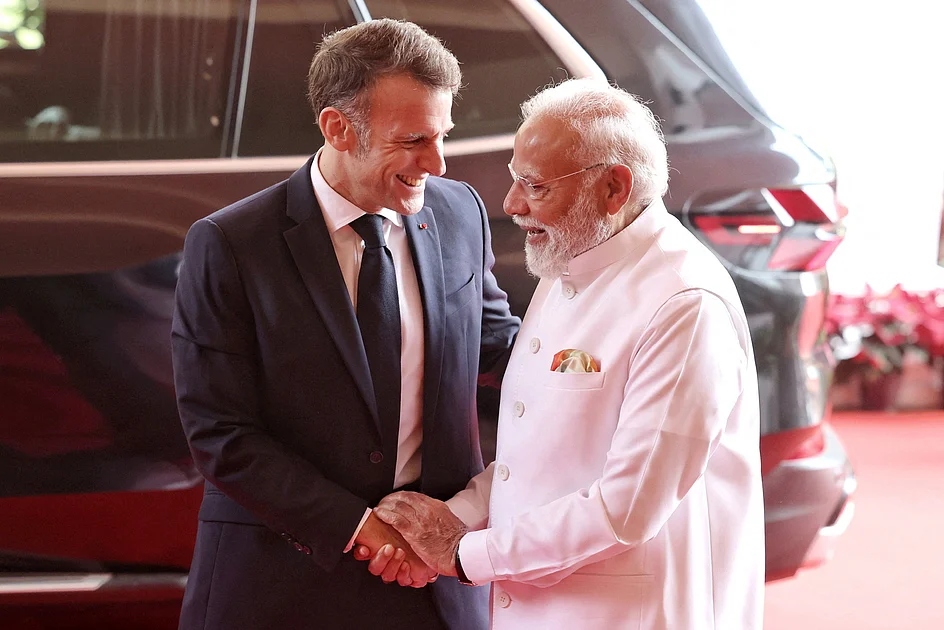
French President Emmanuel Macron commenced a pivotal three-day state visit to India on Tuesday, marking his fourth diplomatic engagement with Prime Minister Narendra Modi since 2017. The leaders convened in Mumbai to inaugurate a new chapter in Franco-Indian relations, emphasizing their nations’ collaborative role in maintaining global stability amid international turbulence.
The centerpiece of bilateral discussions involves a monumental defense agreement for 114 Rafale fighter jets, potentially valued at approximately €30 billion ($35 billion). French officials accompanying Macron expressed strong confidence in finalizing this historic contract, which would represent the largest defense procurement in India’s history. Notably, the majority of these advanced aircraft would be manufactured domestically through strategic industrial partnerships.
Beyond defense collaboration, both leaders inaugurated India’s inaugural helicopter final assembly facility—a joint venture between Tata Group and Airbus located in Karnataka’s tech corridor near Bengaluru. This facility will produce the H125 single-engine helicopter, Airbus’s bestselling model in its category.
Macron’s itinerary includes participation in New Delhi’s artificial intelligence summit later this week, underscoring the technological dimension of this strengthened partnership. The visit follows January’s landmark EU-India free trade agreement and occurs against the backdrop of shifting global economic policies and regional geopolitical dynamics.
Bilateral trade currently stands at $18 billion annually, heavily driven by aerospace and defense sectors, while French foreign direct investment in India approaches $15 billion. The leaders’ personal rapport, described by analysts as demonstrating ‘excellent chemistry,’ has facilitated this remarkable acceleration in strategic cooperation.
While celebrating technological and defense advancements, Macron did address the sensitive issue of Ukraine, urging Indian support for protecting civilian infrastructure—a delicate matter given India’s continued energy purchases from Russia since the 2022 invasion.