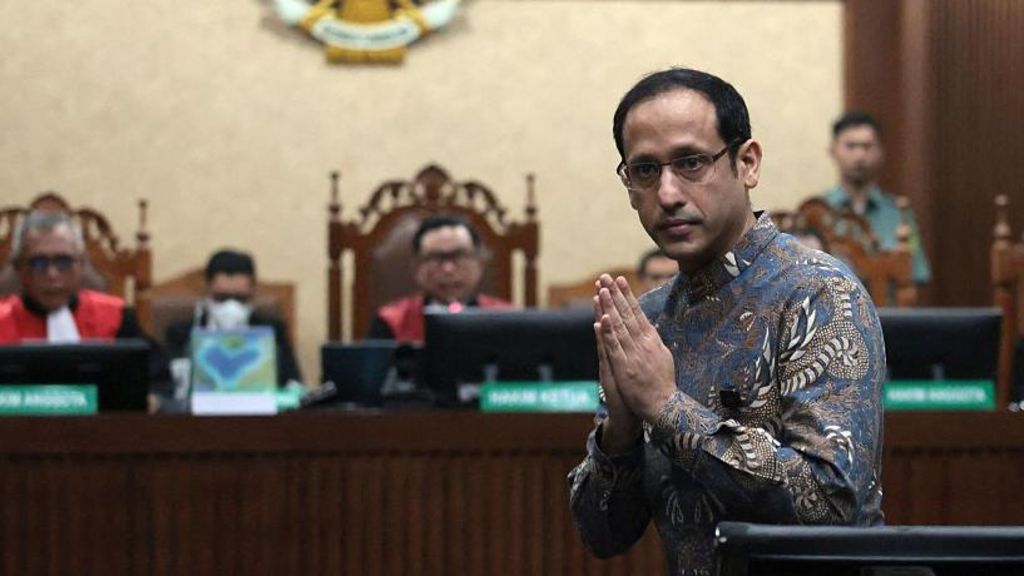
In a high-profile verdict that has sent shockwaves through Indonesia’s political and tech sectors, former Indonesian Education Minister and celebrated tech entrepreneur Nadiem Makarim has been sentenced to 10 years in prison on corruption charges connected to a national school laptop procurement program. The 41-year-old co-founder of Southeast Asian super-app Gojek, who left his private sector role to enter government in 2019 under former President Joko Widodo, has repeatedly maintained his innocence and announced plans to appeal the ruling immediately after the verdict was delivered.
The case revolves around the Education Ministry’s 2021–2022 procurement of Chromebook laptops for schools across the archipelago. Prosecutors argue that Nadiem deliberately rigged the tender process to favor Google, a major Gojek investor, crafting bidding specifications that exclusively matched Google’s Chrome operating system. They allege the purchase went forward despite a 2018 internal ministry assessment confirming Chromebooks, which require continuous internet connectivity, are unsuitable for Indonesia’s many remote regions with limited or no fixed internet access. Prosecutors further claim Nadiem’s actions siphoned $45 million in personal illicit gains, caused $125 million in total state losses, and undermined the country’s public education system, violating Indonesia’s national anti-corruption commitments.
Alongside his 10-year prison term, the Jakarta court ordered Nadiem to pay 809 billion rupiah ($45 million) in restitution, equal to the amount he was found guilty of wrongfully acquiring. An additional 1 billion rupiah fine was also imposed. If the restitution is not paid, Nadiem will face an extra five years behind bars; non-payment of the fine will add another 190 days to his sentence. Nadiem has confirmed he is unable to meet the restitution requirement, meaning his effective sentence will reach 15 years if the conviction is upheld on appeal.
Nadiem has rejected all allegations outright. He asserts that the 809 billion rupiah in question never left Gojek’s corporate accounts, and he never personally accessed or profited from the funds. He also denies any connection between Google’s investment in Gojek and the procurement decision, noting that the Chromebook purchase actually reduced overall costs for the Indonesian government compared to competing alternatives.
Hundreds of Nadiem’s supporters, including dozens of Gojek ride-hailing drivers, gathered outside the Jakarta courthouse ahead of the verdict to voice their backing. Many carried white banners reading “We are with Nadiem” and “Free Nadiem,” and when Nadiem arrived to the court, he greeted the crowd, breaking down in emotion when embraced by a long-time Gojek driver. Inside the building, supporters watched a live stream of the proceedings in an adjacent room; when the guilty verdict and sentence were read, the crowd outside erupted in loud boos, while Nadiem was visibly seen crying in the courtroom.
Speaking to reporters after the ruling, Nadiem struck a somber note. “I do not know what words I can use to explain how I feel today,” he said. “I do not know whom I should ask for help, or where I can seek justice. My only hope is in the Indonesian people, in those who still believe that truth still exists in this country.” His family has stood firmly by him throughout the 10-month legal process. “It’s been difficult for almost 10 months. As a family, we have continued to pray, fight, and stand by him throughout this time,” his mother-in-law Sania Makki told the BBC.
The conviction has sparked fierce debate and controversy across Indonesia, with many critics and analysts arguing the case is politically motivated. Critics claim Nadiem is a target of a broader crackdown on political opponents of current President Prabowo Subianto’s administration, with anti-corruption frameworks being weaponized to target dissent. “The eradication of corruption is being used to attack those who are not liked, or those who are critical of people in power,” prominent Indonesian lawyer and activist Todung Mulya Lubis told the BBC.
Many observers also warn the verdict could have a chilling effect on young Indonesian professionals and entrepreneurs considering entering public service. For many young Indonesians, Nadiem is a symbol of successful private-sector innovation turned public good, so the conviction has stoked widespread fear that outsiders who join government to pursue reform will be targeted for criminalization. “There’s a feeling of fear. It’s like, so if someone that’s from outside of the government tries to work with the government or tries to do good in their own field in this country, am I going to get criminalised?” said artist and political activist Andovi da Lopez. “I can’t speak for everybody, but in my circle, there’s this fear and people just say, ‘just don’t work with the government, just don’t.’ And that fear is real.”
Usman Hamid, executive director of Amnesty International Indonesia, noted that Nadiem is widely viewed by young Indonesians as a reformer trapped in a broken political system. “To young Indonesians, Nadiem is seen as someone who ‘wants to bring change but is trapped in a government system that has systemic problems,’” Hamid said. “Maybe [Nadiem] was perceived as forcing [the government] to innovate policies, and maybe he wanted to do it too fast.”
Many have also drawn parallels between Nadiem’s case and that of two other political allies of former President Joko Widodo: ex-trade minister Tom Lembong and ruling party official Hasto Kristiyanto. Both men were convicted of corruption in recent cases, but were pardoned by current President Prabowo as part of a stated policy of national reconciliation, raising questions about unequal application of justice. The verdict arrives amid growing public unrest in Indonesia, driven by soaring cost of living and a sharp depreciation of the rupiah. Large-scale protests against Prabowo’s economic policies have spread across the country in recent weeks, with activists arguing government policies are pushing the nation toward economic crisis.