Two months have passed since the outbreak of open conflict between the United States, Israel, and Iran, and the battlefield dynamic has shifted dramatically from what initial projections predicted. While the US-Israeli bloc scored swift, high-profile gains in the opening weeks of hostilities, the unexpected resilience of Iran’s governing institutions and military has robbed the alliance of its early strategic initiative, leaving it reacting to developments rather than shaping the war’s outcome on its own terms.
Analysts point to a deep, foundational divide in the core strategic objectives of Washington and Tel Aviv as the primary root of this shifted momentum. This conflict, launched under the Trump administration, has already exposed a fundamental contradiction with decades of US policy in the Persian Gulf, rooted in the 1980 Carter Doctrine.
Unveiled by then-President Jimmy Carter in his 1980 State of the Union Address, the doctrine was crafted in response to two seismic regional shifts: the 1979 Iranian Revolution and the Soviet Union’s invasion of Afghanistan. Carter made clear that any foreign attempt to seize control of the Persian Gulf, a region central to global energy security, would be viewed as an attack on core US interests and repelled by any means necessary, including full military force.
To operationalize this doctrine, the US permanently stationed its Fifth Fleet in the Persian Gulf, imposed sweeping economic sanctions on Iran and the Soviet Union, and steadily expanded its military footprint across the region. Since 2001 alone, the number of US military bases in the Gulf has grown exponentially, with roughly 50,000 American military personnel currently deployed across the region. Even with this overwhelming military dominance, every US administration for decades acknowledged that a full-scale war to overthrow the Iranian government would backfire. A direct conflict, policymakers recognized, would risk triggering the exact outcome the Carter Doctrine was designed to prevent: Iran could block access to the Strait of Hormuz, the world’s most critical chokepoint for global oil shipments, effectively ceding control of the Persian Gulf’s energy supply chains to hostile forces. For generations, Washington thus accepted a tentative status quo with Tehran.
For Israel, however, the strategic calculus of conflict with Iran could not be more different. Iran is the leading state backer of the so-called Axis of Resistance, a loosely aligned coalition of anti-Western and anti-Israeli groups including Syria, Hezbollah, the Houthis, and Hamas. The coalition’s core stated goals are to oppose US regional hegemony, end Israeli statehood, and support Palestinian resistance to Israeli occupation in the Palestinian territories. While the coalition has never possessed the military capacity to deliver on its most ambitious goals, Iran has long provided financing, training, and arms to Hamas and Hezbollah to carry out resistance operations against Israel.
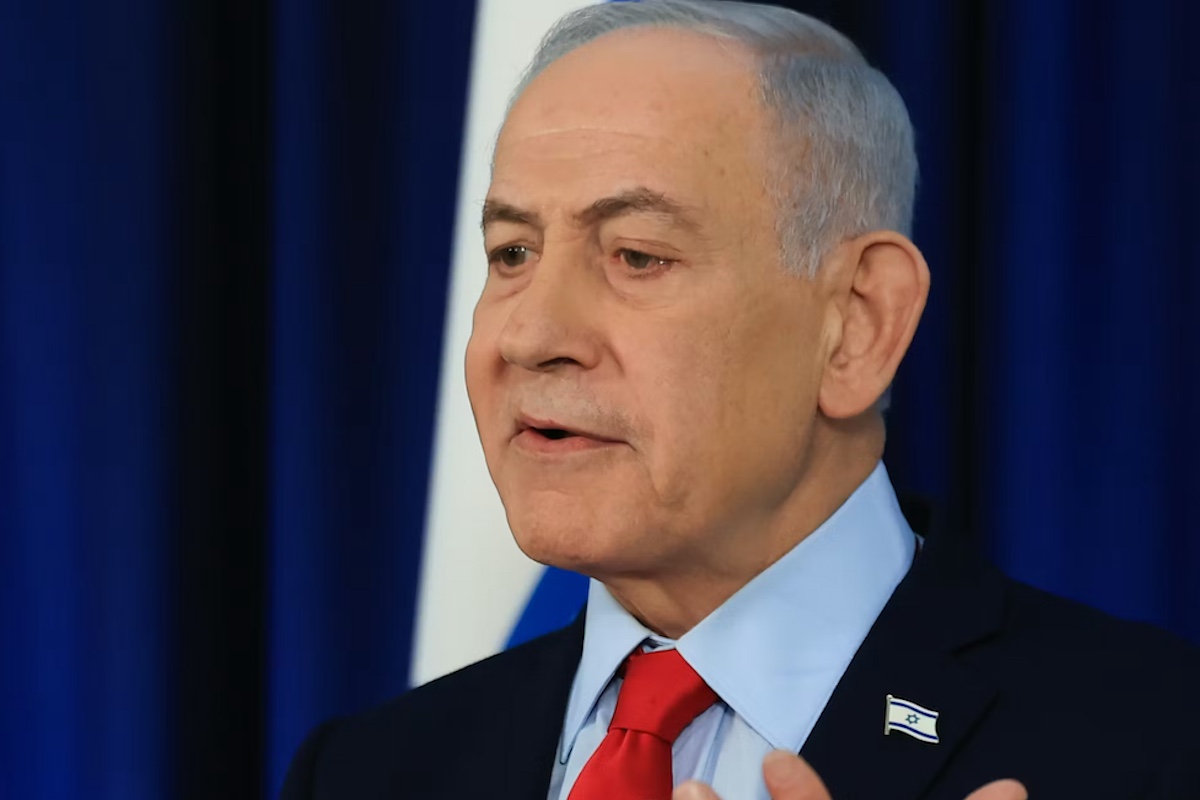
For decades, Washington successfully pressured Israel to avoid large-scale sustained military action against Axis of Resistance members, a compromise that preserved the Persian Gulf status quo and kept global energy supplies flowing. That arrangement collapsed entirely after the October 2023 Hamas-led attacks on Israel, which removed US restrictions on Israeli military escalation. In response to the attacks, Israeli Prime Minister Benjamin Netanyahu’s government launched its long-standing “mowing the grass” strategy – a doctrine that calls for degrading an adversary’s capabilities by eliminating frontline leadership, destroying military, political, and economic infrastructure, and establishing a new deterrence balance.
Israel first applied this strategy against Hamas in Gaza and Hezbollah in southern Lebanon, advancing into southern Lebanese territory to establish a new buffer zone that would strip Hezbollah of its historic strongholds along the Israeli border. The campaign has come at a devastating humanitarian cost: hundreds of Lebanese civilians have been killed, and widespread systematic destruction of civilian infrastructure has been documented. Israel has now extended this same destruction-focused strategy to Iran itself, carrying out a campaign of targeted assassinations of senior political and military leaders and striking infrastructure across the country, including civilian sites.
Beyond the military dimension, the conflict has delivered major immediate political benefits for Netanyahu, who faces national elections scheduled for October 27. The 2023 Hamas attacks were a major political blow to the prime minister, who had built his decades-long political brand as Israel’s unshakable security guarantor. Now, on the campaign trail, Netanyahu can point to gains against Hamas, Hezbollah, and Iran to rebuild his credibility. A victory at the polls would not only allow him to retain the prime ministership – it would also put him in a position to secure a pardon from President Isaac Herzog and end his years-long ongoing corruption trial. For Netanyahu, the incentives to continue the conflict are clear, but the short-term political gains carry steep long-term costs.
First, public support for Netanyahu’s government remains contingent on delivering on his maximalist goals: the total destruction of Hamas and Hezbollah, and the collapse of Iran’s current ruling regime. Early 2025 polling shows that support for Netanyahu’s right-wing Likud Party plummeted immediately when news of a potential ceasefire with Hamas broke. If the Trump administration moves forward with a ceasefire agreement that Iran demands includes a cessation of hostilities against Hezbollah, Netanyahu could see his polling lead evaporate overnight.
Second, international public support for Israel has fallen to historic lows in the years following the 2023 outbreak of hostilities. Recent polling shows that 65% of Democratic voters and 41% of independent voters in the US now sympathize with Palestinians, and even among Republican supporters, backing for Israel is at its lowest point since 2004. The trend is identical across Europe, where 2025 polling records historic low support for Israeli policy. This shift carries major material risks for Israel: the country relies on $3.8 billion in annual US military aid and unrestricted access to American weapons and munitions to sustain its military campaigns. Without this support, Israel would not be able to carry out offensive operations without major economic consequences, and would likely face a severe recession. Given President Trump’s well-documented history of unpredictable policy shifts, this support cannot be counted on as a given.
Third, Netanyahu and multiple senior members of his cabinet are currently under investigation by the International Criminal Court (ICC) on charges of genocide, war crimes, and crimes against humanity stemming from Israeli military conduct in the Gaza campaign. While the Israeli government has repeatedly denied any wrongdoing, an adverse ruling from the court would further erode international support and leave Israel more diplomatically isolated than ever.
Finally, even after two months of intense military pressure that has significantly weakened Iran, Hamas, and Hezbollah, the mere survival of these groups against a far more militarily powerful alliance is already being framed as a political victory for their cause. Worse for Israel, the decimation of older leadership has cleared the way for younger, more hardline, more emboldened leaders to take control across the Axis of Resistance. That makes the eventual reemergence of a more militant, revenge-focused coalition far more likely.
The paradox of Netanyahu’s campaign is that instead of strengthening Israel’s long-term security, it has left the country facing a far more complex and dangerous security environment. With backing from traditional allies increasingly uncertain, Israel may end up far more vulnerable to future attacks than it was before the conflict began.