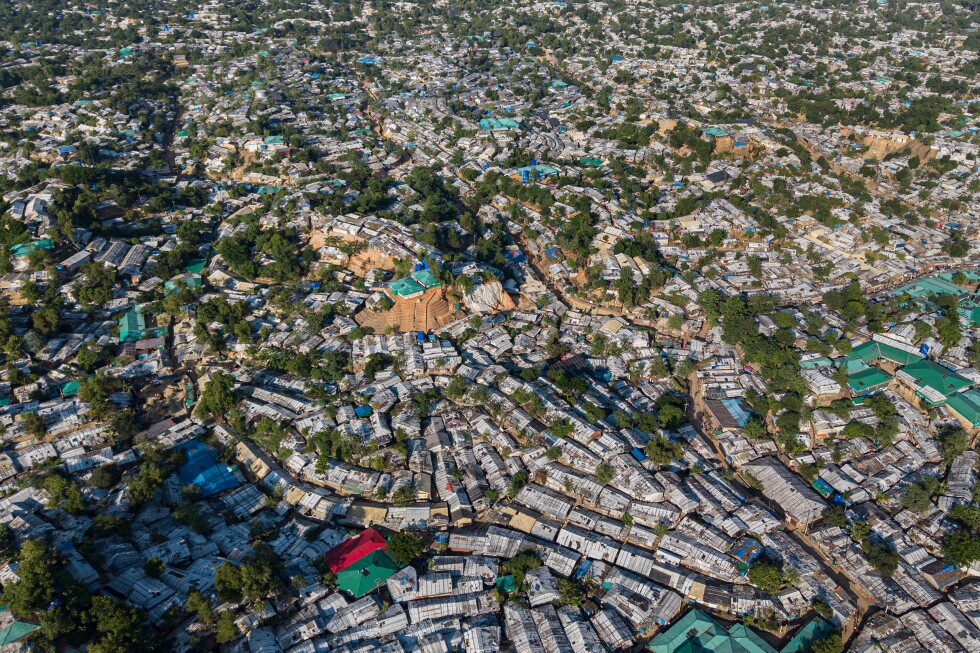
More than seven years after hundreds of thousands of Rohingya ethnic minorities fled genocidal violence at the hands of Myanmar’s military, the vulnerable refugee community trapped in overcrowded Bangladeshi camps faces a new crisis: reduced food assistance that aid leaders and residents warn will deepen hunger and push desperate people toward deadly risks.
Starting Wednesday, the United Nations World Food Program rolled out a new tiered assistance model for the 1.2 million Rohingya residing in the squalid Cox’s Bazar refugee settlements. Under the revised framework, monthly food aid allocations will be adjusted based on assessed household vulnerability. While one-third of the population classified as “extremely food insecure” — including child-headed households — will retain the current $12 per person monthly allocation, roughly 17% of refugees will see their aid cut to just $7 per month, with the remaining population receiving reductions between these two amounts, meaning two-thirds of the entire community will face smaller food assistance stipends.
For decades, the Rohingya, a stateless Muslim minority group in majority-Buddhist Myanmar, faced systemic discrimination. A 2017 widescale military crackdown that the United States has formally recognized as genocide pushed more than 700,000 additional Rohingya across the border into Bangladesh, where they are legally barred from holding formal employment. With no path to safe repatriation following the 2021 military coup that kept the same leadership responsible for the 2017 violence in power, the entire community remains almost entirely dependent on international humanitarian aid to meet basic needs. Even before the cuts, refugees repeatedly warned the existing $12 monthly stipend was barely enough to avoid hunger.
“It is very difficult to understand how we will survive now with only $7. Our children will suffer the most,” said Mohammed Rahim, a camp resident and father of three who was already struggling to feed his family before the reduction. “I am deeply concerned that people may face severe hunger and some may even die due to lack of food.”
The WFP has publicly linked the risk of aid reductions to sweeping 2024 funding cuts from the U.S. and other major donor nations that stripped the agency of one-third of its core budget. However, WFP spokesperson Kun Li rejected characterizing the new policy as a general “ration cut,” arguing the term only applies when assistance falls below the 2,100 daily calories per person that is the global emergency food aid minimum. The agency claims even refugees receiving the $7 monthly stipend will still meet this calorie threshold, framing the tiered model as a step to improve fairness, transparency, and equity by targeting more support to the most vulnerable.
That framing is rejected by Bangladeshi officials overseeing the refugee response. “But a ration cut is precisely what the change means for the Rohingya,” said Mohammad Mizanur Rahman, Bangladesh’s Refugee Relief and Repatriation Commissioner. Rahman warned the cuts will push already desperate refugees to flee the camps in search of food and work, threatening to unravel law and order in the surrounding region. This is not an idle concern: past aid cuts have already driven a surge in harmful coping strategies, including child marriage, child labor, and kidnapping, as desperate families struggle to get by.
Funding shortfalls have plagued Rohingya support programs for years. In 2025, core Rohingya assistance programs were only half funded, and so far in 2026, just 19% of required funding has been secured. The WFP was already forced to slash rations to $8 per month in 2023 due to donation shortfalls. By November that year, the agency confirmed 90% of camp residents could not afford a nutritionally adequate diet, and 15% of children suffered from acute malnutrition — the highest rate ever recorded in the settlements. Rations were only restored to $12 per month in 2024.
Already, the cuts have sparked widespread outcry among the refugee community. Dozens of Rohingya held peaceful protests across the camps on Tuesday, demanding the reversal of the new policy and restoration of full rations. Many carried signs reading “Food is a right, not a choice” and warning that widespread starvation will follow the cuts.
For Rahim, the new $7 allocation brings impossible risks. The 40-year-old father lives with a chronic illness, and he cannot safely send his children outside the camps to work due to soaring rates of kidnapping, violence, and human trafficking. He said dozens of refugees he knows are already weighing deadly options that they would have otherwise rejected: returning to Myanmar to face persecution and violence, or undertaking dangerous, irregular sea journeys to Malaysia in overcrowded, unseaworthy fishing vessels. Hundreds of Rohingya die or disappear on these risky voyages every year.
“Ration cuts are pushing people toward life-threatening risks, leaving them with no safe choices,” Rahim said. “I am very worried about the future of our children.”