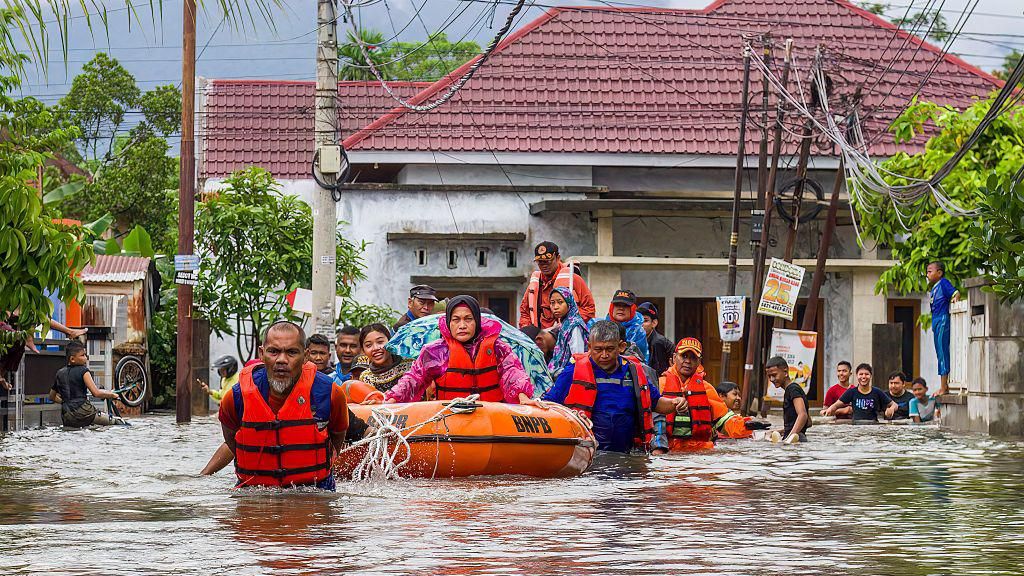
Southeast Asia confronts one of its most devastating natural disasters in years as catastrophic flooding and landslides have claimed approximately 700 lives across Indonesia, Thailand, Malaysia, and Sri Lanka. Triggered by torrential monsoon rains intensified by rare tropical cyclones, the calamity has left hundreds missing and millions affected throughout the region.
The crisis began Wednesday when unprecedented rainfall struck Indonesia’s Sumatra island, with the tropical cyclone Senyar generating catastrophic conditions. In Aceh Province’s Pidie Jaya Regency, resident Arini Amalia described how ‘the current was very fast, in a matter of seconds it reached the streets, entered the houses.’ She returned the following day to find her home completely submerged. Another survivor, Meri Osman, recounted being swept away by currents and clinging to a clothesline until rescue arrived.
Indonesia reports the highest death toll with over 300 confirmed fatalities and nearly 300 individuals still missing. Rescue operations face significant challenges due to persistent adverse weather conditions, leaving thousands stranded and awaiting evacuation.
Thailand experiences its worst flooding in a decade, particularly in southern Songkhla province where waters rose 3 meters (10 feet). The city of Hat Yai recorded 335mm of rainfall within 24 hours—the heaviest deluge in three centuries. With over 160 fatalities nationwide, the disaster has affected 3.8 million people. Emergency services have been overwhelmed, with hospitals resorting to refrigerated trucks for body storage as morgues reached capacity.
In Sri Lanka, Cyclone Ditwah exacerbated already severe conditions, causing landslides that have killed at least 132 people with hundreds more missing. The government has declared a state of emergency as approximately one-third of the nation faces electricity and water shortages. Over 15,000 homes have been destroyed, forcing 78,000 residents into temporary shelters.
Malaysia’s northern Perlis state has been severely impacted with two confirmed deaths and tens of thousands displaced. Meteorological experts attribute the extreme weather to an unusual interaction between Typhoon Koto in the Philippines and Cyclone Senyar in the Malacca Strait, compounded by climate change altering traditional monsoon patterns through increased rainfall intensity and duration.