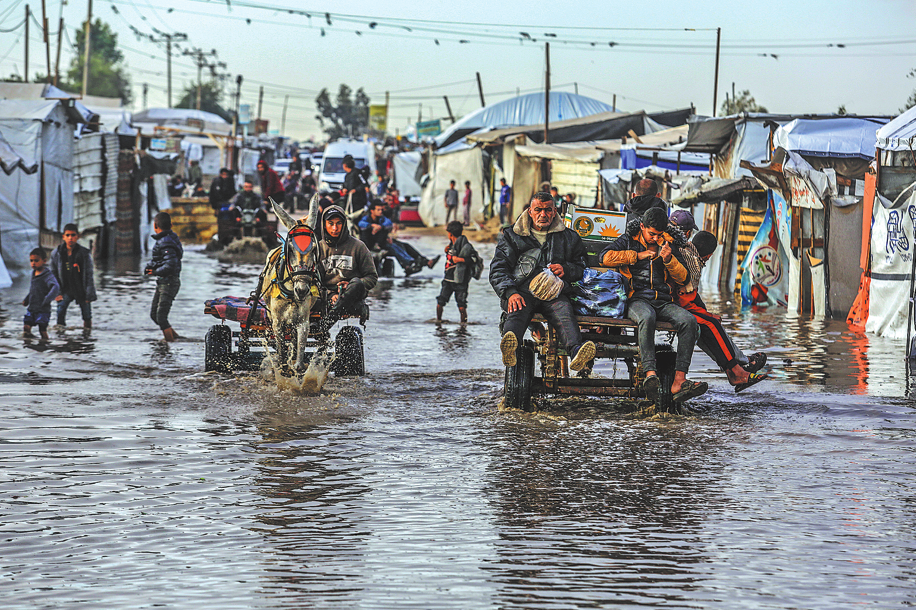
The first heavy rains of winter have inundated the Mawasi tent camp in Gaza, exacerbating the already dire living conditions for displaced Palestinians. On Saturday, torrential downpours flooded the makeshift shelters, forcing residents to dig trenches in a desperate attempt to divert water from their tents. The rains, which began on Friday, seeped through torn tarpaulins and fragile structures, soaking the meager belongings of families. Strong winds further threatened to topple tents and disrupt the already scarce food and supply distribution.
Bassil Naggar, a resident who recently purchased a new tent for $712 on the black market, described the relentless struggle to keep his shelter dry. ‘I spent all of Friday pushing water out of my tent,’ he said, noting that his neighbors’ tents and possessions were also ruined. ‘Water puddles are inches high, and there is no proper drainage.’
The United Nations reports that Mawasi housed up to 425,000 displaced Palestinians earlier this year, most of whom are living in temporary tents after being displaced by Israel’s military campaign. While the Israeli defense body overseeing humanitarian aid claims to be allowing winter supplies like blankets and tarpaulins into Gaza, aid organizations argue that these efforts are insufficient as temperatures drop and winds intensify.
Amid the worsening humanitarian crisis, international efforts to stabilize Gaza are underway. The UN Security Council is set to vote on a U.S. proposal for a UN-mandated stabilization force, which would operate independently of the UN and maintain Israel’s control over Gaza’s security perimeter. Meanwhile, Russia has introduced a competing resolution advocating for a UN-led stabilization force, opposing territorial changes in Gaza and urging a two-state solution.
On Saturday, Russian President Vladimir Putin and Israeli Prime Minister Benjamin Netanyahu discussed the Gaza ceasefire, Iran’s nuclear program, and stability in Syria during a phone call. As the first stage of the Gaza ceasefire agreement nears its end, the focus shifts to the more challenging task of establishing a governing body and deploying an international stabilization force.