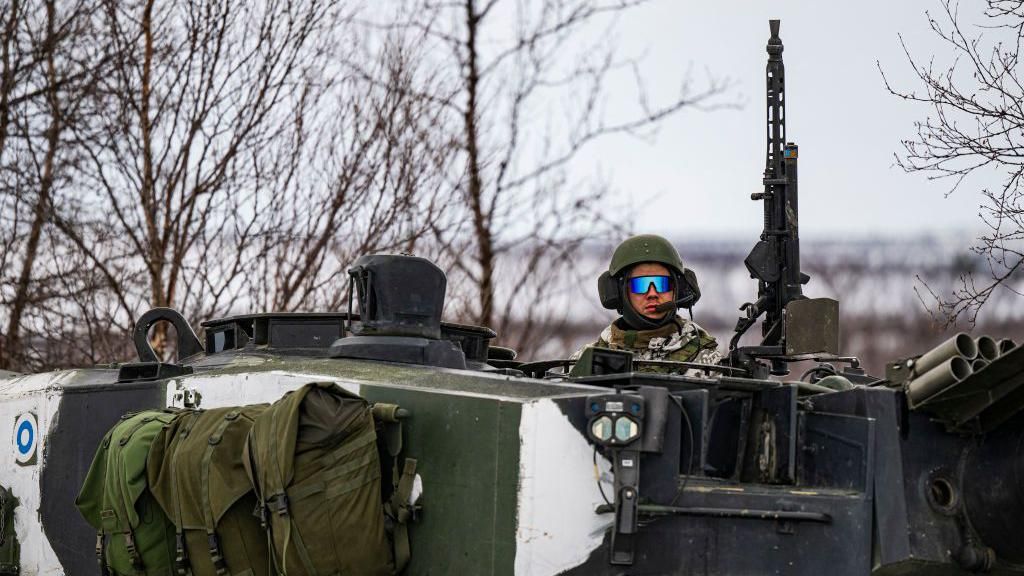
In a landmark security policy reversal, Finland’s government has proposed legislation to overturn its 37-year prohibition on nuclear weapons within its territory. The initiative represents the most significant military policy shift since the Nordic nation abandoned decades of neutrality to join NATO in April 2023.
Defence Minister Antti Häkkänen presented the proposal on Thursday, stating that Russia’s full-scale invasion of Ukraine in 2022 had ‘fundamentally and significantly changed’ Finland’s security environment. The amendment would modify both the 1987 Nuclear Energy Act and criminal code to permit the ‘transport, delivery, or possession’ of nuclear weapons when connected to Finland’s military defense.
The legislative change would enable Finland to fully integrate with NATO’s nuclear deterrence strategy, which operates under the alliance’s foundational principle of collective defense. This doctrine treats any attack on a member state as an attack against all alliance members, with several nuclear-capable NATO nations potentially responding with nuclear force if necessary.
Finland’s strategic position is particularly significant as it shares the longest border with Russia among EU and NATO members—stretching 1,340 kilometers (832 miles). The country’s NATO accession was widely viewed as a strategic setback for Russian President Vladimir Putin, who had repeatedly criticized the alliance’s eastern expansion.
The proposal emerges amid heightened European defense cooperation following Russia’s invasion of Ukraine. Recent incidents of suspected hybrid warfare, including drone sightings that disrupted air traffic across several NATO states, have prompted renewed discussions about collective defense capabilities.
This development coincides with broader European nuclear deterrence initiatives, including Monday’s announcement of deepened Franco-German cooperation and Sweden’s reconsideration of its stance on foreign troops and nuclear weapons. The Finnish government’s proposal will undergo consultation until April 2 before formal parliamentary consideration by the right-wing coalition that holds a legislative majority.