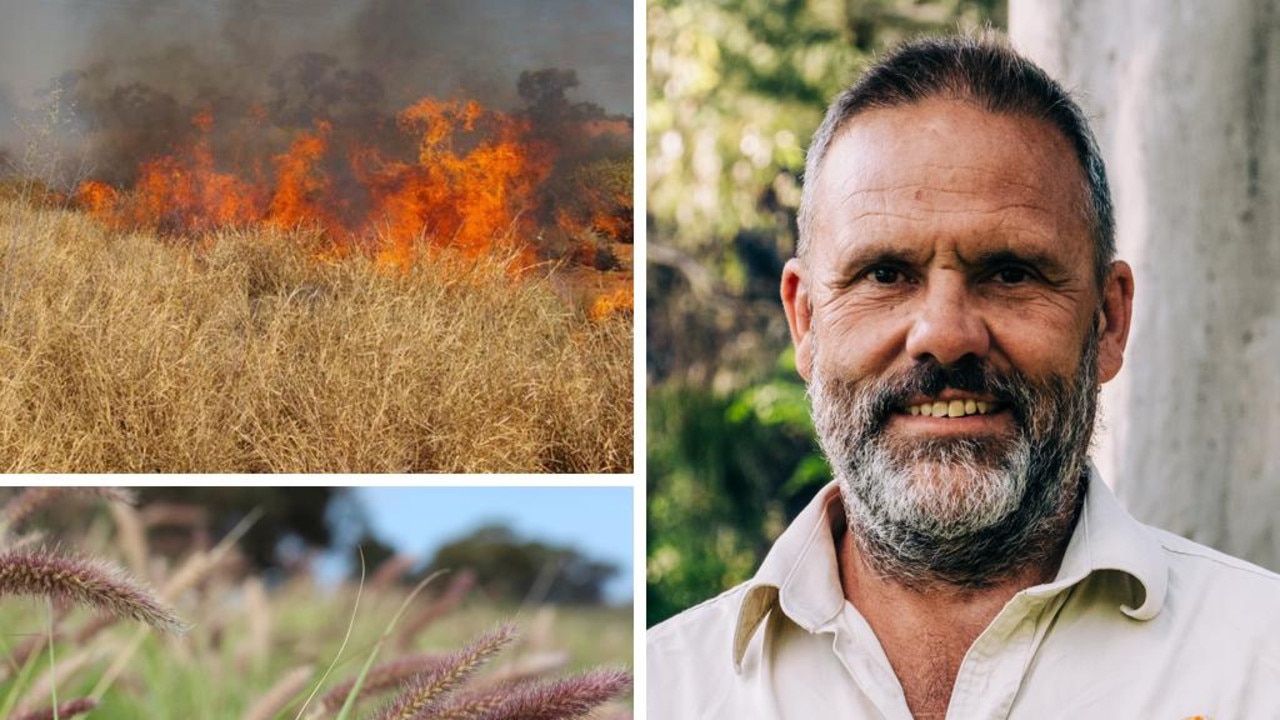
A coalition of Indigenous leaders and environmental advocates is converging on Australia’s capital to demand urgent federal action against an invasive grass species that is fundamentally transforming the nation’s desert landscapes. The controversial buffel grass, originally native to Africa and parts of Asia, burns with unprecedented intensity and frequency, creating ecological havoc across Central Australia.
Traditional owners have identified the plant as tjanpi kura (bad grass) or mamu tjanpi (devil grass) due to its destructive characteristics. The species spreads aggressively, choking waterways and creating dense fuel loads that result in catastrophic fires. These infernos reach temperatures and frequencies previously unknown to these ancient ecosystems, destroying centuries-old desert oaks and mulga trees that have long defined the region’s character.
The federal government recently postponed a critical decision on whether to designate buffel grass as a Weed of National Significance—a classification that would trigger coordinated national response measures. This hesitation has prompted Indigenous Ambassador Richard Swain, a Wiradjuri man representing the Invasive Species Council, to characterize the situation as requiring immediate national leadership.
Beyond the Northern Territory where it’s already declared a weed, buffel grass has established dominance across hundreds of kilometers in Central Australia and continues its expansion into Western Australia, South Australia, New South Wales, and Queensland. This geographical spread places numerous native species at risk and threatens First Nations cultural practices tied to the land.
The delegation arriving in Canberra includes senators David Pocock and Sarah Hanson-Young alongside traditional owners. They advocate for a three-pronged approach: official designation as a Weed of National Significance, classification as a Key Threatening Process under national environmental law, and dedicated funding for a national coordinator position alongside a comprehensive action plan.
Senator Hanson-Young emphasized the dual threat to both ecosystems and Indigenous culture, noting that worsened fire conditions endanger plants, animals, and communities simultaneously. Eastern Arrernte Traditional Owner Camille Dobson highlighted structural challenges, explaining that remote communities lack properly trained firefighters and equipment, while Aboriginal ranger programs remain chronically underfunded and overstretched despite being positioned as primary responders to the crisis.