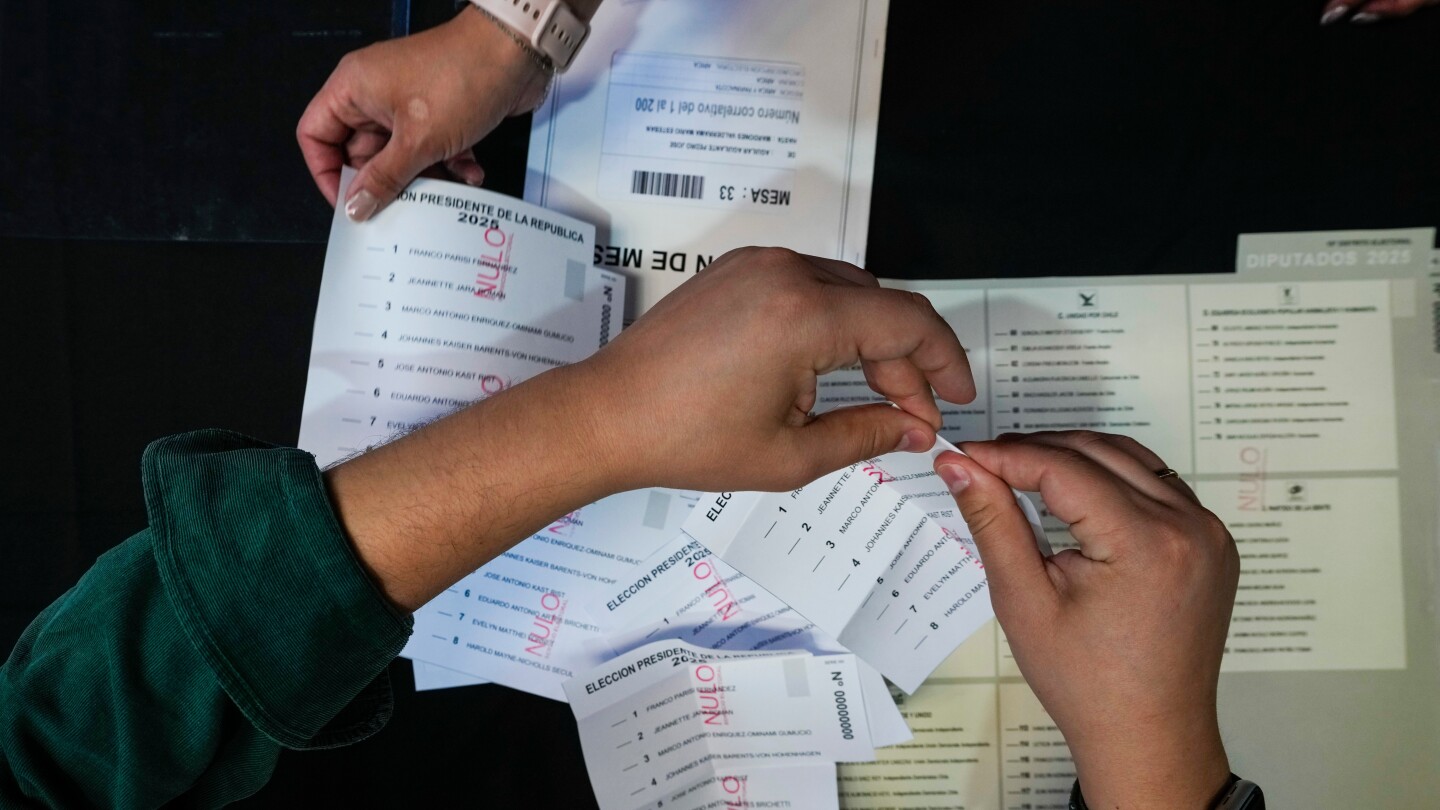
In Santiago, Chile, the final campaign rally for radical libertarian candidate Johannes Kaiser mirrored the fervor of a Donald Trump event, complete with MAGA-style caps, AC/DC anthems, and red, white, and blue flags. Kaiser, who is gaining traction ahead of Sunday’s presidential election, tapped into rising fears of uncontrolled migration, a sentiment that has pushed even the governing coalition’s Communist candidate, Jeannette Jara, to adopt tougher stances on immigration. Kaiser’s supporters, like Claudia Belmonte, praised his promises to “Make Chile Great Again,” close borders to Venezuelan migrants, and withdraw from the United Nations. The surge in anti-immigrant rhetoric reflects broader concerns over transnational gangs like Tren de Aragua, which have brought violent crimes such as kidnappings and contract killings to Chile, a nation once considered one of Latin America’s safest. This shift marks a stark contrast to the 2019 social upheaval that propelled leftist Gabriel Boric to the presidency. Now, experts say nativist fears could benefit ultraconservative candidate José Antonio Kast, who is polling strongly but unlikely to secure a first-round victory. The campaign has seen candidates across the political spectrum, including Jara, adopt hardline immigration policies inspired by figures like Trump and El Salvador’s Nayib Bukele. Kast, a devout Catholic and father of nine, has focused on his tough-on-migration platform, distancing himself from his conservative cultural values. Meanwhile, Kaiser’s extreme proposals, such as building a border wall and mass deportations, have positioned him as a more radical alternative. The election underscores a broader redirection of public anger from economic inequality to immigration, reshaping Chile’s political landscape.
Fears over migration and crime push Chile’s presidential race to the right