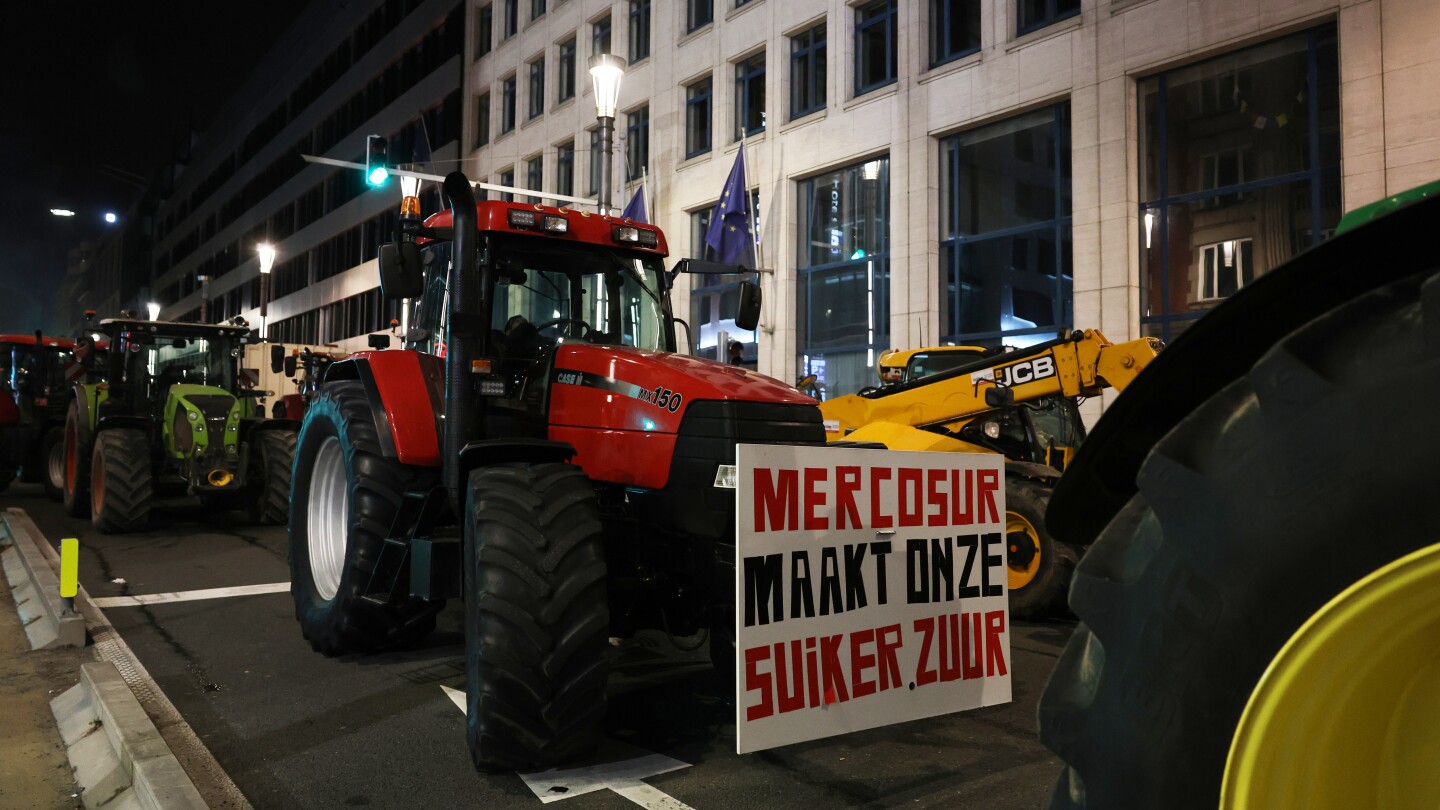
Brussels witnessed intense demonstrations on Wednesday as thousands of farmers mobilized tractors to blockade key roadways and ignite fireworks near the European Union headquarters. The protests coincided with an EU leadership summit addressing the contentious free-trade agreement with Mercosur nations. Law enforcement deployed tear gas and water cannons to disperse crowds expressing vehement opposition to the proposed pact with South American economies.
The agricultural sector’s primary concern centers on potential market destabilization through imported goods produced under less stringent regulatory frameworks. This economic apprehension has triggered broader political ramifications, with several EU members expressing reservations about the agreement’s current terms. France has emerged as the leading opposition force, demanding enhanced safeguards against market disruption, stricter pesticide regulations, and reinforced import inspection protocols.
Italy recently joined the dissenting coalition, with Premier Giorgia Meloni declaring any immediate signing “premature” without adequate protections for European agricultural interests. This development significantly strengthens the opposition bloc, potentially providing France sufficient votes to veto European Commission President Ursula von der Leyen’s push for ratification.
Despite twenty-five years of negotiations covering a prospective market of 780 million people, the agreement faces unprecedented political headwinds. Supporters argue the pact would establish crucial economic counterweights to Chinese export controls and American tariff policies, while critics warn of environmental standard erosion and agricultural sector devastation.
South American leaders remain cautiously optimistic about finalizing the agreement. Brazilian President Lula da Silva has positioned the deal as a cornerstone of his diplomatic agenda, warning that failure to secure ratification now might permanently suspend negotiations during his administration. The agreement has found unusual consensus among ideologically divergent South American leaders, including Argentina’s Javier Milei and Uruguay’s government, all recognizing the potential benefits for their agricultural exports.
The ongoing stalemate reflects deeper tensions between economic globalization priorities and domestic agricultural protectionism within EU politics, with far-right political movements leveraging the controversy to gain traction among disaffected rural communities.