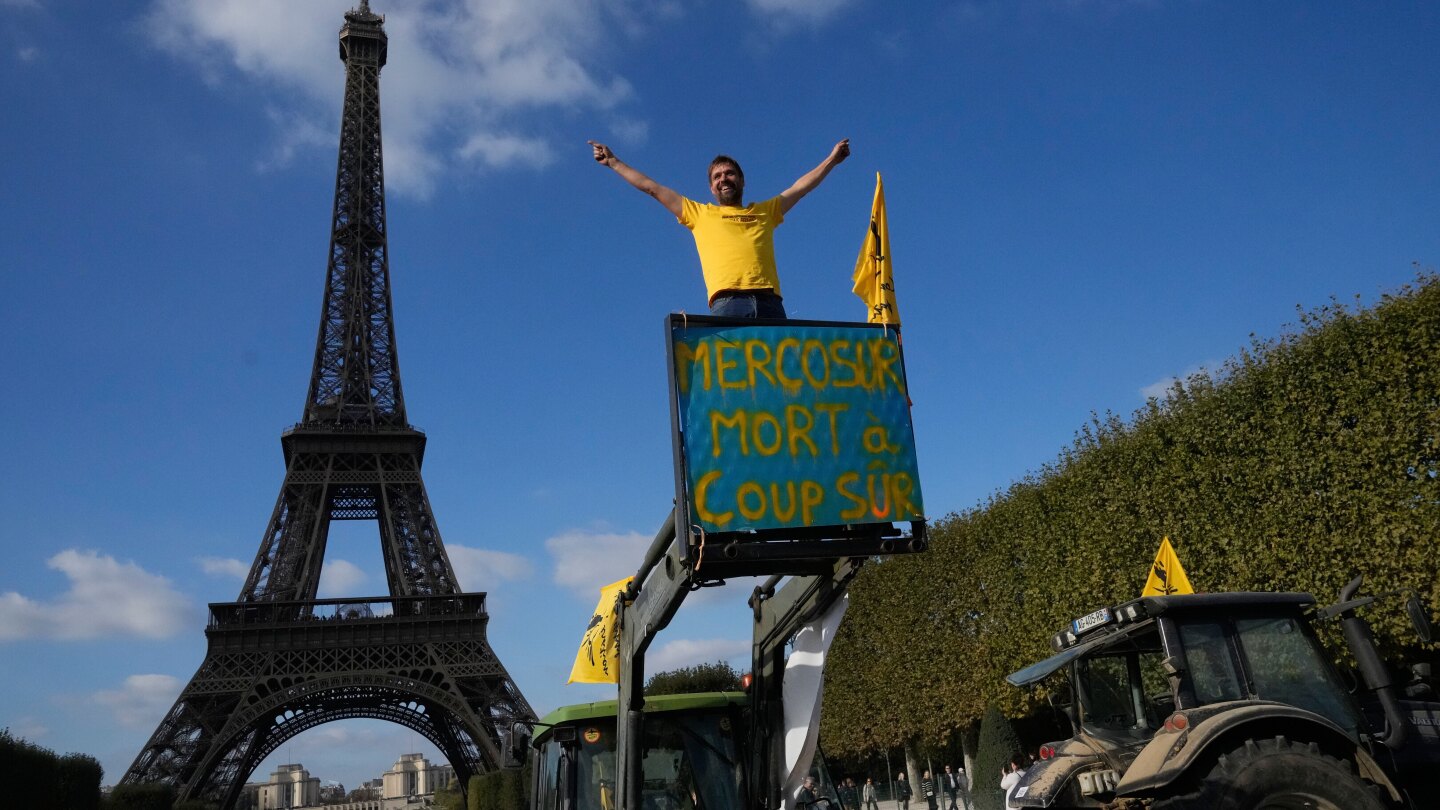
BRUSSELS — A landmark trade agreement between the European Union and Mercosur nations, representing nearly two decades of negotiation, now confronts formidable opposition from France just days before its anticipated ratification. The comprehensive pact linking the 27-member EU with Brazil, Argentina, Uruguay, Paraguay, and Bolivia would establish one of the world’s largest free trade zones, encompassing 780 million consumers and accounting for a quarter of global GDP.
The agreement, which would progressively eliminate tariffs on most goods over a 15-year implementation period, has encountered vehement resistance from European agricultural sectors. French Prime Minister Sébastien Lecornu declared the current terms “unacceptable” and formally requested postponement of Thursday’s critical vote until 2026 or beyond. This eleventh-hour intervention threatens to derail plans for European Commission President Ursula von der Leyen and European Council President António Costa to formally sign the agreement in Brazil on December 20.
Agricultural concerns form the core of the opposition, with France, Poland, Austria, and the Netherlands expressing apprehension that Mercosur producers might undercut European farmers through less stringent labor, environmental, and pesticide regulations. Despite recent European Commission proposals to strengthen import inspections and implement safeguard mechanisms for agricultural products, French officials maintain these measures remain insufficient.
The political dimension has intensified as disgruntled farmers, whose tractor protests previously paralyzed European capitals, prepare renewed demonstrations in Brussels. Their mobilization, which gained traction with far-right parties during the 2024 EU elections, adds pressure on leaders already grappling with geopolitical considerations.
European Commission spokesperson Olof Gill emphasized the agreement’s strategic importance, stating it would create “a platform based on trust, based on rules” during times of rising global uncertainty. Proponents argue the pact would save businesses approximately €4.26 billion annually in duties while facilitating trade across diverse sectors including French wines, German pharmaceuticals, and Brazilian rare earth minerals.
The standoff highlights broader challenges in EU trade policy as the bloc seeks to counter aggressive trade tactics from both the United States and China. As Alicia Gracia-Herrero of the Bruegel Institute noted, the impasse raises questions about the EU’s geopolitical credibility regarding ongoing negotiations with other major economies including India and Indonesia.