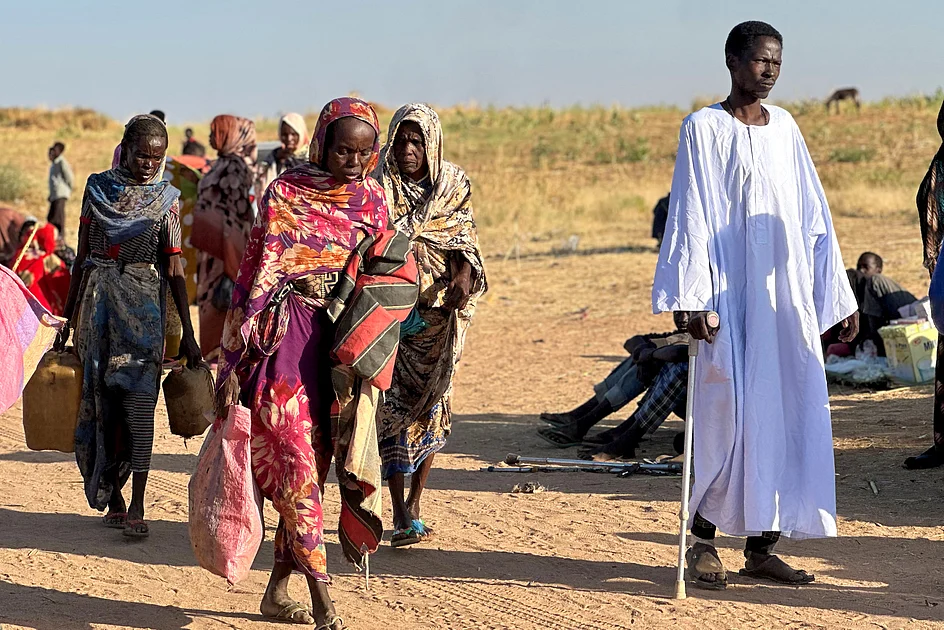
The city of Al Fasher in Sudan has become a scene of devastation as the Rapid Support Forces (RSF) seized control following an 18-month siege, leading to widespread atrocities and a humanitarian crisis. Survivors fleeing the city recounted harrowing tales of families being forcibly separated, children executed in front of their parents, and mass killings. Germany’s top diplomat, Johann Wadephul, described the situation as ‘apocalyptic,’ while satellite imagery from Yale University’s Humanitarian Research Lab suggested ongoing mass killings. Reports of summary executions, sexual violence, looting, and abductions have emerged, with tens of thousands of civilians still trapped in the city. The UN estimates that over 65,000 people have fled Al Fasher since the RSF’s final assault, but around 260,000 residents remain in grave danger. Doctors Without Borders (MSF) highlighted the limited number of survivors reaching safer areas, with only 5,000 making it to Tawila, 70 kilometers west of Al Fasher. Eyewitnesses reported that groups attempting to flee were often killed or captured, with individuals separated based on gender, age, or ethnicity. The RSF, descended from the Janjaweed militias accused of genocide in Darfur two decades ago, now controls all five state capitals in the region, effectively dividing Sudan along an east-west axis. The conflict has displaced nearly 12 million people, creating the world’s largest displacement and hunger crises. UN officials warn that the violence is spreading to the neighboring Kordofan region, with reports of large-scale atrocities perpetrated by the RSF.
Families separated, children killed as survivors flee Sudan’s ‘apocalyptic’ Al Fasher