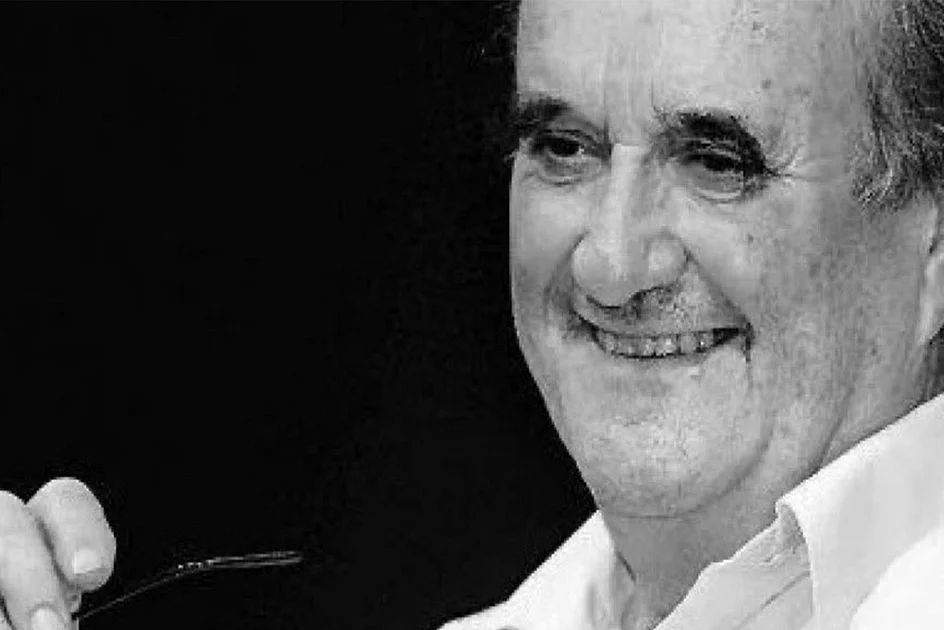
Renowned British journalist Sir Mark Tully, whose distinctive voice became synonymous with authoritative reporting from the Indian subcontinent for decades, passed away at age 90 in New Delhi on Sunday. The legendary broadcaster died at 2:35 PM on January 25th at Max Super Speciality Hospital in Saket, where he had been receiving treatment for the past week.
Hospital authorities confirmed the celebrated correspondent succumbed to multi-organ failure following a stroke, extending heartfelt condolences to his family and countless admirers worldwide.
Born in Calcutta (now Kolkata) in 1935 to affluent British settlers, Tully’s extraordinary journey saw him evolve from theology student at Cambridge University to becoming the BBC’s definitive chronicler of South Asia. His professional connection with India formally began in 1965 when he joined the BBC’s New Delhi office as an administrator, marking his return to the nation of his birth after being sent to UK boarding schools post-World War II.
Tully’s remarkable career spanned three tumultuous decades that defined modern India. His incisive reporting covered watershed moments including the 1971 Bangladesh Liberation War, Indira Gandhi’s 1975 Emergency declaration, Operation Blue Star (1984), the assassinations of both Indira and Rajiv Gandhi, economic liberalization reforms, and the Ayodhya dispute resolution.
His uncompromising journalistic integrity famously led to his expulsion from India during the Emergency for refusing to sign a censorship agreement—though he returned immediately after democratic norms were restored. Despite resigning from BBC in 1994 citing a ‘culture of fear’ under then Director-General John Birt, Tully continued contributing to BBC programming until 2019 while maintaining his Delhi residence in Nizamuddin West.
The Padma Bhushan and Padma Shri recipient, knighted by Britain in 2002, authored several critically acclaimed books including ‘No Full Stops in India’ and ‘India in Slow Motion.’ UNESCO’s Courier publication celebrated him as a ‘radio legend’ who mastered the medium during an era when magnetic tapes and unreliable telecommunications demanded extraordinary resourcefulness from foreign correspondents.
Indian political figures including Senior Congress leader Pawan Khera joined global voices in mourning his passing, recalling how generations ‘grew up listening to his voice’ and reading his nuanced accounts of India’s complex socio-political landscape.