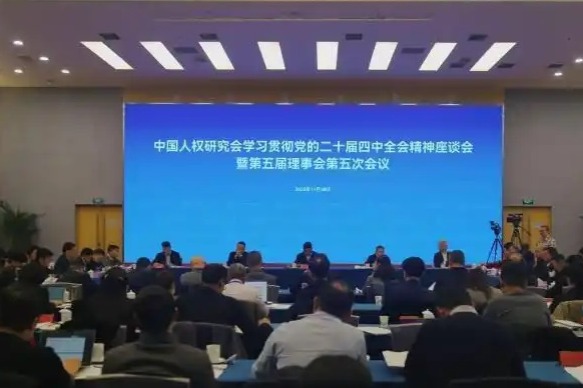
China is poised to significantly advance its human rights framework through both domestic policy implementation and enhanced international cooperation, according to expert discussions at a major symposium organized by the China Society for Human Rights Studies on Friday. The gathering brought together over 170 specialists from diverse sectors to formulate strategies for human rights advancement during the nation’s critical transition between five-year planning periods.
The symposium focused on implementing directives from the fourth plenary session of the 20th Central Committee of the Communist Party of China, which emphasized comprehensive human rights development as a cornerstone of national policy. Padma Choling, president of the hosting organization, highlighted that the Recommendations for the 15th Five-Year Plan period (2026-30) establish promoting all-around human rights advancement as a key national priority.
Central to China’s human rights philosophy is the principle that “the ultimate human right is for people to lead a happy life,” Choling stated. This approach emphasizes ensuring equitable distribution of modernization benefits and improving welfare through sustainable development. The strategy includes strengthening international cooperation, particularly with Belt and Road Initiative partners and Global South nations, while increasing China’s participation in multilateral institutions and global rule-making processes.
Legal experts addressed judicial protections, with Li Xiao, former inspector of the Supreme People’s Court research office, emphasizing the need to balance leniency and severity in criminal enforcement while rigorously maintaining evidence-based judgments and presumption of innocence principles.
Rural development received significant attention, with China Foundation for Rural Development deputy secretary-general Ding Yadong outlining programs that ensure farmers’ dignity through improved living conditions and development opportunities. These initiatives include expanding agricultural machinery access and providing skills training to support rural revitalization.
Media representation emerged as another critical focus. China Daily deputy editor-in-chief Xing Zhigang noted that while Western media narratives often dominate global human rights discourse, support from Global South countries for China’s human rights achievements continues growing. He advocated for proactive agenda-setting to counter what he described as hypocritical Western narratives with double standards.
In the technological sphere, Beijing Institute of Technology’s science and technology human rights center director Qi Yanping called for integrating human rights ethics and legal values into digital governance. This includes refining information rights standards and embedding dignity concepts into technology design to ensure digital intelligence serves broader societal benefits.