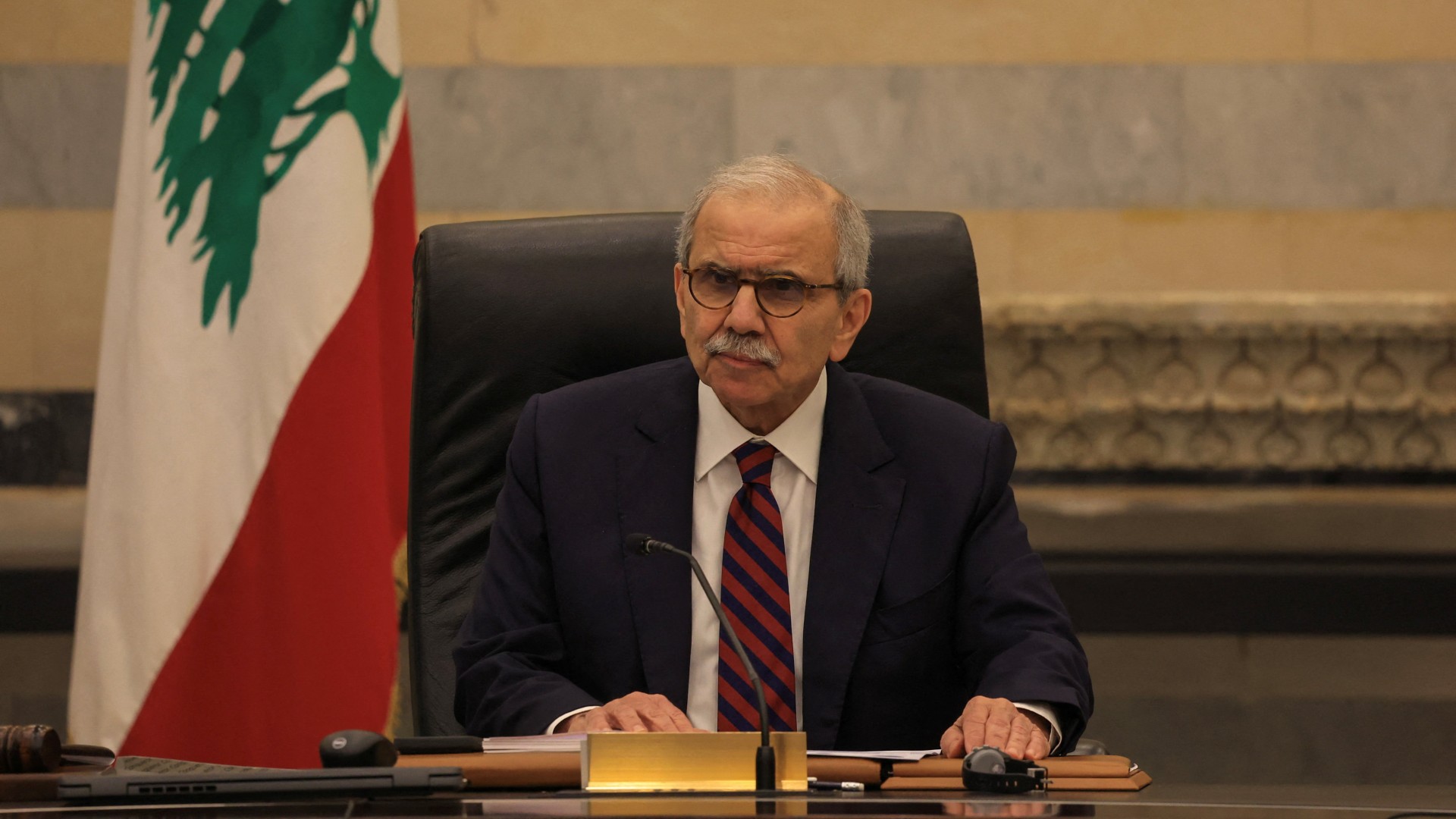
Trapped between competing regional and global powers, Lebanon’s newly elected government is waging a quiet diplomatic battle to claim full sovereignty over its own future, pushing to position itself as an equal, independent negotiating party ahead of next week’s Washington talks with Israeli officials. The ongoing conflict that has shattered the country has put Beirut in an unenviable position: squeezed between Israeli military aggression, Iran’s regional power projection, and inconsistent diplomatic attention from Washington, leaving the small state scrambling to rewrite the rules of negotiation before its fate is decided by outside actors.
The conflict traces back to a US-Israeli strike that killed Iranian Supreme Leader Ali Khamenei, which triggered retaliatory cross-border rocket fire from the Iran-aligned militant group Hezbollah. Israel responded with a full-scale bombardment of Lebanon, acting on long-held plans to push Hezbollah back from the shared border that the movement has controlled for decades. When Washington and Tehran announced a two-week ceasefire mediated by Pakistan earlier this week, both Iran and Islamabad said the truce would include Lebanon. But Israel immediately rejected that inclusion, launching a devastating 10-minute air assault on Beirut and other Lebanese areas that killed more than 300 people, the majority civilians including dozens of children. Under mounting international pressure and threats of further Iranian retaliation, Israel eventually agreed to de-escalate its attacks and enter direct talks with the Lebanese government in Washington next week to discuss a permanent end to hostilities and the future of Hezbollah.
For Lebanon’s leadership, which took office in early 2025 on a mandate to restore state authority after years of fragmentation and a previous devastating Israeli war sparked by the Gaza conflict, the upcoming talks represent far more than a chance to stop the bombing. Senior Lebanese officials have made clear that their core demand is non-negotiable: all future negotiations and decisions about Lebanon’s future must be channeled exclusively through official state institutions, led by President Joseph Aoun’s office. The government is intent on abandoning the old military-dominated negotiation frameworks that have governed Israeli-Lebanese border talks for years, and separating any Lebanese agreements from separate deals being struck between Iran and the United States. This position is as much about survival as it is about sovereignty: after decades of foreign interference and economic collapse that has left the state fragile, Lebanese leaders view formal control over negotiations as the only way to rebuild public trust in state institutions and avoid being reduced to a bargaining chip in a larger regional conflict.
Not all stakeholders have aligned with this framework, however. Hezbollah, the powerful Iran-backed armed movement that holds significant political and military sway in Lebanon, has rejected the current timing of the talks, insisting that any negotiations can only begin after a full ceasefire, an Israeli withdrawal from occupied Lebanese territory, and the safe return of displaced civilians. The new approach also creates friction with both Israel and Iran, whose competing priorities directly undermine Beirut’s goals. Israel has made clear it intends to decouple the Lebanese file from wider talks with Iran, seeking to maintain military pressure on Hezbollah and keep Lebanon as a bargaining chip to prevent Iran from claiming a diplomatic victory by protecting its regional ally. For its part, Iran has resisted any separation of the two fronts, viewing the US initial attempt to exclude Lebanon from the Iran ceasefire as a outright betrayal. Iranian officials have repeatedly stated they will not move forward with any truce that leaves Lebanon exposed to continued Israeli attacks, a stance echoed by senior diplomatic sources in Egypt, which is leading Arab mediation efforts. Any public abandonment of Hezbollah would also carry severe political costs for Tehran both domestically and among its regional allied networks.
International powers have been split in their approach to Lebanon’s demands. Pakistan, Turkey, and Egypt have all sought to reassure Beirut and urge patience as diplomacy moves forward, with Egypt actively pushing for Lebanon’s full inclusion in any regional ceasefire framework. Both France and the United Kingdom have also publicly called for any US-Iran truce to extend to Lebanon. But Lebanese officials report that Beirut also faces quiet external pressure: some global and regional actors do not want to see Lebanon positioned as a success for Iranian diplomacy, after earlier Arab mediation efforts failed to stop the war. For President Aoun, this creates a no-win dilemma: even as his weak government relies on Iranian pressure to secure a ceasefire, he cannot afford to be seen as a mere proxy for Tehran, which would undermine his mandate to restore sovereign state authority.
The scale of the crisis facing Lebanon makes this diplomatic push all the more urgent. The latest conflict has displaced more than one million people – roughly one-fifth of the country’s entire population – and the International Monetary Fund warned earlier this year that Lebanon’s fragile post-collapse economic recovery will remain unstable without deep structural reforms. The current ad-hoc negotiation framework, which has been anchored in a US-chaired military truce committee and UN-backed monitoring since a 2024 ceasefire, was expanded to include civilian envoys in late 2025, but Aoun’s administration is pushing for a fully political channel centered on the presidency and cabinet, rather than the legacy military-focused machinery.
Prime Minister Nawaf Salam is expected to travel to Washington and New York in the coming days to frame any diplomatic progress as a victory for the Lebanese state, rather than a concession to regional power brokers. But even if he succeeds in securing a ceasefire through state-led channels, core sticking points – including the future of Hezbollah’s arsenal and the status of southern Lebanon – will remain tied to the broader US-Iran regional standoff. In the end, Lebanon’s government is trying to secure three competing goals: an immediate ceasefire to end civilian suffering, full state control over all negotiations, and a political outcome that does not hand Iran a symbolic diplomatic victory – all while holding almost none of the decisive power needed to shape the final outcome.