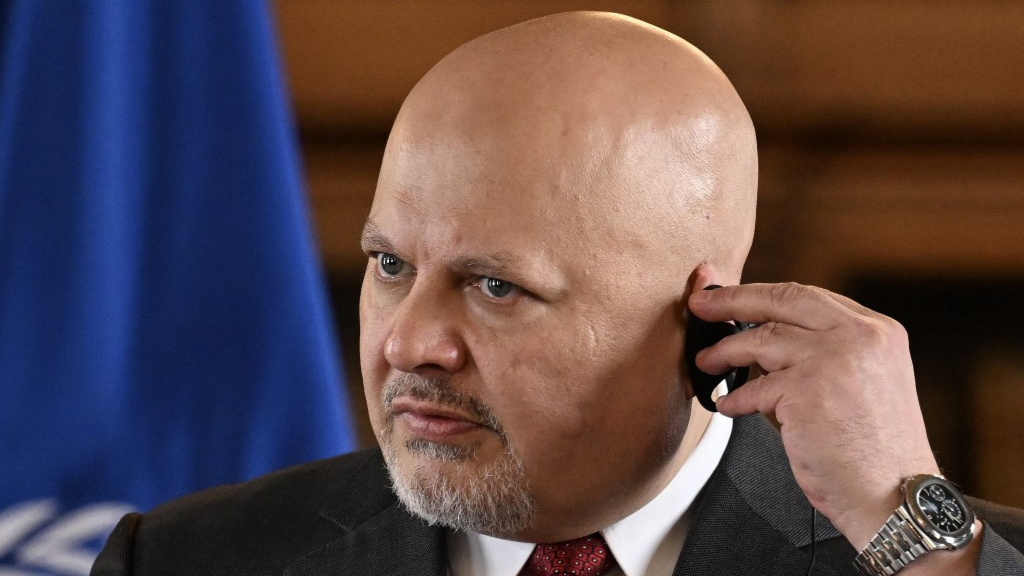
A growing rift has emerged at the highest levels of the International Criminal Court (ICC), as a majority of staff from the Office of the Prosecutor (OTP) have publicly thrown their support behind Prosecutor Karim Khan, pushing for his immediate return to official duties amid mounting allegations that the ongoing misconduct investigation into him has been politicized. The development comes as the court’s governing body, the Assembly of States Parties (ASP) Bureau, nears its deadline for a preliminary assessment of the claims against Khan, who has been on administrative leave since May 2024 while facing unproven sexual misconduct allegations that he has repeatedly and strenuously denied.
The unfolding controversy traces back to a multi-layered investigation launched after allegations against Khan surfaced. First, the United Nations Office of Internal Oversight Services (OIOS) conducted an inquiry, collecting testimony and evidence from both the accusers and Khan. After reviewing the OIOS report, an independent panel of judges appointed by the ASP Bureau issued a landmark ruling last month that cleared Khan of any wrongdoing. The panel found that the OIOS investigation had failed to produce any conclusive evidence of misconduct or breach of duty, noting that most claims relied on unsubstantiated hearsay rather than direct proof, and fell far short of the ‘beyond a reasonable doubt’ standard of proof required to sustain a finding of misconduct.
In a surprise move that has alarmed legal observers, a majority of the 21-member ASP Bureau voted last Wednesday to disregard the independent judges’ clearing of Khan, voting to open their own separate assessment of the allegations based on the inconclusive UN report. The motion to set aside the judicial finding was backed by 15 states, mostly from Western and European blocs: Belgium, Bolivia, Brazil, Chile, Cyprus, Ecuador, Finland, Italy, Japan, Latvia, New Zealand, Poland, Slovenia, South Korea, and Switzerland. Legal experts have already warned that the decision to overrule the independent judicial panel’s conclusion risks turning the misconduct probe into a politically motivated process, rather than an impartial legal review.
Now, internal documents obtained exclusively by Middle East Eye reveal that two separate anonymous letters from large groups of OTP staff have been sent to the ASP presidency in recent weeks, pushing back against efforts to oust Khan. The first letter, sent on March 31, one day before the key ASP Bureau vote, was submitted through an official staff channel on behalf of a ‘sizeable group’ of OTP staff, aligning with the judges’ conclusion that no misconduct was proven and calling for Khan to resume his responsibilities.
A second, more explicit letter sent a week later on Tuesday went further, openly identifying the signatories as ‘a majority of staff of the ICC Office of the Prosecutor from different regional and gender backgrounds.’ The letter reaffirms the staff’s commitment to an independent, rule-of-law accountability process that is free from outside pressure, noting that ‘if the findings of the Panel of Judges lack evidence against the Prosecutor, then we welcome his return.’
The staff also pushed back against public narratives that have painted Khan as an unpopular leader within the OTP, praising his tenure over the past years for delivering ‘unprecedented successes’ in the office’s core work. The letter stressed that disagreements over leadership style from a small minority of staff are not the subject of the investigation, and should not be used to undermine Khan’s position. Most critically, the majority of OTP staff warned that they are witnessing ‘concerning signs of political interventions and individual agendas’ that are driving a coordinated smearing campaign against Khan, and applying undue pressure on public opinion, the Bureau, and the ASP as a whole.
The letter argued that the timing and goals of these campaigns are transparent: they are designed to force the ASP Bureau to ignore the objective judicial findings of the panel that the Bureau itself created, and reach a preordained conclusion against Khan. The staff also pushed back on an earlier statement from the ICC Staff Union Council, which claimed that ‘many OTP staff’ were suffering from heightened anxiety and even panic over the process. The majority letter rejects the Staff Union’s claim that it speaks for ‘many’ staff as inaccurate, noting that a large share of OTP employees support both the rights of the prosecutor and the complainant, calling for a fair process for all parties.
The controversy has been further complicated by the revelation that an anonymous letter opposing Khan, claiming that the UN allegations are incompatible with his continued leadership, was read out in full to the ASP Bureau during last week’s meeting, while the pro-Khan letter from the majority of OTP staff was not shared with the body. The anti-Khan letter was later published in full by the International Federation for Human Rights (FIDH), but questions remain about why only the critical letter was presented to decision-makers. Middle East Eye has requested comment from the ASP on this discrepancy, and has not yet received a response.
In their first public statement on the matter last Thursday, Khan’s legal team confirmed that the prosecutor has still not received any official correspondence from the ASP Bureau regarding the investigation. The lawyers emphasized that the UN inquiry never made any conclusive findings of misconduct across its 137 conclusions, and that the independent judges correctly ruled that the available evidence did not prove any misconduct or breach of duty of any kind. ‘If it is the case that this conclusion has instead been set aside, it raises cogent and troubling questions about whether political considerations have been allowed to displace legal judgment,’ the statement said.
Observers have long linked the pressure campaign against Khan to his aggressive pursuit of war crime investigations in Gaza, which has put him in direct conflict with Israel and its Western backers. Khan and other ICC officials have been the target of an escalating intimidation campaign since he opened the Gaza investigation, including the imposition of US sanctions on Khan, his two deputies, and multiple ICC judges, following the court’s decision to issue arrest warrants for Israeli Prime Minister Benjamin Netanyahu and former Defense Minister Yoav Gallant.
A Middle East Eye investigation last August documented a years-long campaign of pressure against Khan, including threats from prominent politicians, coordinated media leaks of the sexual misconduct allegations timed to coincide with key steps in the Gaza investigation, and even unconfirmed reports of a Mossad surveillance team operating in The Hague that raised fears for Khan’s personal safety. Pressure built first in April 2024, ahead of Khan’s application for arrest warrants for Netanyahu and Gallant, intensified again that October, one month before the warrants were issued, and ramped up further in early 2025 when Khan began moving toward arrest warrants for additional senior Israeli officials, which coincided with new media leaks of the sexual misconduct allegations. The Trump administration imposed new sanctions on Khan in February 2025, and Khan took leave in mid-May, shortly after an initial attempt to suspend him failed, and amid the ongoing UN investigation.
The ASP Bureau is required to submit its preliminary assessment of the allegations by this Thursday, with a final ruling on the misconduct claims expected in early June. If the Bureau recommends a finding of serious misconduct, the full 123-member ASP will first hold a vote to determine whether Khan committed serious misconduct, less serious misconduct, or no misconduct at all. A finding of any level of misconduct requires a two-thirds majority vote of the states present and voting. If the ASP votes to confirm serious misconduct, a second vote will be held on whether to remove Khan from office, which requires an absolute majority of 63 votes from the 123 member states.