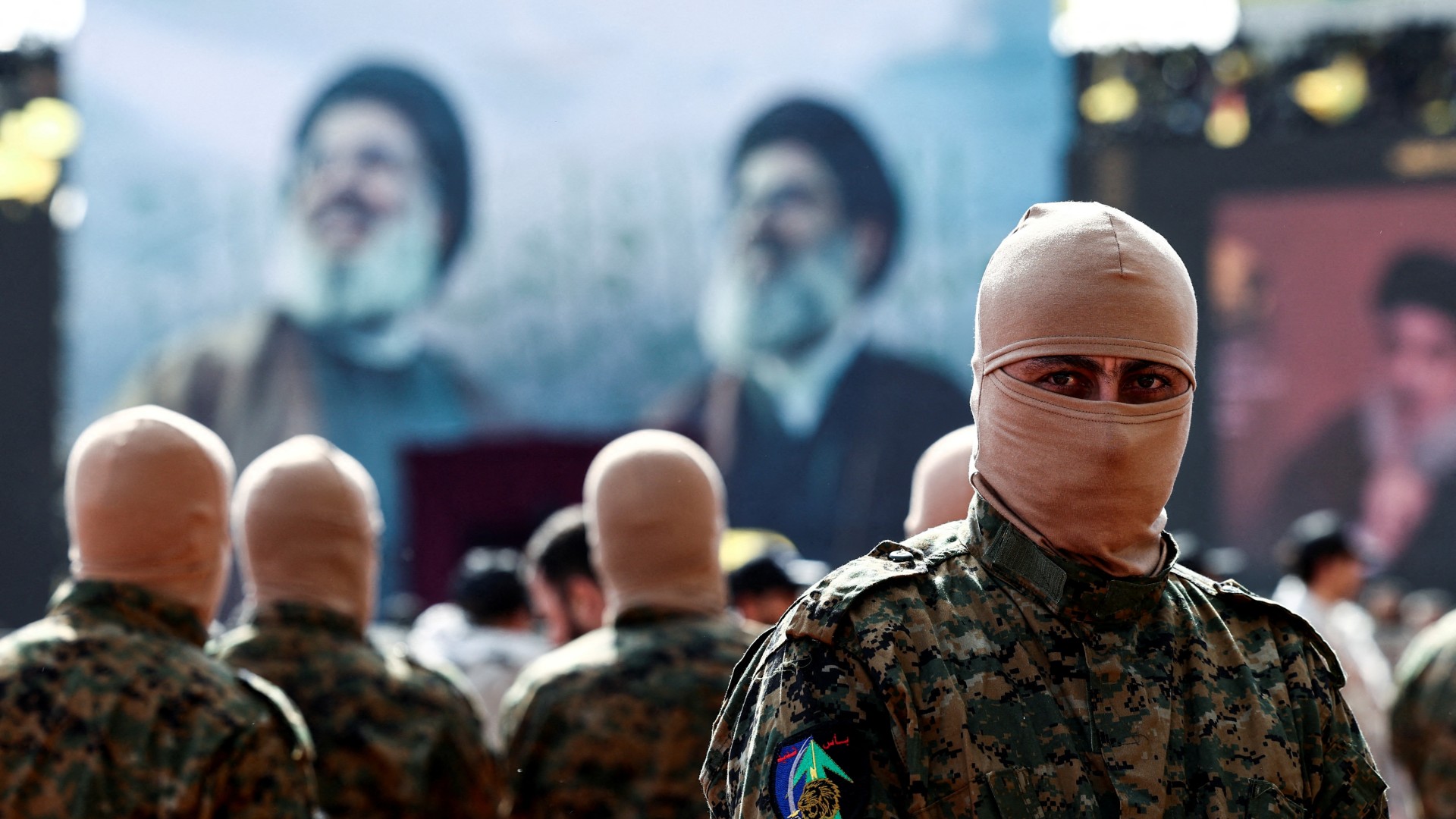
Contrary to widespread assertions from Israeli, American, and Lebanese government officials that Hezbollah had been permanently crippled, the Lebanese militant organization has demonstrated remarkable resilience and strategic recovery. Emerging from a devastating 15-month conflict that concluded with a November 2024 ceasefire, Hezbollah has not only reconstituted its military capabilities but has returned to active warfare against Israel with renewed intensity.
Multiple sources familiar with Hezbollah’s internal recovery process reveal that the organization interpreted the ceasefire not as a permanent resolution but as a critical operational pause to rebuild for inevitable future conflicts. Despite Israeli Prime Minister Benjamin Netanyahu’s claims that the campaign had set Hezbollah back “decades” and eliminated its leadership, the organization immediately began comprehensive reconstruction efforts beginning November 28, 2024—just one day after the ceasefire took effect.
The rebuilding operation was both extensive and methodical, focusing on restoring pre-October 2023 capabilities through a combination of Iranian support, local manufacturing, and strategic resource allocation. By mid-December 2025, military commanders reportedly informed leadership that reconstruction of recoverable assets was complete, though some advanced systems—particularly air defense capabilities—sustained irreversible damage.
Hezbollah’s recovery was particularly impressive given the organization’s devastating losses during the conflict. Israel’s September 2024 pager bombings that wounded dozens of members, followed by targeted airstrikes that eliminated top leadership including Secretary General Hassan Nasrallah, had left the organization “blinded, scattered and broken” according to one source. The steadfastness of frontline fighters provided surviving leadership the critical breathing space needed to regroup and reorganize.
The organization implemented significant tactical adaptations in response to intelligence vulnerabilities, abandoning compromised communication networks for more secure “basic and primitive” methods including human couriers and handwritten notes. Structurally, Hezbollah moved away from its conventional army model toward a more decentralized “Mughniyeh spirit” doctrine featuring semi-autonomous units operating with broader scenario-based guidance rather than constant direct command.
Despite public claims of Lebanese army control south of the Litani River and government assertions of achieving a “state monopoly on arms,” Hezbollah gradually reestablished its presence through smaller cells and individual cadres operating with patience and concealment. The ceasefire period, which saw approximately 400 Lebanese killed in ongoing Israeli strikes, represented not genuine peace but an actively contested phase where both sides positioned for the next confrontation.
Hezbollah’s renewed military capabilities became unmistakably evident in early March 2026, when the organization launched approximately 60 drones and rockets followed by similar volleys in subsequent days, with missiles reaching as far as southern Israel’s Ashkelon region. The organization that many had written off as defeated has demonstrated它不仅恢复了持续火力能力,还在黎巴嫩和以色列领土上重新部署了战斗人员,对以色列施加压力。