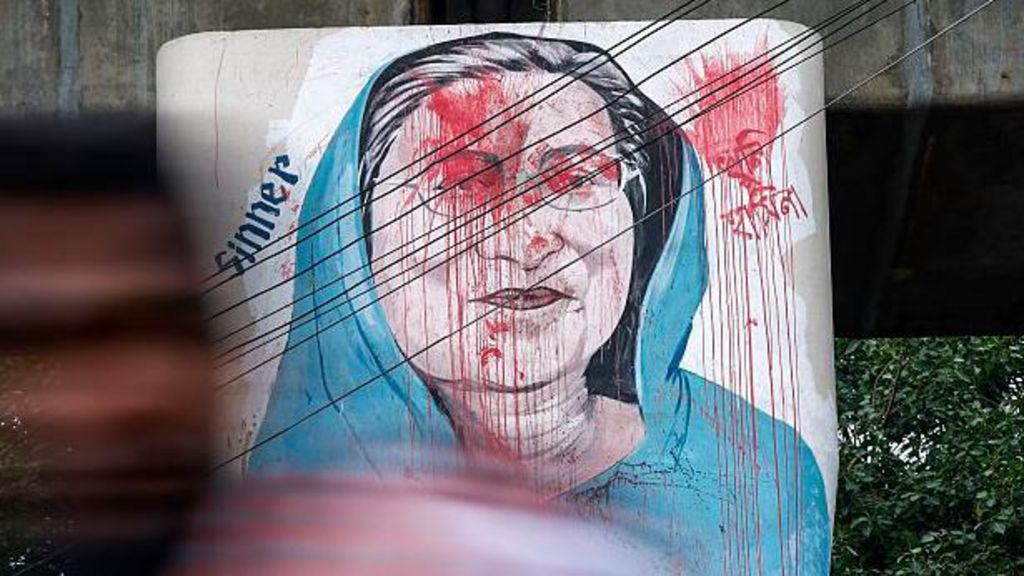
Nearly two years after being ousted from power by a mass popular uprising, former Bangladeshi Prime Minister Sheikh Hasina has publicly pledged to return to her home country by December, even as she faces a confirmed death sentence for crimes against humanity handed down by a Dhaka tribunal last year. The 78-year-old leader, who fled to India at the height of the 2024 anti-government protests that ended her 15-year tenure, denies all charges against her, framing the conviction as a politically motivated campaign to destroy her and her Awami League party.
Hasina delivered her remarks via audio link to a packed gathering of journalists at Delhi’s Foreign Correspondents’ Club on Tuesday, marking her first formal public address to media since her government collapsed. “I know that they may put me in jail or they may kill me, anything may happen, but still I have to go back,” she told attendees, declining to share specific details of her travel route or exact re-entry date to avoid preemptive disruption. During the address, she claimed without providing evidence that opposition and civil society organizations hijacked a 2024 student-led protest over government job quotas to orchestrate a violent coup against her administration.
The conviction against Hasina rests on robust evidence collected by multiple independent bodies. United Nations investigators confirmed they found clear documentation that Hasina and her inner circle authorized systematic lethal force to cling to power during the uprising. A phone call recording verified by BBC’s investigative unit BBC Eye captured Hasina directly approving a deadly crackdown on demonstrators, which prosecutors used as core evidence to secure her in absentia conviction. The UN estimates that as many as 1,400 people were killed during the weeks of unrest, most by live gunfire from state security forces loyal to Hasina.
Since Hasina fled to India, her long-ruling Awami League has fractured amid a widespread crackdown by the new government. The party was banned from political activity shortly after Hasina’s departure and was barred from contesting the country’s February 2026 general election, which brought the Bangladesh Nationalist Party (BNP) to power with its leader Tarique Rahman installed as prime minister.
The current Bangladeshi government has already reacted with fury to Hasina’s Delhi press event, accusing India of violating diplomatic norms by allowing her to hold a public political address. “Our people have firmly resolved that our nation will never again go back to the dark days of fascism and that Bangladesh will never be a client state,” the Bangladeshi foreign ministry said in an official statement following the address. Dhaka has formally requested India extradite Hasina to face her sentence, a request New Delhi says it is currently reviewing. Hasina’s continued residency in Delhi has already put significant strain on bilateral relations between the two neighboring South Asian nations.
Political analysts warn that a potential return by Hasina would carry massive personal and national risks. “It’s a huge risk for her personally. If she does go back to Bangladesh, she will immediately be arrested,” said David Bergman, a Dhaka-based independent political analyst. He added that mass protests led by BNP supporters, student activists from the National Citizens Party, Islamist groups and other opposition factions would almost certainly immediately break out demanding the government carry out her death sentence.
At the same time, the stakes of remaining in exile are equally high for the fractured Awami League. Exiled former Awami League cabinet minister Mohammad Ali Arafat told the BBC that without Hasina’s return, the party will be completely destroyed. “If Ms Hasina doesn’t go back, the violence will continue and they will exterminate the Awami League,” Arafat said. Already, internal discontent has grown within the party, with rank-and-file members and mid-level leaders criticizing top officials for fleeing the country and leaving grassroots supporters vulnerable to targeted violence by the new government. Awami League claims hundreds of its supporters have been killed in post-uprising mob violence and dozens more have died in custody, claims that current Dhaka officials have repeatedly denied.
Bergman notes that Hasina’s vow to return reflects a clear political calculation: any future role for her in Bangladeshi politics depends on her facing the consequences of the conviction rather than remaining in exile. For the country, any move by Hasina to return is almost certain to trigger fresh political unrest and deepen existing divides two years after the uprising that ended her rule.