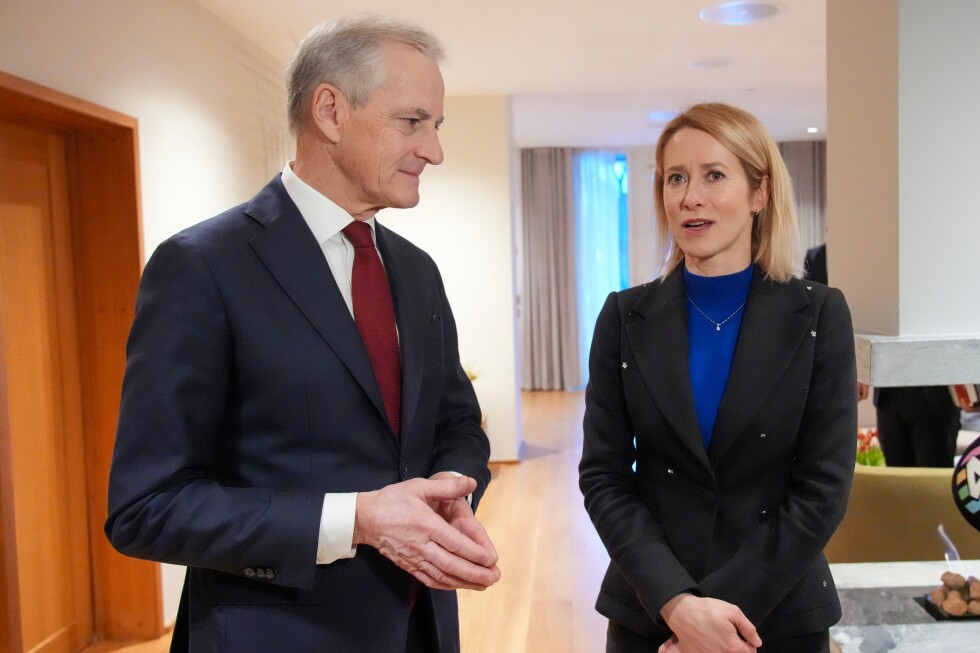
BRUSSELS — European Union Foreign Policy Chief Kaja Kallas has issued a stark warning against proposals for a European army, characterizing the concept as “extremely dangerous” during a security conference in Norway on Monday. Her remarks come amid intensified discussions about European security autonomy following shifting U.S. geopolitical priorities.
Kallas systematically dismantled the European army proposition, emphasizing practical military command structures as her primary concern. “Those advocating for a European army may not have thoroughly considered the practical implications,” she stated. “When already integrated within NATO, establishing a separate military force becomes fundamentally unworkable.”
The Estonian diplomat highlighted the critical importance of clear command hierarchies during security crises. “The paramount military asset in any emergency situation remains the chain of command—establishing unequivocally who issues orders to whom,” Kallas explained. “Creating parallel structures between a European army and NATO would result in catastrophic coordination failures, with critical decisions falling between institutional gaps.”
Norwegian Prime Minister Jonas Gahr Støre echoed Kallas’ position despite Norway’s non-EU membership status. “NATO maintains an established decision-making process among allies that, while complex, undergoes continuous operational training,” Støre noted, unequivocally rejecting European army proposals as “not a road we should travel.”
The debate resurged following recent NATO tensions triggered by former President Donald Trump’s controversial suggestions regarding Greenland’s status. Adding strategic perspective, NATO Secretary-General Mark Rutte recently asserted that European self-defense without U.S. support remains currently unachievable. Rutte told EU lawmakers that Europe would need to more than double existing military spending targets to approach autonomous defense capabilities, bluntly stating that those believing otherwise should “keep on dreaming.”