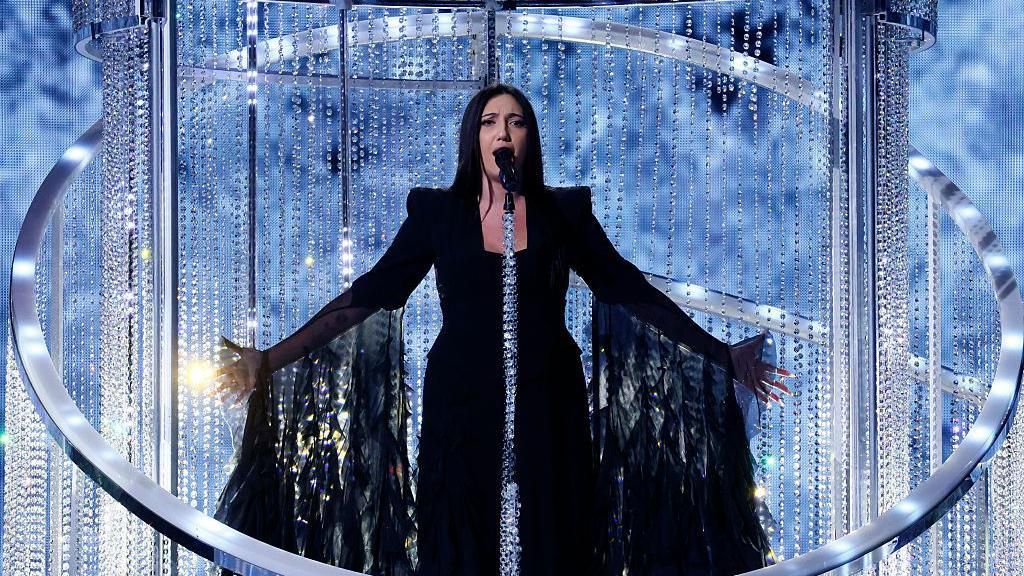
The European Broadcasting Union (EBU) has delayed a crucial vote on whether Israel will be permitted to participate in the Eurovision Song Contest 2026, citing ‘recent developments in the Middle East’ as the primary reason. Initially scheduled for November, the virtual meeting has been canceled, and the issue will now be addressed during an in-person gathering in December. The EBU emphasized the need for an open discussion among its members but did not confirm whether a vote would still occur.
Israel’s potential inclusion in the competition has sparked controversy, with several participating countries, including Spain, Ireland, Slovenia, Iceland, and the Netherlands, considering a boycott due to the ongoing conflict in Gaza. The situation escalated recently when Hamas released 20 Israeli hostages in exchange for hundreds of Palestinian prisoners, following a ceasefire that took effect last Friday.
The EBU stated, ‘In light of recent developments, the executive board agreed on October 13 that an open, in-person discussion on Israel’s participation is necessary.’ The matter will now be added to the agenda of the EBU’s winter general assembly in December, replacing the previously planned extraordinary session.
Austrian national broadcaster ORF, the host of Eurovision 2026, has supported the EBU’s decision, urging countries not to boycott the event. ORF’s Foreign Minister, Beate Meinl-Reisinger, argued that Eurovision and the arts should not be platforms for political sanctions. Meanwhile, Dutch broadcaster AvroTros maintained its stance, stating that a ceasefire would not alter its position for 2026, though it would reassess participation in future years.
Israel’s national broadcaster, Kan, has previously defended its right to participate, highlighting Israel’s long-standing success in the contest. In May, Israel’s act, Yuval Raphael, secured the largest public vote, though jury votes ultimately crowned Austria the winner. The decision on Israel’s participation remains a contentious issue, reflecting the broader geopolitical tensions surrounding the event.