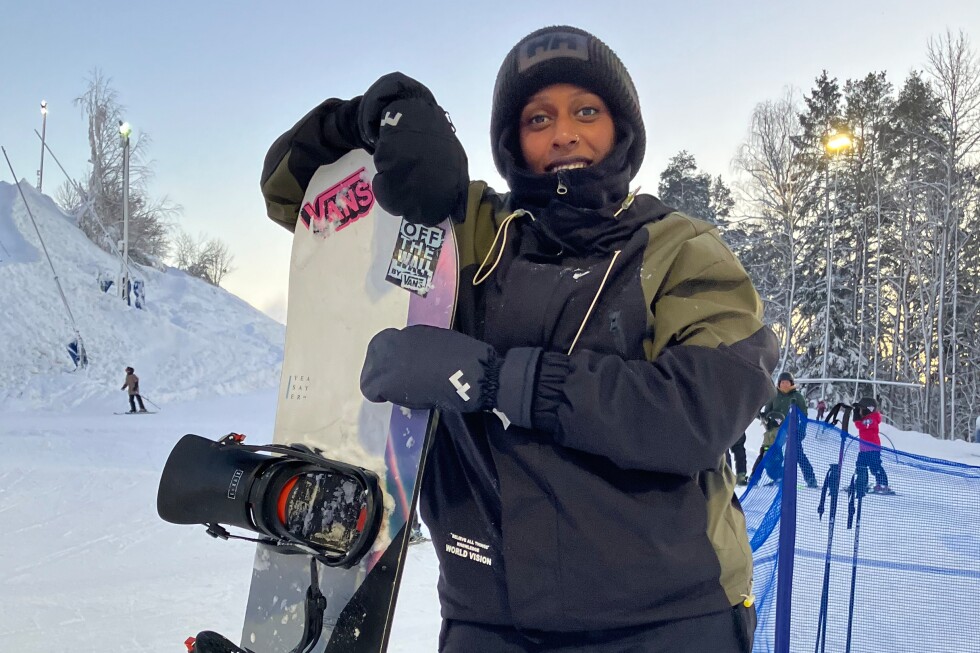
In the snow-covered landscapes of northern Sweden, Maryan Hashi’s journey from feeling like an “alien” on ski slopes to becoming an advocate for winter sports integration represents a powerful narrative of cultural adaptation. The 30-year-old Somali student initially confronted overwhelming self-doubt when she first attempted snowboarding near her Skelleftea home, questioning everything from her attire to her technique as a Black woman in a predominantly white environment.
Her perseverance transformed snowboarding from an unfamiliar activity into a profound passion that significantly enhanced her integration into Swedish society. Hashi’s experience highlights a broader demographic reality: while approximately 20% of Sweden’s 10 million residents are foreign-born—with about half originating from Asia or Africa—this diversity remains strikingly absent from winter sports arenas.
The Milan Cortina Winter Olympics roster exemplifies this disparity, with Sweden’s team consisting almost exclusively of ethnically Swedish athletes. NHL player Mika Zibanejad, whose father is from Iran, stands as a rare exception. This homogeneity persists across European winter sports nations including France, Germany, and Switzerland, despite their increasingly diverse populations.
Researchers identify multiple barriers preventing immigrant participation, including social unfamiliarity, financial constraints, and geographical limitations. Professor Josef Fahlen of Umea University emphasizes that parental influence plays a crucial role in sports participation, noting that children of non-European immigrants are unlikely to encounter sports unfamiliar to their parents.
Financial accessibility remains another significant hurdle, with equipment rentals, clothing, travel expenses, and slope passes creating substantial economic barriers. While Sweden’s ski federation promotes inclusion through programs like “Alla På Snö” (Everyone On Snow)—reaching approximately 30,000 children annually with free equipment and slope access—and the Leisure Bank project offering free sports equipment rentals, these initiatives don’t specifically target immigrant communities.
Hashi, who now teaches snowboarding to skeptical immigrant friends and children, advocates for targeted outreach: “Open the door for us. We’re going to take care of the next generation for you.” Her story underscores the transformative potential of winter sports as an integration tool while highlighting the need for systematic changes to make these activities truly accessible to Sweden’s diverse population.