FRANKFURT, Germany — The European Central Bank maintained its current monetary policy stance Thursday, keeping benchmark interest rates unchanged as the eurozone economy demonstrates unexpected resilience despite global trade tensions and geopolitical challenges.
ECB policymakers decided to retain the key deposit rate at 2%, maintaining the level established in June following a series of reductions from the previous peak of 4% that began in mid-2024. This decision reflects the institution’s cautious approach amid what President Christine Lagarde characterized as “a challenging global environment.”
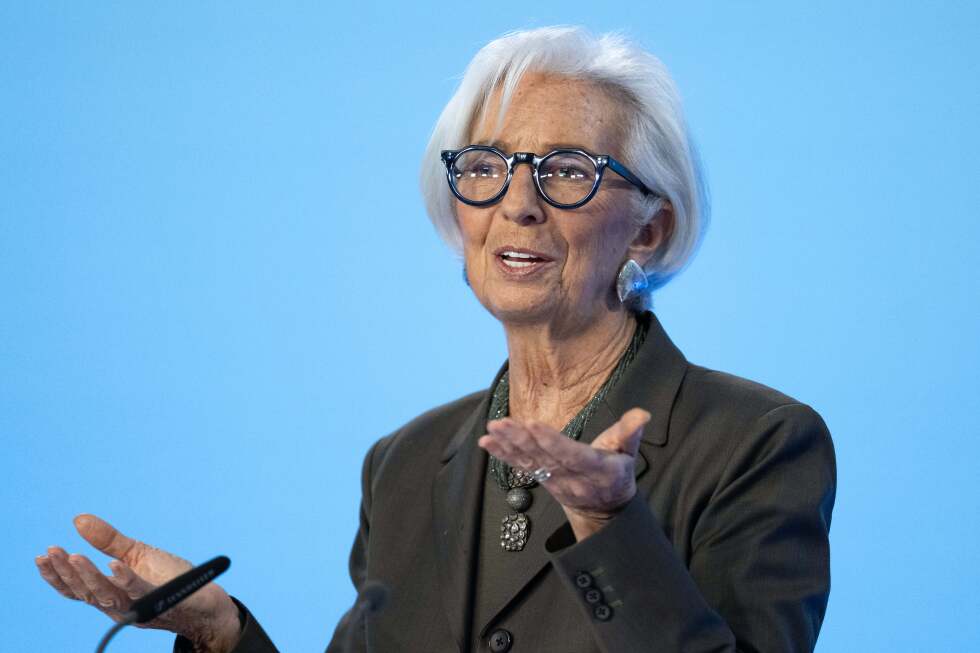
Addressing journalists during her post-meeting conference, Lagarde highlighted several factors supporting the region’s economic stability. “The economy remains resilient, buoyed by historically low unemployment levels, increased governmental expenditure on defense infrastructure, and the cumulative impact of our previous rate reductions,” she stated.
However, Lagarde acknowledged significant external headwinds, citing “higher tariff impositions and a strengthening euro” as continuing challenges. The ECB president offered no definitive guidance on future monetary policy directions, emphasizing instead a meeting-by-meeting approach to decision-making given the current “significant uncertainty” in global markets.
The current accommodative monetary environment has already stimulated economic activity through revived mortgage lending and construction sectors, benefiting from reduced borrowing costs. Concurrently, robust employment figures continue to sustain consumer demand, providing additional economic momentum without requiring further immediate stimulus measures.
Economic indicators support the ECB’s steady approach. The eurozone expanded by 0.3% in the final quarter of 2025, exceeding analyst expectations. Financial institution Berenberg projects full-year growth could reach 1.3% for 2026, with economists anticipating the ECB might maintain current rates until mid-2027 before considering any increases.
Improved growth prospects stem partly from anticipated fiscal expansions in key economies. Germany, the eurozone’s largest economy, is expected to increase infrastructure and defense spending, while France recently resolved prolonged budgetary negotiations that had created political uncertainty.
Additional positive developments include moderated energy costs since the dramatic price surges following Russia’s 2022 invasion of Ukraine, and reduced trade policy uncertainty after the European Commission negotiated a cap on U.S. tariffs at 15%—a substantial increase from the previous 4.8% but below worst-case scenarios.
Inflationary pressures have similarly moderated, with January figures falling to 1.7%, below the ECB’s 2% target threshold. This combination of controlled inflation, steady growth, and reduced external uncertainties provides the central bank with flexibility to maintain its current policy stance while monitoring evolving economic conditions.